

NAVIGATION AND DREDGING : The Port Authority of Douala Denies All Rumors and Alleged Problems

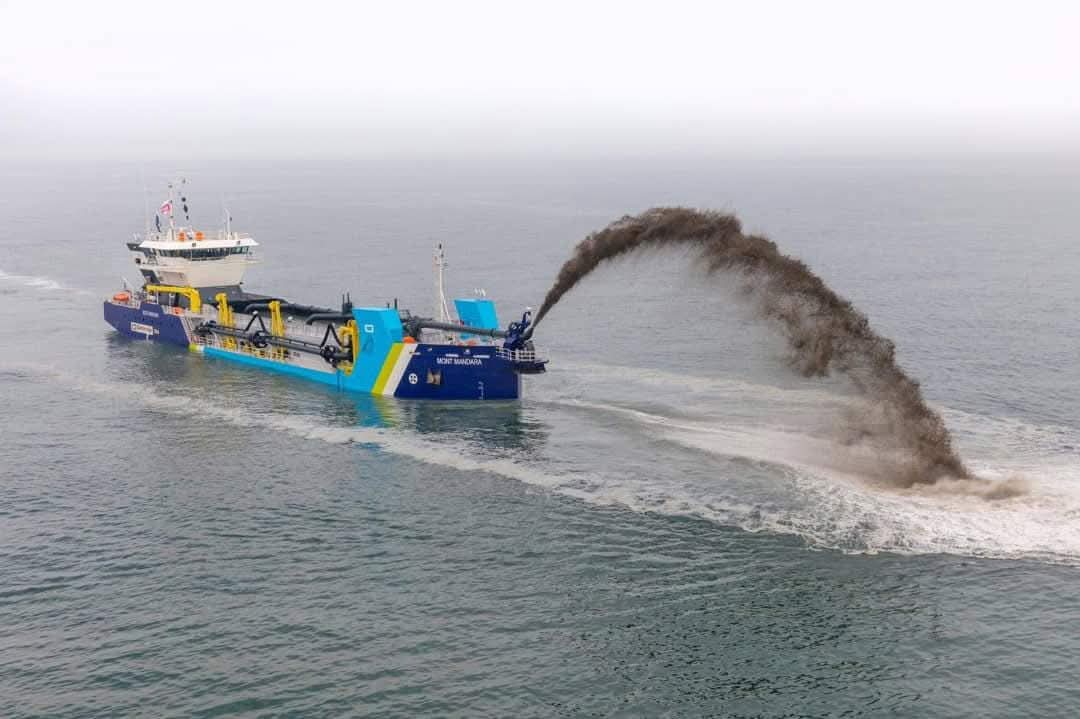
(LVDE) – On September 9, 2025, the Port Authority responded to allegations made by Africa Intelligence concerning navigation issues, stating that its infrastructure remains fully operational and that dredging costs are now under control.
Amid uncertainty surrounding maritime navigation, the Port Authority of Douala (PAD) spoke out to clarify the situation. On September 9, 2025, the port authority vigorously denied the information published by Africa Intelligence, which claimed the existence of a so-called “Shipowners’ Collective” and alleged dredging difficulties. According to the PAD, this entity is fictitious, and the figures provided regarding vessels and draughts are purely fabricated.
The PAD’s statement emphasized that the access channel, quays, and waterway of the Douala-Bonabéri port remain fully navigable, contradicting allegations of compromised operations. The authority also highlighted that, even during very favorable tides, the permissible draught has never exceeded 8.70 meters — a crucial piece of information for shipowners.
Dredging management has been internalized by the PAD, enabling the Delegated Dredging Authority to handle the activity without charging economic operators — contrary to what the report suggested. This marks an important shift in the port’s cost management policy, after decades of excessive dredging expenses. Indeed, the port spent nearly 156 billion CFA francs over 15 years on dredging, averaging 10.5 billion per year. Thanks to internalization, the cost has been reduced to about 5 billion CFA francs annually.

By showcasing this cost reduction, the PAD reaffirms its determination to restore the State’s sovereignty over access to port infrastructure. The authority underlines its commitment to ensuring safe navigation, controlling expenses, and maintaining transparency, while supporting the proper functioning of one of Cameroon’s main economic arteries.
This clarification comes at a crucial moment for the local economy, as the Douala-Bonabéri port plays a pivotal role in trade and imports. By dismissing the rumors, the PAD seeks to reassure economic operators of the reliability of its infrastructure and the sustainability of port operations.
The implications are significant for shipowners and businesses depending on the port. By reaffirming the navigability of its facilities, the PAD aims to maintain the confidence of economic partners and ensure the smooth flow of commercial activity in the country. The authority stresses that information from unverified sources does not reflect operational reality and that it remains determined to pursue its mission as an economic driver in Cameroon.
To recall, the Port Authority of Douala-Bonabéri, through its swift and firm response to the dredging allegations, demonstrates its commitment to transparency and operational efficiency. This stance is intended to reassure stakeholders in the maritime sector and safeguard the reputation of one of the region’s most strategic ports.
Esther Grace


 La voix des entreprises
 Anatole Bidias
 Amélie Yandal
 Esther Grâce