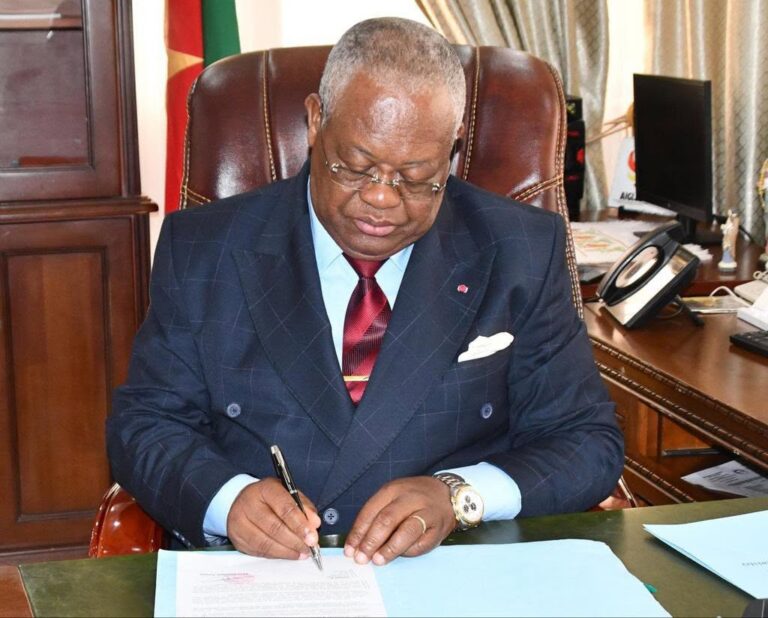


GOVERNANCE AND PERFORMANCE : APME ushers in a new era of results and SME transformation

(LVDE) – Gathered in Yaoundé on 22 May 2026 at the Hôtel Concorde in Olezoa, newly promoted staff of the Small and Medium-Sized Enterprises Promotion Agency (APME) were officially installed by Jean-Marie Louis Badga, the Director General. The ceremony takes place in a context of far-reaching organisational reform aimed at strengthening institutional performance, accelerating the digitalisation of services, and improving support for Cameroonian SMEs, which are a key pillar of the National Development Strategy 2030.
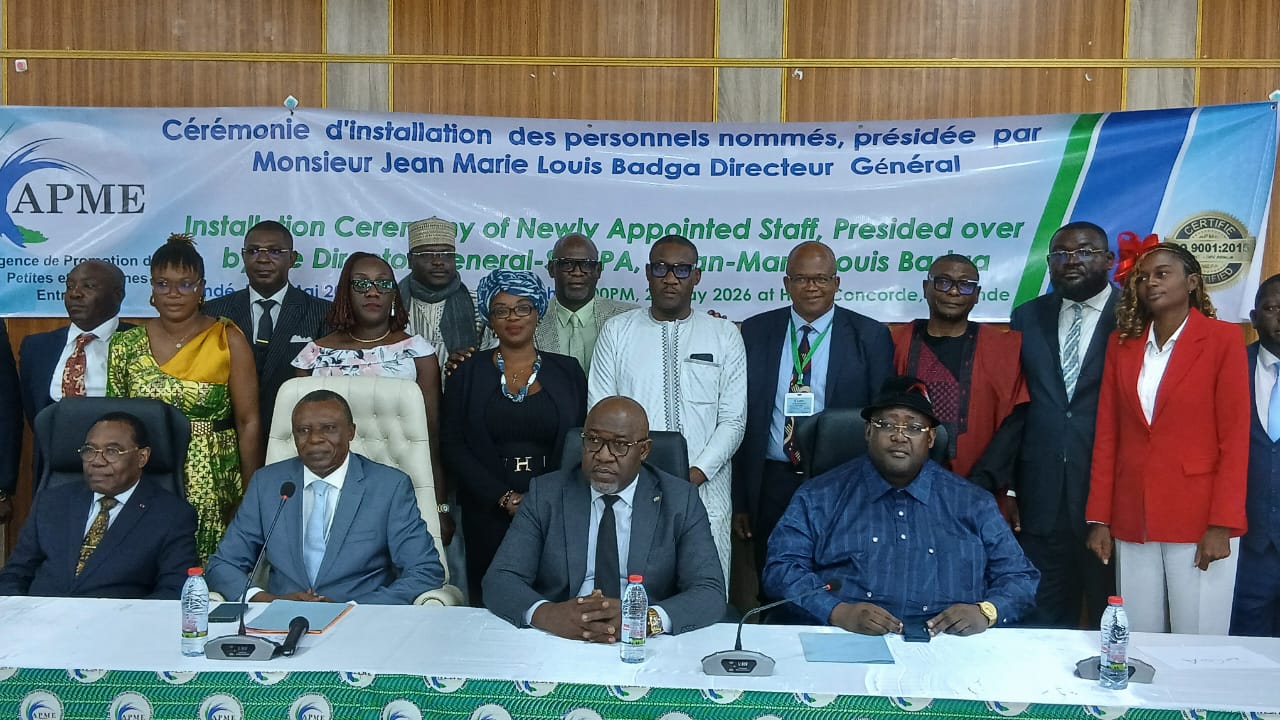
In a solemn atmosphere, APME’s top management set the tone for a new governance model centred on rigor, accountability, and a results-driven culture. In front of board members and institutional stakeholders, the Director General emphasised the strategic importance of the recent appointments, framing them as part of a broader overhaul of the agency’s operating model and a heightened demand for performance.
Created to support the development of small and medium-sized enterprises, APME plays a structuring role in the national economy. SMEs account for more than 90% of Cameroon’s formal business ecosystem and remain a major engine of job creation and value generation. Within this framework, the Board of Directors defines strategic orientations, while the General Management ensures operational implementation, with an increasing obligation to deliver measurable results and tangible impact.
The Director General recalled that the Agency has supported several thousand businesses over the past decade through its formalisation, incubation, and training mechanisms. Business creation centres, SME support hubs, and various financing and capacity-building programmes have helped broaden access to entrepreneurship, particularly among young people and women, despite a sometimes challenging environment.
At the core of this reform, internal governance is expected to undergo significant change. The Board of Directors is presented as the guarantor of strategic steering and performance oversight, while the General Management stresses the need for a more agile, disciplined, and results-oriented administration. The revised organisational structure aims to clarify responsibilities, streamline decision-making, and strengthen coherence in field operations.
In a context of accelerated digital transformation, APME is also stepping up the digitalisation of its services : online business registration, distance learning, digitised data management, and the modernisation of regional offices. According to World Bank estimates, the digitalisation of public services can significantly improve administrative efficiency in developing countries while reducing processing times and costs.
Beyond structural reforms, the message delivered to newly appointed officials is clear : every position now entails a duty to deliver results. Monitoring and evaluation mechanisms will be strengthened to assess both individual and collective performance, in a bid to ensure transparency and real impact on SMEs.
Within this dynamic, APME aims to consolidate its role as a central player in Cameroon’s economic transformation. By focusing on organisational discipline, skills development, and digital innovation, the institution seeks to enhance business competitiveness and contribute to the country’s long-term vision of emergence by 2035.

 La voix des entreprises
 Esther Grâce