


ENERGY : CSTAR leverages modular engineering to compress Kribi refinery execution time

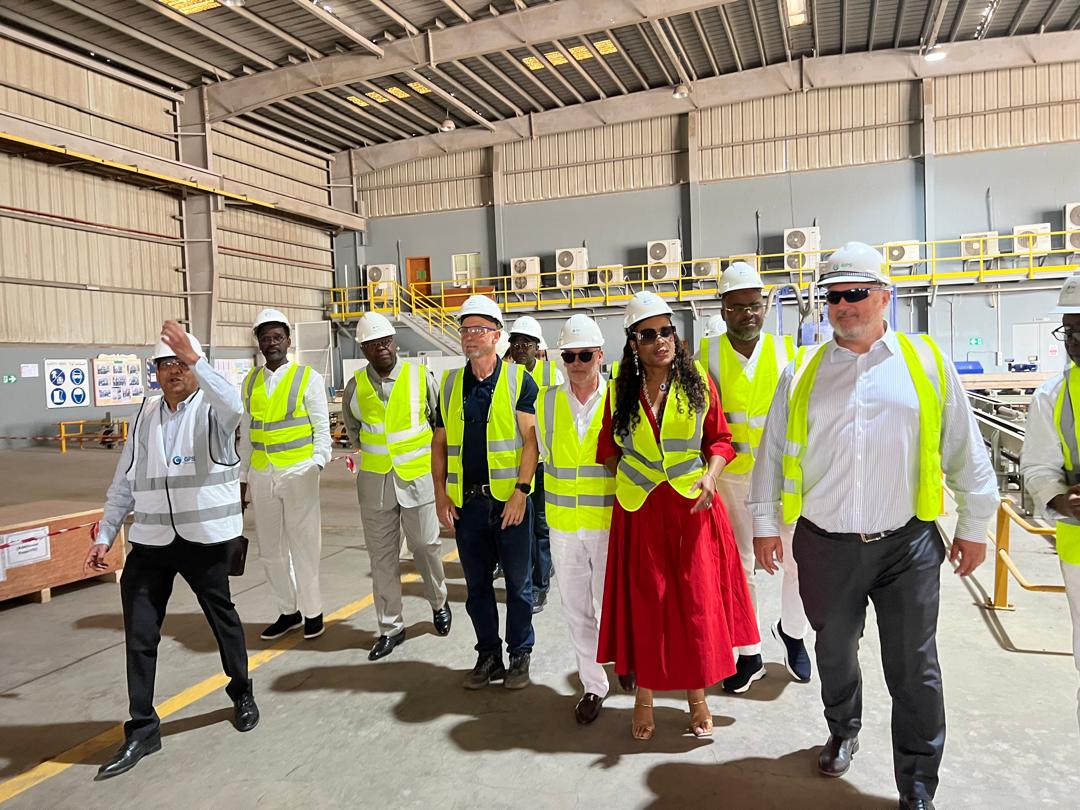
(LVDÉ) – In Kribi, CSTAR is accelerating the development of its planned refinery through a modular construction strategy. During a technical visit on June 6, 2026, to fabrication sites operated by the RCG consortium, project developers highlighted an industrial approach designed to significantly shorten construction timelines, secure delivery schedules and optimize costs for a strategic energy asset for Cameroon and Central Africa.
In Africa’s push toward greater energy autonomy, execution speed has become as critical as financing capacity. To meet its commissioning target, CSTAR has opted for modularization, a construction model increasingly adopted in large-scale oil and gas projects across emerging economies.
The June 6 field visit to RCG facilities provided a clearer picture of the project’s industrial architecture. Unlike conventional refineries built entirely on-site, the Kribi project is based on the off-site fabrication of complete process modules — including distillation units, treatment systems, storage facilities and auxiliary infrastructure — which are later transported and assembled in Cameroon.
These modules are currently being manufactured in specialized industrial facilities in Abu Dhabi by a consortium with proven international experience, including participation in major projects such as ADNOC refineries in the United Arab Emirates and the Huajin Aramco complex in China. This global engineering footprint strengthens technical credibility while aligning the project with high industrial standards.
The core advantage of this model lies in parallel execution. While modules are built and tested in controlled industrial environments, site preparation works continue simultaneously in Kribi. This overlap between engineering phases significantly reduces overall construction time and limits exposure to typical on-site delays.
Beyond time efficiency, modularization also improves cost control and quality assurance. Factory assembly reduces on-site technical uncertainties, while standardized testing procedures enhance operational reliability before shipment. In a context where African megaprojects often face cost overruns and delays, this approach introduces a higher level of delivery discipline.
CSTAR’s development roadmap targets an initial capacity of 10,000 barrels per day, with a gradual increase to 30,000 barrels per day by 2028. The modular design also allows for future expansion into higher-value fuels and potential biofuel integration, depending on regional demand dynamics.
Across the continent, this model reflects a broader industrial shift. From Nigeria to Angola, modular refineries are gaining traction due to their scalability, faster deployment cycles and lower upfront capital requirements. They increasingly represent a pragmatic response to Africa’s dual challenge: accelerating industrialization while maintaining financial sustainability.
For Cameroon, the project carries implications that go far beyond infrastructure delivery. The Kribi refinery is expected to reduce dependence on imported refined products, strengthen domestic energy security and reinforce the strategic role of the deep-water port as a regional logistics hub. It also aligns with broader ambitions to expand local value addition in the energy sector.
However, execution risks remain significant. The logistics of transporting large industrial modules to Kribi will depend on port efficiency, road infrastructure and coordinated supply chains. More critically, long-term success will hinge on the development of local technical expertise to operate and maintain the facility once commissioned.
Ultimately, the Kribi refinery stands as a test case for Cameroon’s industrial ambition in the energy sector. While modularization may compress construction timelines, only sustained investment in skills and operational capacity will determine whether the project becomes a durable pillar of energy sovereignty and regional growth.

 La voix des entreprises
 Esther Grâce