

ILLICIT GOLD MINING : Over 100 companies face legal action in Cameroon

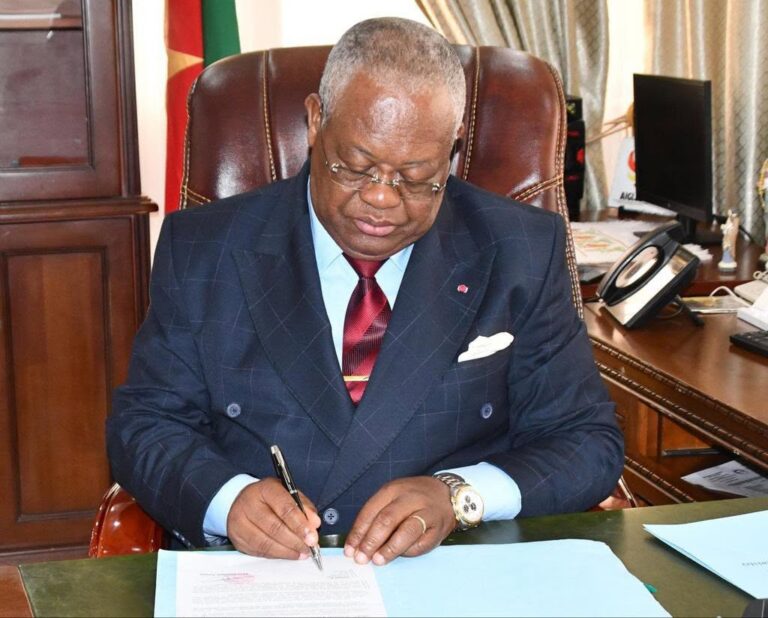
(LVDE) – In Yaoundé during the Government Action Exhibition (SAGO), the Acting Minister of Mines, Industry and Technological Development, Prof. Fuh Calistus Gentry, announced that more than 100 companies operating in semi-mechanised artisanal gold mining are now subject to legal proceedings across Cameroon. The announcement comes as part of a nationwide regulatory tightening aimed at formalising a fast-growing segment of the mining industry, improving public revenue collection and restoring control over informal gold production channels.

Cameroon is stepping up pressure on its artisanal and semi-industrial gold sector as it seeks to convert mineral potential into structured economic value. Once characterised by weak oversight and fragmented operations, the segment has become a priority in a broader state-driven effort to impose regulatory discipline and strengthen fiscal returns from natural resources.
Speaking in Yaoundé at SAGO 2026, Prof. Fuh Calistus Gentry confirmed that more than 100 companies are currently facing legal proceedings for failing to comply with updated mining regulations. At the same time, 22 operators have entered formalisation procedures, signalling a gradual but strategic shift from informality towards regulated production systems.
The enforcement drive coincides with a broader acceleration of Cameroon’s mining ambitions. Following the rollout of several industrial projects in 2025—including iron ore developments in Kribi-Lobé and Bipindi-Grand Zambi, bauxite at Minim-Martap, marble at Bidzar, and gold at Colomine—the authorities are extending regulatory coverage to artisanal and semi-mechanised operations, long associated with revenue leakages and environmental pressure.
The new framework significantly raises compliance requirements. Operators are required to pay a CFAF 63 million environmental bond, comply with a 25% synthetic mining tax, and meet 5% export duty obligations. In addition, majority Cameroonian ownership is mandatory, while production thresholds are set at a minimum of five kilograms of gold per site per month. Environmental standards now include a six-month transition toward closed-circuit processing systems.
The fiscal implications are substantial. According to projections from the Ministry of Mines, formalised sites could yield up to 1,320 kilograms of gold annually, while SONAMINES expects at least 380 kilograms in recoveries. The regularisation of 100 illegal sites could generate an estimated CFAF 8.64 billion, a figure that could double to CFAF 17.28 billion if compliance extends to 200 sites.
For operators, the reform introduces higher compliance costs but also greater legal certainty and improved access to financing. It also strengthens credibility in global gold markets increasingly shaped by traceability requirements and responsible sourcing standards.
For Cameroon, the overhaul reflects a wider industrial strategy aimed at structuring domestic value chains around mineral resources. Beyond extraction, the ambition is to progressively integrate local processing capacity, in line with import-substitution objectives and industrial diversification goals.
At the regional level, the initiative could serve as a reference point in Central Africa, where informal mining remains widespread and cross-border illicit flows continue to undermine public revenues. By tightening enforcement and accelerating formalisation, Cameroon is positioning resource governance as a pillar of economic transformation and industrial upgrading.
The crackdown ultimately signals a structural transition: from informal extraction to regulated production, from fragmented activity to integrated value chains, and from resource potential to measurable fiscal and industrial performance.

 La voix des entreprises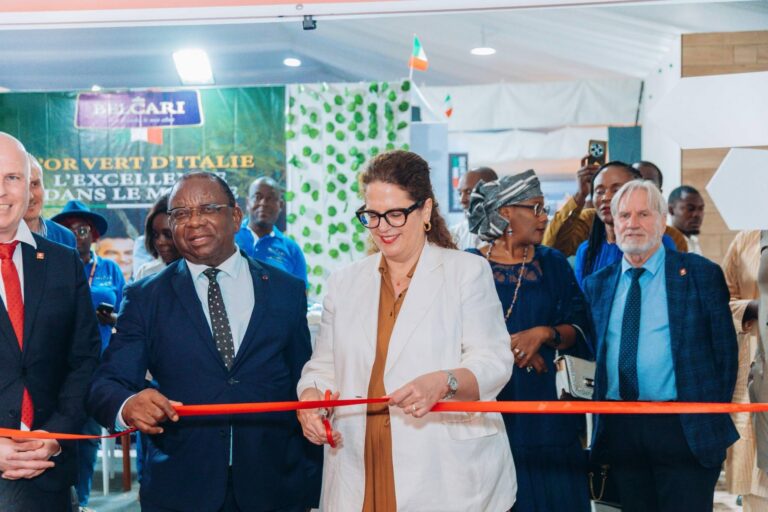
 Esther Grâce