


AIR TRANSPORT : Royal Air Maroc Restructures Its Network and Suspends Services to the CEMAC Region

(LVDE) – On 25 May 2026 in Casablanca, Royal Air Maroc announced the temporary suspension of several of its international routes, including those connecting the CEMAC zone (Cameroon, Gabon, Congo, Central African Republic and Equatorial Guinea) to its Moroccan hub. The decision, driven by soaring jet fuel prices and weakening demand on certain routes, reshuffles air connectivity in Central Africa, where RAM had been a key player in intercontinental traffic.
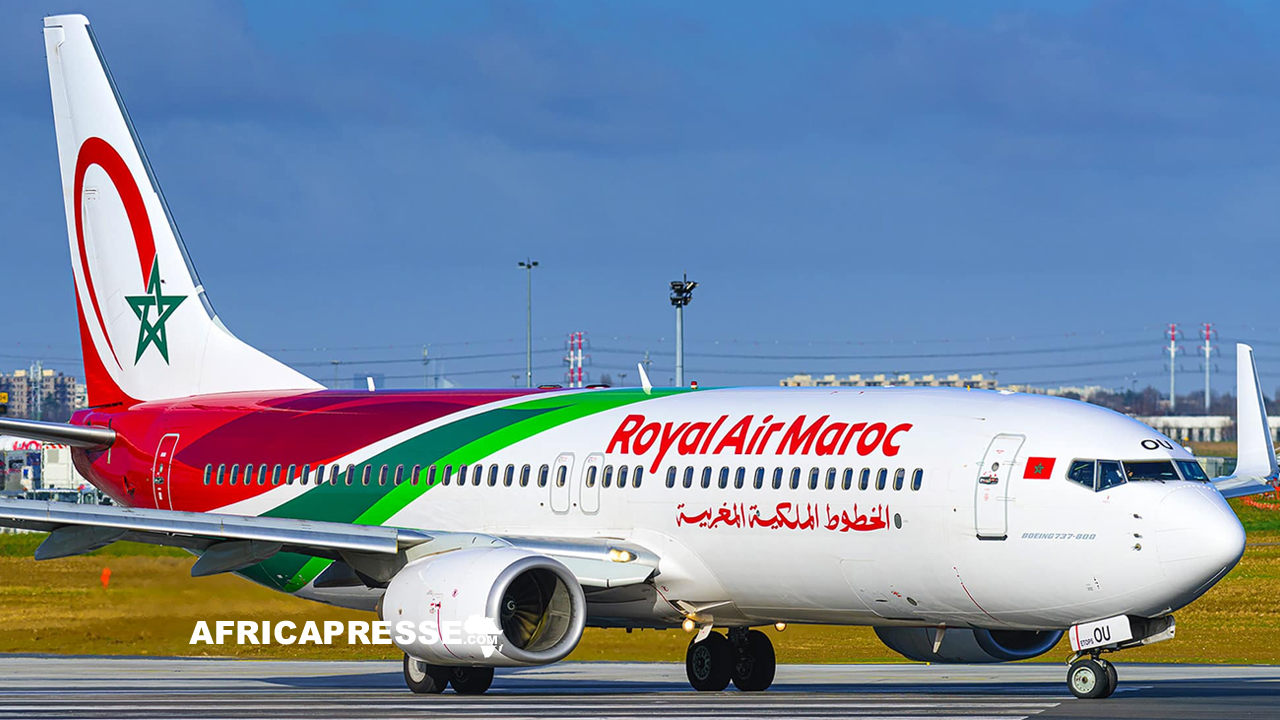
In a statement released from its Casablanca headquarters, Royal Air Maroc justified this strategic downsizing by citing a combination of adverse factors, foremost among them the sustained rise in global aviation fuel prices. The carrier also pointed to declining demand across several African and European routes, forcing the airline into an “immediate and temporary adjustment” of its international flight schedule.
This restructuring results in the suspension of services linking Casablanca to several Central African capitals, including Douala and Yaoundé in Cameroon, Libreville in Gabon, Brazzaville in Congo, and Bangui in the Central African Republic. In total, between 22 and 26 weekly frequencies are being removed from the regional air network, representing an estimated capacity of more than 350,000 passengers per year.
Beyond Central Africa, the airline is also suspending selected medium- and long-haul routes to Europe, particularly from Marrakech and Tangier, affecting destinations such as Marseille, Lyon, Bordeaux, and several cities in Spain. This network reduction comes as global airlines continue to adjust capacity in response to volatility in the energy market.
Within the CEMAC region, the decision highlights the structural fragility of local air transport supply. National carriers, often constrained by limited fleets and persistent financial challenges, struggle to absorb the traffic gap left by major international operators. Camair-Co in Cameroon and Equatorial Congo Airlines in the Republic of Congo remain largely confined to regional routes, with no real intercontinental relay capacity.
As a result, passenger flows are expected to shift toward major African hubs, notably Addis Ababa with Ethiopian Airlines, Lomé with ASKY Airlines, and Kigali with RwandAir. These more established platforms are already capturing a growing share of intra-African and international traffic, increasing Central Africa’s dependence on external hubs for its air connectivity.
From an economic standpoint, the impact goes beyond passenger transport. RAM’s withdrawal also affects air cargo flows, particularly high-value goods such as pharmaceuticals and express parcels, which are essential to urban economies in the sub-region. The loss of capacity could exert upward pressure on ticket and freight prices while reshaping regional logistics chains.
A major actor in Africa–Europe–Americas connectivity through its Casablanca hub, Royal Air Maroc had positioned itself in recent years as a strategic alternative to European carriers for Central African travelers. Its temporary withdrawal opens a period of adjustment in which regional air transport dynamics may be redefined, amid rising costs and increasing competition from emerging African hubs.


 La voix des entreprises
 Esther Grâce