

CAMEROON : 121 Billion FCFA Invested in Road Infrastructure in the Far North Between 2021 and 2025

(LVDE) – Over the 2021–2025 period, Cameroon’s government channelled more than 121 billion FCFA into road infrastructure in the Far North region, according to official data from the Ministry of Public Works. The programme, implemented across multiple projects, combines new road construction, rehabilitation of strategic corridors and bridge development, with the stated objective of improving connectivity in one of the country’s most geographically and logistically challenging areas.
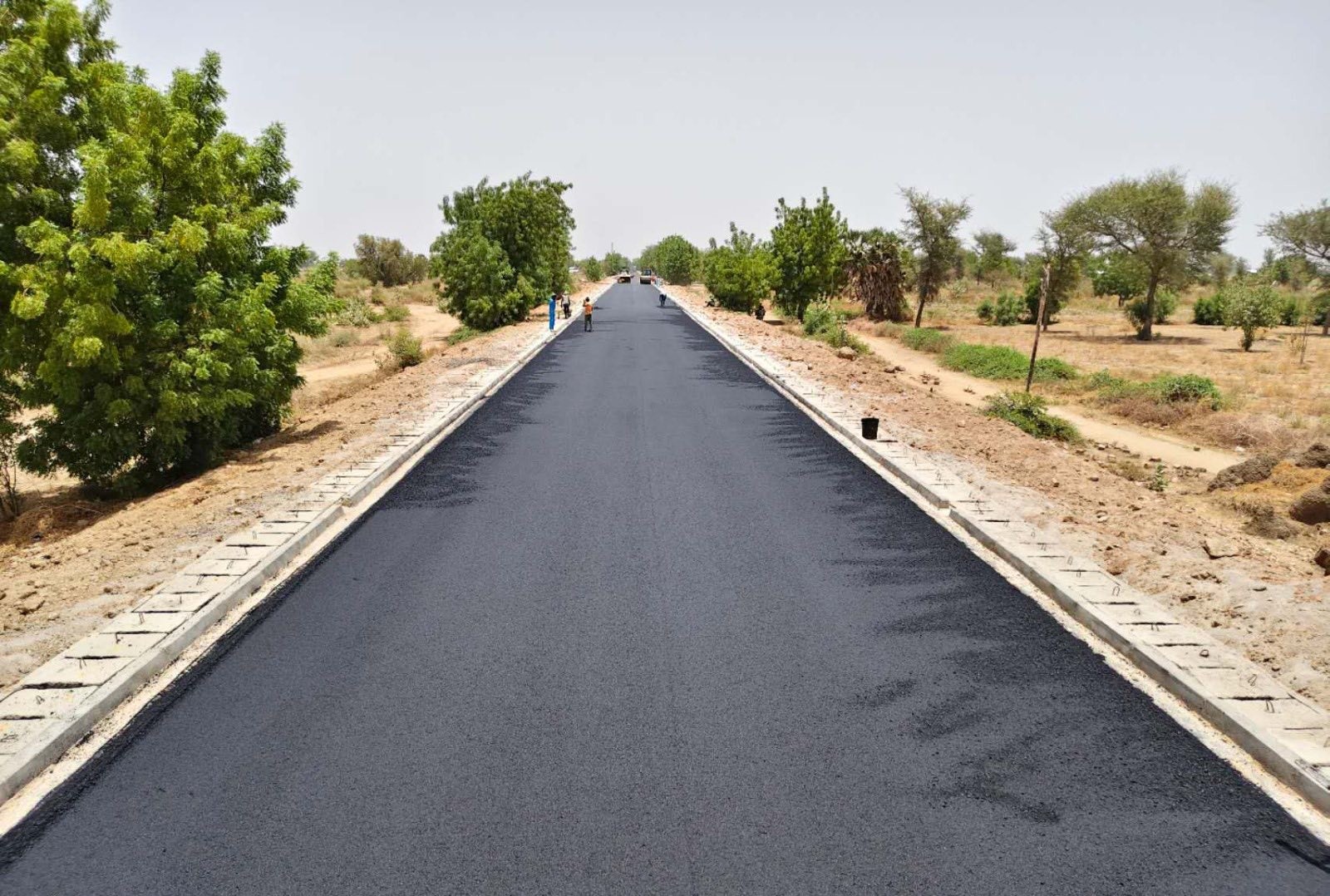
Across the Far North, a large-scale infrastructure push has reshaped key transport axes under state coordination. Driven by public investment priorities set by the Presidency, seven major projects were delivered over the four-year cycle, reflecting a sustained effort to open up production basins and strengthen regional mobility despite persistent security and climatic constraints.
Road construction and asphalt paving operations formed the backbone of this transformation. Three main road projects alone delivered 58.64 km of newly paved infrastructure. These include the Maroua–Bogo road (34.84 km), commissioned in 2021, the Inter N1–Carrefour Méri link (5.8 km), and the first phase of the Saotchaï–Datcheka–Takréo–Yoldéo–Doukoula corridor (18 km), completed in 2025. These routes are increasingly seen as critical lifelines for agricultural supply chains and interurban mobility.
In parallel, rehabilitation works focused on strengthening the National Road No. 1 corridor, a strategic axis linking northern Cameroon to neighbouring countries. Approximately 65 km of paved roads were upgraded, including the reconstruction of the Maroua–Mora section over 62 km and the refurbishment of the first 3 km of the Mora–Tchakamari stretch. These interventions are aimed at improving road safety and securing cross-border trade flows within the Lake Chad Basin.
Bridge infrastructure also featured prominently in the investment programme. Between 2023 and 2024, two major structures were completed: the bridge over the Mayo Limani linking Amchidé (Cameroon) to Limani (Nigeria), and the bridge over the Logone River connecting Yagoua (Cameroon) to Bongor (Chad), including access roads. Together, they account for roughly 740 linear metres of bridgeworks and 7.5 km of connecting roads, reinforcing regional integration and cross-border commerce.
Beyond completed projects, several works remain ongoing as the Ministry of Public Works continues its rollout strategy in the region. The broader ambition is to reduce isolation of agricultural and pastoral zones, improve access to markets, and strengthen economic exchanges with neighbouring countries. In a region where infrastructure remains a decisive factor for development, the 121 billion FCFA investment programme reflects a long-term structural shift rather than a short-term upgrade.

 La voix des entreprises
 Esther Grâce