

CAMEROON : Dangote Partners with China’s Sinoma for New Cement Plant

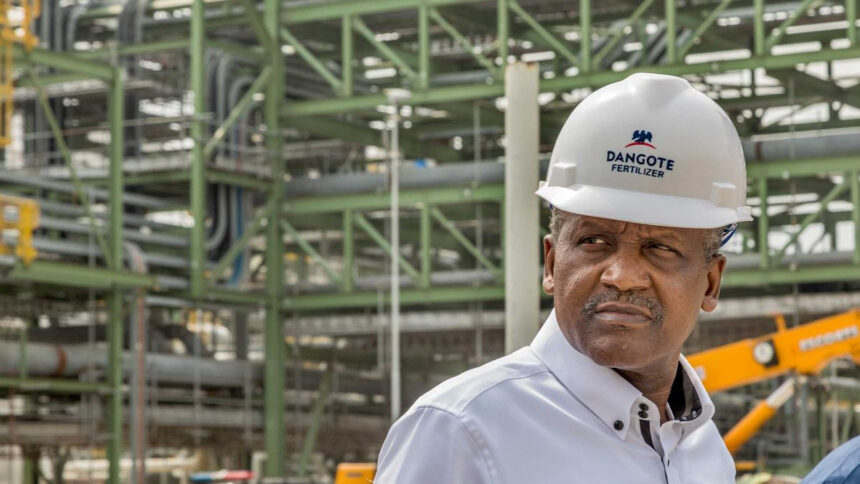
Aliko Dangote, CEO of the Dangote Group.
(LVDE) — In Cameroon’s industrial landscape, consolidation continues in the cement sector with new strategic moves. Dangote Cement, owned by Nigerian businessman Aliko Dangote, is relying on the technical expertise of China’s Sinoma Engineering to accelerate its African expansion in a market where construction material demand remains strong despite rising competition.
Across the African continent, industrial investments in construction materials are increasing, with Cameroon emerging as a strategic market. Dangote Cement recently signed an approximately $1 billion contract with China’s Sinoma Engineering, a company specialized in industrial engineering and heavy infrastructure. This partnership aims to build new production units and modernize existing facilities in several African countries, including Cameroon, Nigeria and Ethiopia.
For Cameroon, the project remains surrounded by technical uncertainties, although two main options are emerging. The first option is to expand production capacity at the Douala plant, which currently produces about 1.5 million tonnes per year. The second option revives a long-delayed project first announced in 2015, involving the construction of a second cement plant in Nomayos, in the Centre region, with a similar production capacity. This unit was initially budgeted at nearly CFA88 billion and was expected to be completed within two years.
Dangote’s industrial ambitions in Cameroon follow a long timeline. In 2015, just weeks before the inauguration of the Douala cement plant, Aliko Dangote had already announced this expansion project during a meeting with government authorities. Environmental and social impact studies were later conducted between 2019 and 2024, confirming the economic potential of the site, although construction work never effectively started.
The arrival of new investments comes amid a changing market environment. Since the sector was opened to competition in 2015, the historic monopoly of Cimenteries du Cameroun has disappeared, making way for several industrial operators. Today, national production capacity is close to 12 million tonnes, while domestic consumption is estimated at around 8 million tonnes according to sector analyses, creating a structural overcapacity situation.
Despite this abundant supply, the price of a 50 kg bag of cement remains high, fluctuating between 5,100 and 5,300 FCFA in major cities such as Douala and Yaoundé. Industry players attribute this pressure to high import costs of clinker, the main raw material used in cement production. Public authorities, through the Ministry of Trade, have repeatedly raised concerns about possible anti-competitive practices and price collusion among producers.
Esther Grace

 Esther Grâce
 La voix des entreprises