

YAOUNDE–DOUALA HIGHWAY : Deforestation works intensify on Phase 2

(LVDE) – Along the Yaoundé–Douala corridor, in the Pouma subdivision (Sanaga-Maritime region), works on Phase 2 of the 141.1 km highway are progressing steadily. Since March 27, 2026, and as of April 23, 2026, teams deployed on site have been accelerating deforestation and right-of-way clearance operations as part of the strategic road project linking Yaoundé and Douala.
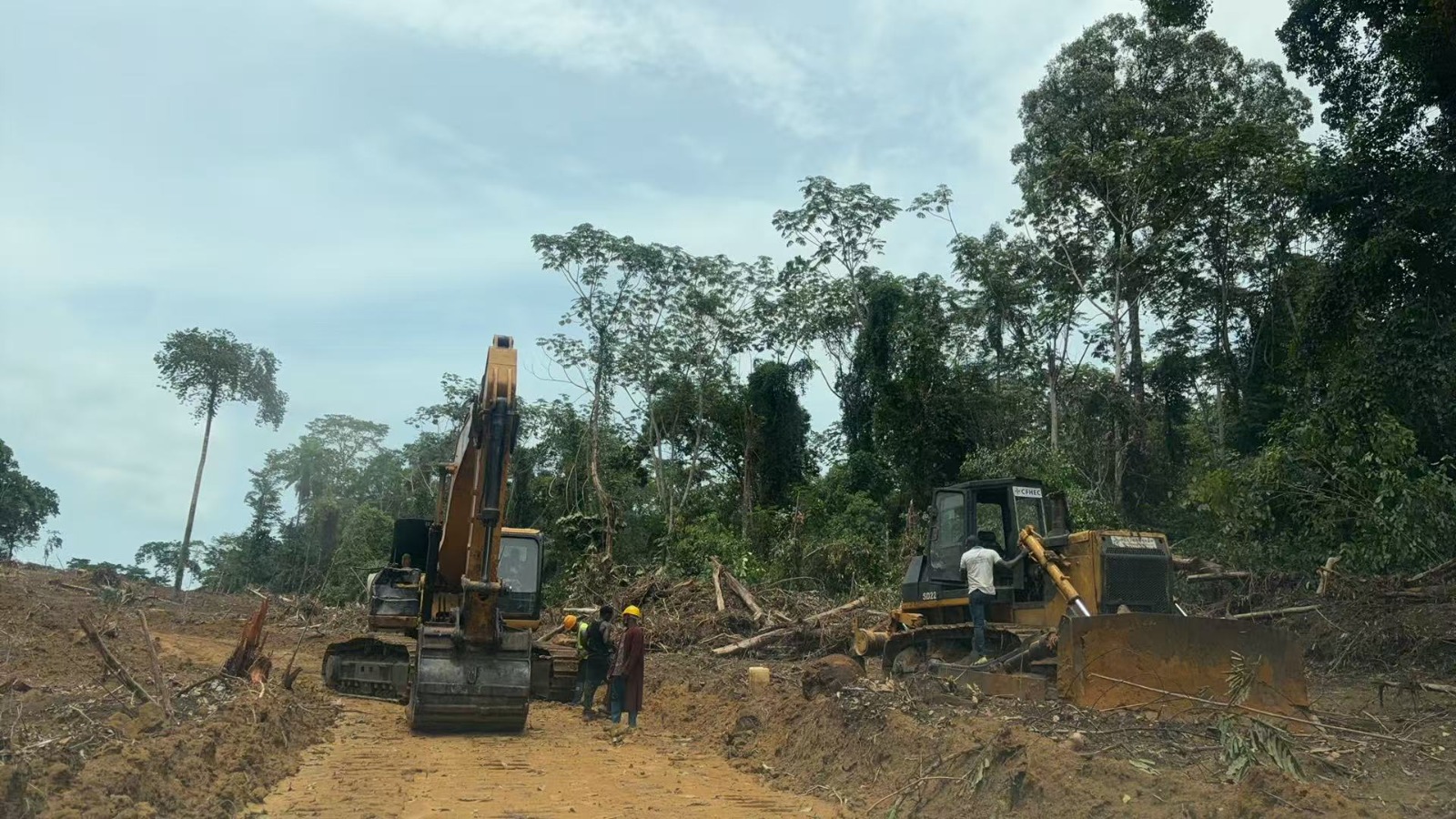
On the Phase 2 construction site of the Yaoundé–Douala highway, activities are being carried out at a sustained pace in the heart of the Sanaga-Maritime region. In the Pouma area, works are advancing along a strategic axis connecting Cameroon’s two main metropolitan cities, with visible progress between kilometre points PK99+580 and PK96+300, around PK100, a junction zone linking Regional Road 315 and the Pouma–Sanaga bridge axis.
On the ground, operations combine several technical components: deforestation, clearing of vegetation, execution studies, and quarry prospecting. This integrated approach is designed to prepare the terrain for future earthworks and pavement construction phases. Teams have been working continuously, 7 days a week, since March 27, 2026, in order to maximize productivity before the onset of the heavy rainy season, a key factor in road construction planning in forested areas.
According to site monitoring data, the progress of works reflects continuous execution across already cleared sections. Deforestation remains a key milestone in the overall advancement of the project, enabling the clearing of right-of-way areas required for the implementation of the highway’s main infrastructure.
In parallel with technical progress, the social component of the project is also being implemented. Compensation for people affected by the project is currently underway along the concerned sections. It is being carried out in accordance with established procedures and follows a gradual schedule, aligned with the progressive release of the required right-of-way areas for construction works.
This Phase 2 of the Yaoundé–Douala highway is part of a broader road infrastructure programme aimed at improving the flow of exchanges between the political capital and the country’s main economic hub. The 141.1 km corridor represents a major challenge in reducing logistics costs, improving transport safety, and modernising national infrastructure.
As works continue in the Pouma area, the project confirms its structuring role in the development of Cameroon’s road network. The main challenge now is to maintain the pace of execution while ensuring coordination between technical, environmental, and social aspects of the project.

 La voix des entreprises
 Esther Grâce