

CEMENT : Cameroon’s exports surge by 318.8% in 2025

(LVDE) – In 2025 in Cameroon, according to the National Institute of Statistics (INS), cement producers exported 10,463 tonnes, compared to 2,498 tonnes in 2024. This sharp increase in both volumes and revenues reflects a strategic shift in the sector toward sub-regional markets, amid rising competition on the domestic market.
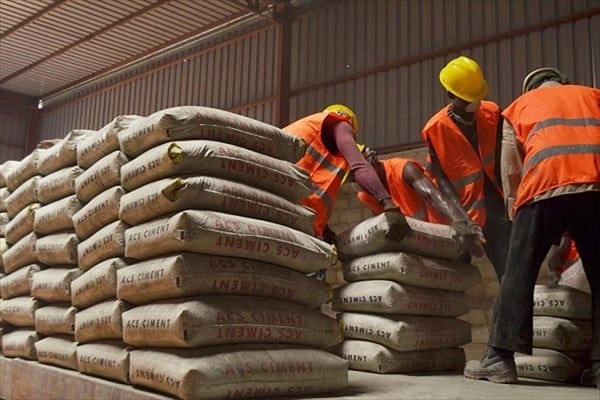
Against a backdrop of restructuring in the local market, Cameroon’s cement industry is accelerating its international expansion. Data published by the National Institute of Statistics show that in 2025, cement exports reached 10,463 tonnes, a spectacular increase of 318.8% compared to the 2,498 tonnes recorded in 2024. This performance marks a turning point for a sector long focused on domestic demand.
The observed momentum is not limited to volumes. Revenues generated from these exports also recorded strong growth, rising from 254 million CFA francs in 2024 to 995 million CFA francs in 2025. This significant increase confirms the rising value of export flows and the growing interest of producers in foreign markets.
This trend is part of a broader structural transformation of the industrial landscape. In just over a decade, Cameroon’s cement market has shifted from a monopoly situation to a highly competitive environment. The entry of new players following the arrival of Dangote Cement in 2015 has profoundly reshaped the sector’s balance. Alongside Cimencam, a subsidiary of Lafarge Holcim Maroc Afrique, several producers have established operations, contributing to a rapid increase in production capacity.
Today, the country has around ten active or planned cement plants, including Cimaf, Medcem, Mira Company, Cimpor, Central Africa Cement, Sinafcam, and Yousheng Cement. This multiplication of actors has raised national production to nearly 12 million tonnes per year, while domestic demand is estimated at around 8 million tonnes. This structural imbalance is putting pressure on prices and market shares.
Faced with this overcapacity, exports are emerging as a strategic lever to absorb surplus production. Sub-regional markets, particularly in Central Africa, offer growth opportunities for Cameroonian manufacturers, in a context where infrastructure needs remain significant. This shift also helps diversify revenue sources and reduce exposure to domestic market fluctuations.
Moreover, this export breakthrough comes in a context of increasing intra-African trade driven by the African Continental Free Trade Area (AfCFTA). Gradual improvements in logistics corridors and transport infrastructure could further strengthen this dynamic and facilitate access to neighbouring markets.
Through this growth, Cameroon’s cement sector demonstrates its ability to adapt to intensifying competition. The challenge now lies in consolidating these international positions while maintaining a balance on the domestic market. In a capital-intensive and highly competitive industry, exports are gradually becoming a key growth pillar for sector companies.

 La voix des entreprises
 Esther Grâce