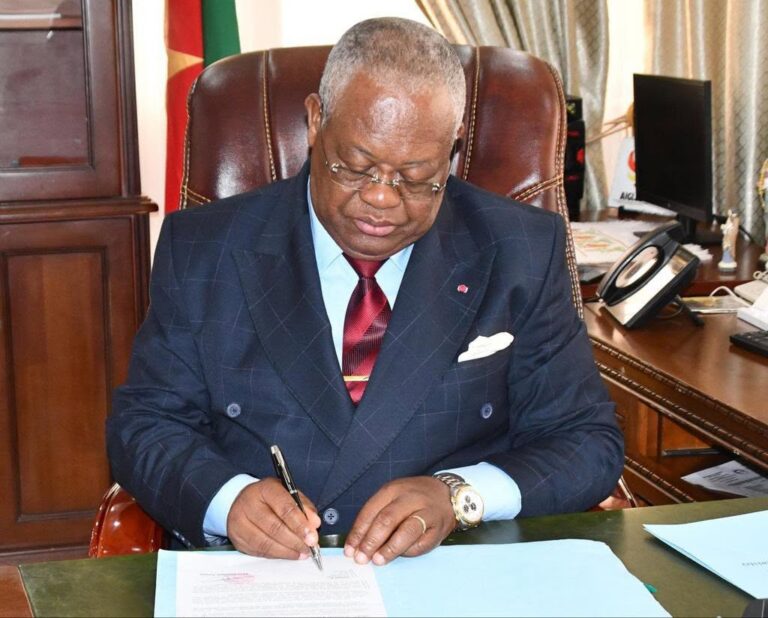


HUMAN RIGHTS & SOCIAL PROTECTION : CDHC warns of worsening inequalities and violence affecting children in Cameroon

(LVDE) – On May 15, 2026 in Yaoundé, the Human Rights Commission of Cameroon (CDHC) made public its statement on the occasion of the International Day of Families, observed this year under the theme : “Families, Inequalities and Children’s Well-being.” The institution warns of rising social inequalities, the weakening of family structures, and an increase in domestic violence, particularly affecting women and children.
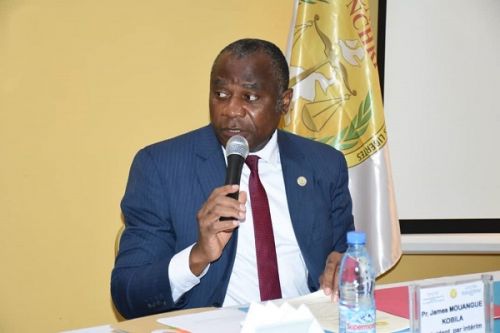
Prof. James Mouangue Kobila – President of the CDHC (Cameroon Human Rights Commission).
Released in Yaoundé on May 15, 2026, the CDHC statement comes amid growing social tensions surrounding the situation of families. The institution cautions against the persistence of inequalities and the progressive weakening of family structures, whose social protection function is increasingly compromised.
The Commission recalls that the International Day of Families, established by United Nations General Assembly resolution 47/237 of September 20, 1993, aims to keep global attention focused on the family as a cornerstone of social development. The 2026 edition highlights the impact of widening inequalities on family cohesion and on children’s prospects for development and well-being.
In its analysis, the CDHC stresses that Cameroon’s 1996 Constitution enshrines the family as the natural foundation of society and imposes a duty of protection on the State. However, observed realities reveal a persistent gap between constitutional principles and their implementation. Economic, social, and territorial inequalities continue to limit families’ access to essential services and undermine conditions for the harmonious development of children.
The Commission expresses strong concern over the intensification of domestic violence. Reported cases include physical, psychological, sexual, and economic abuse, with a rise in serious incidents affecting minors, including sexual abuse, femicides, and infanticides. These trends reflect a gradual deterioration of the family environment across several social contexts.
On the ground, CDHC officers also note a growing fragmentation of family structures linked to internal migration, forced displacement, and rural exodus. This trend reduces direct parental support and increasingly exposes children to emotional, educational, and social vulnerability.
The Commission extends its analysis to the continental level, recalling that hundreds of millions of children live in conflict-affected areas in Africa. This reality increases the risks of violence, trafficking, and exploitation, particularly along irregular migration routes, where children remain among the most vulnerable groups.
The CDHC also identifies corruption as an aggravating structural factor. It argues that illicit practices and embezzlement within basic social services weaken the effectiveness of public policies and reduce equitable access to fundamental rights related to family life, education, and health.
Regarding its actions, the Commission highlights awareness-raising initiatives carried out in 2025, notably in Ébolowa, in partnership with civil society organizations. These activities helped strengthen understanding of parental responsibilities and promote men’s involvement in preventing gender-based violence.
Finally, the CDHC calls for strict implementation of the recommendations from the 2024 Universal Periodic Review, particularly those related to family protection. It recommends strengthening citizen oversight mechanisms in essential social services in order to combat corruption and improve the protection of rights related to parenthood and marriage.
In closing, the institution emphasizes the need for coordinated action by all public and social actors to restore family cohesion and ensure a supportive environment for children’s well-being in Cameroon.

 La voix des entreprises
 Esther Grâce