

LPG SUPPLY : SCDP Targets 1,950 Tonnes per Day at Bonabéri to Strengthen Cameroon’s Energy Security

(LVDE) – In Douala, on May 25, 2026, the Board of Directors of Cameroon’s Petroleum Storage Company (SCDP) approved a major modernization project for the Bonabéri LPG depot. Designed to increase daily loading capacity from 1,000 to 1,950 tonnes, the investment aims to ease supply-chain bottlenecks, secure domestic gas distribution and reinforce Cameroon’s resilience in a market still heavily dependent on imports.
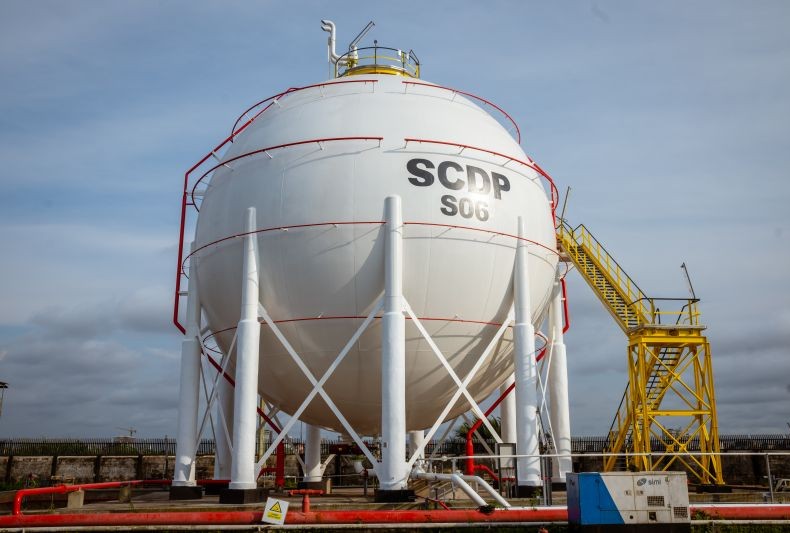
Cameroon is preparing to tackle one of the most critical bottlenecks in its domestic gas value chain. Through a new modernization program at its Bonabéri liquefied petroleum gas (LPG) depot in Douala, the Société Camerounaise des Dépôts Pétroliers (SCDP) intends to nearly double the site’s daily loading capacity, transforming one of the country’s most strategic energy hubs into a more efficient gateway for national distribution.
Approved by SCDP’s Board of Directors on May 25, 2026, the project reflects growing concerns over the ability of existing infrastructure to keep pace with rapidly rising demand for cooking gas. While storage capacities have expanded in recent years, loading operations have increasingly become a constraint, creating delays in deliveries and pressure on operators throughout the distribution chain.
The modernization plan includes the construction of new truck-loading and rail-loading facilities, a dedicated LPG pumping station, upgraded metering systems, and advanced automation and safety equipment. Once completed, the facility’s daily loading capacity is expected to increase from approximately 1,000 tonnes to nearly 1,950 tonnes, representing a 95% rise in throughput.
Rail logistics will be among the main beneficiaries. The number of LPG rail tank cars that can be loaded simultaneously will increase from two to seven, multiplying railway handling capacity by 3.5. This improvement is expected to accelerate product movements across the country while reducing congestion at one of Cameroon’s busiest energy logistics centers.
Beyond operational efficiency, the project carries significant economic implications. Bonabéri serves as the principal entry point and redistribution platform for imported LPG, making it a cornerstone of Cameroon’s domestic energy supply system. Any disruption at the site can rapidly affect the availability of bottled gas, particularly in major urban centers where LPG has become an essential household energy source.
Demand fundamentals continue to support such investment. Urbanization, population growth and the gradual transition away from firewood and charcoal are driving sustained increases in LPG consumption. Across Africa, governments increasingly view cooking gas as a cleaner transitional energy source capable of reducing deforestation and improving public health outcomes. Cameroon is no exception, yet domestic production remains insufficient to satisfy demand, leaving the country heavily reliant on imports.
In this context, logistics infrastructure becomes as important as production itself. The efficiency of storage, loading and transportation networks directly influences market stability, retail availability and consumer prices. A more efficient Bonabéri depot could therefore help reduce supply disruptions while improving the responsiveness of distributors operating across the national territory.
The investment also comes at a time when regional supply flows are evolving. Potential adjustments in activity at the Bipaga LPG center in southern Cameroon could redirect part of the country’s logistical demand toward Douala, further increasing Bonabéri’s strategic importance within the national distribution system.
For businesses, the benefits could be substantial. Faster loading operations mean shorter turnaround times for transporters, improved inventory management for distributors and greater predictability for industrial users. For the broader economy, a more reliable LPG supply chain could strengthen energy security, reduce the risk of shortages and support the government’s efforts to expand access to cleaner domestic energy.
The project also reflects a broader modernization agenda within Cameroon’s energy sector. Enhanced automation, digital metering and reinforced safety systems are expected to improve traceability, operational efficiency and risk management for a product that remains both highly sensitive and economically strategic.
With implementation expected to take around 20 months, attention now turns to the project’s financing structure and investment cost. Yet one reality is already clear: by increasing Bonabéri’s handling capacity to nearly 2,000 tonnes per day, SCDP is not merely upgrading a depot—it is reinforcing a critical pillar of Cameroon’s energy security architecture at a time when demand for LPG continues to rise across the country.

 La voix des entreprises
 Esther Grâce