

MARITIME SECURITY : ECCAS and ECOWAS seek to strengthen governance in the Gulf of Guinea

(LVDE) – Meeting in Yaoundé, Cameroon, senior officials and experts from the Economic Community of Central African States (ECCAS), the Economic Community of West African States (ECOWAS), the Gulf of Guinea Commission, and the Interregional Coordination Centre (ICC) are taking part in the fifth Annual Meeting of Senior Officials of the Yaoundé Architecture. The proceedings, opened on May 14, 2026 and scheduled to last three days, focus in particular on the financing of the ICC, regional maritime cooperation, the transfer of the YARIS system, and the adoption of a 2026–2030 strategic roadmap for security in the Gulf of Guinea.
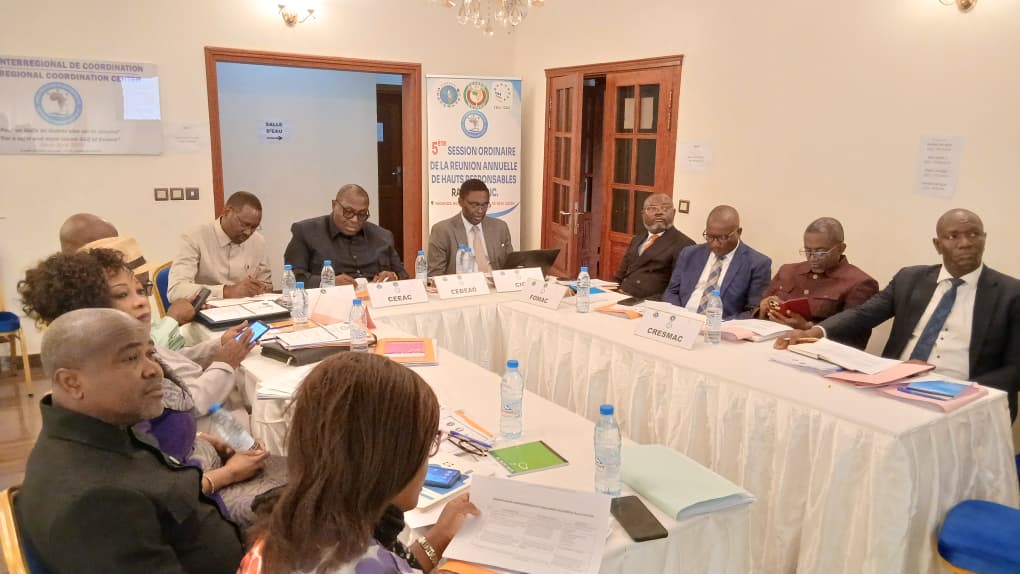
In the refined meeting rooms of the Interregional Coordination Centre (ICC) in Yaoundé, exchanges are intensifying between civilian experts, military officials, and diplomats from Central and West Africa. Badges representing different regional organisations cross paths in the corridors as delegations settle around working tables. At the opening of the preparatory sessions of the fifth Annual Meeting of Senior Officials of the Yaoundé Architecture, the tone is set for coordination and the strengthening of maritime security mechanisms in the Gulf of Guinea.
Over three days, Yaoundé is hosting this strategic meeting under the auspices of ECCAS, which currently holds the rotating presidency of the interregional platform. Alongside ECOWAS, the Gulf of Guinea Commission, and the Interregional Coordination Centre, participants are examining persistent security challenges in a maritime area that has become strategic for both African and global trade.
In his opening address, the ECCAS Commissioner for Political Affairs, Peace and Security, General Marcel Mapangou Moussadji, stressed the need to strengthen the operational effectiveness of the Yaoundé Architecture, established in 2013 following the joint summit of Heads of State of ECCAS, ECOWAS, and the Gulf of Guinea Commission (CGG). This regional framework was created to coordinate efforts against maritime piracy, illicit trafficking, and insecurity in the Gulf of Guinea, in line with United Nations Security Council resolutions 2018 (2011) and 2039 (2012).
At the core of the discussions is the functioning of the Interregional Coordination Centre, regarded as the cornerstone of the regional security system. Based in Yaoundé, the ICC ensures coordination between the maritime security centres of Central and West Africa, namely CRESMAC and CRESMAO. Experts are reviewing the 2024–2025 activity and financial reports, as well as the institution’s 2026 draft budget.
Discussions also focus on the transfer of the YARIS system, a regional maritime information-sharing platform developed with the support of the European Union under the GoGIN II programme. Now placed under the intellectual property of the EU–Africa Chamber of Commerce for a transitional period of five years, the platform remains a key tool for monitoring maritime spaces and sharing security alerts across the region.
In the meeting room, experts are also addressing the ICC’s funding challenges and the need to establish more sustainable financing mechanisms. Among the proposals under consideration are the creation of a tripartite financing mechanism involving ECCAS, ECOWAS, and the CGG, as well as the appointment of a permanent representative to the European Union in Brussels to enhance international resource mobilisation.
Participants are also expected to adopt a strategic plan covering the 2026–2030 period, aimed at modernising the operational capacities of the regional framework, improving information sharing, and strengthening cooperation with international partners, including the African Union and the United Nations.
According to several international reports, the Gulf of Guinea remains one of the most sensitive maritime zones in Africa in terms of transnational crime, despite a relative decline in piracy incidents in recent years thanks to regional cooperation mechanisms. For officials gathered in Yaoundé, strengthening the Yaoundé Architecture is now seen as a strategic priority for securing African maritime routes and protecting regional trade flows.

 La voix des entreprises
 Esther Grâce