

AIRPORT INFRASTRUCTURE : ADC Mobilizes CFAF 700 Million to Upgrade Bamenda International Airport

(LVDE) – Closed since 2020 due to the security crisis in Cameroon’s English-speaking regions, Bamenda International Airport exceptionally reopened on April 16, 2026, during the visit of Pope Leo XIV. Led by Aéroports du Cameroun (ADC S.A.), the rehabilitation project, estimated at CFAF 700 million, enabled the temporary reactivation of the airport after several years of inactivity.
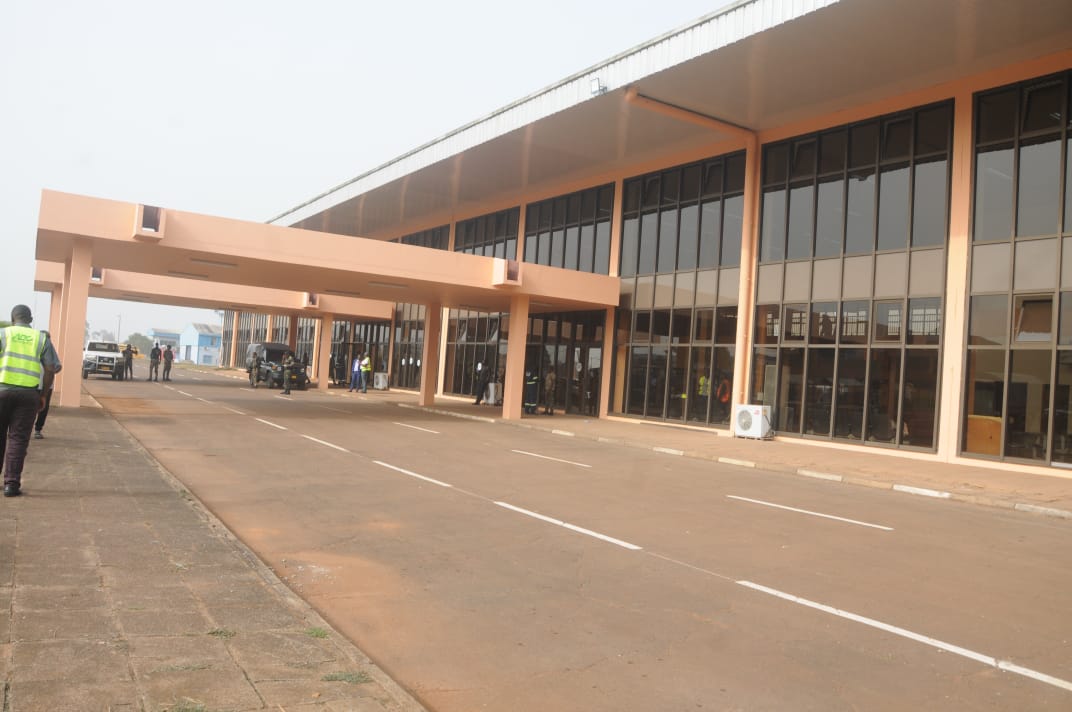
As preparations intensified ahead of the high-profile event, the airport site, which had remained dormant for years, came back to life. For several weeks, technicians, workers and security personnel worked continuously to restore minimum operational capacity to infrastructure that had gradually deteriorated since its closure.
In a North-West Region still marked by fragile security conditions, upgrading the airport represented a major challenge. The objective was to ensure operational readiness in line with the protocol and security requirements surrounding the reception of the Sovereign Pontiff and the official delegations expected in Bamenda.
The prolonged shutdown had led to significant deterioration of the facilities. Buildings showed visible signs of wear, while several technical installations had become obsolete. To address the situation, ADC S.A. launched an extensive rehabilitation program involving 31 projects carried out between January and April 2026.
The interventions covered all sections of the platform. The passenger terminal was renovated, reception areas refreshed, sanitary facilities rehabilitated and the hydraulic network restored through the replacement of defective equipment. Electrical installations and lighting systems were also upgraded to secure airport operations.
On the airside, teams carried out a full cleaning of the platform, renewed runway markings and maintained aeronautical pavements. Additional security measures were deployed to ensure smooth aircraft movements and safe operational conditions.
The VIP lounge was completely refurbished with new equipment intended to improve reception conditions for official guests. In addition, ground handling equipment was transferred from other airports across the country to strengthen logistical capacity during the reopening period.
According to Aéroports du Cameroun, the operation was entirely financed through the company’s own resources, with the total investment reaching CFAF 700 million and a reported execution rate of 100%. The achievement highlights the operator’s capacity to rapidly reactivate strategic infrastructure under constrained conditions.
At the national level, secondary airports managed by ADC play an important role in territorial connectivity despite irregular traffic linked to economic and security challenges. In this context, the reopening of Bamenda airport stands as a strong signal of territorial continuity.
Beyond the religious event that prompted the rehabilitation, the project has revived discussions on the long-term modernization of regional airport infrastructure in Cameroon, often weakened by limited usage but strategically important whenever national or international imperatives arise.

 La voix des entreprises
 Esther Grâce