

KRIBI AUTONOMOUS PORT : CFAF 350 Billion in Customs Revenue and an African Industrial Vision Showcased in Kigali

(LVDE) – In Kigali, Rwanda, the Port Autonome de Kribi (PAK) unveiled its industrial transformation strategy on May 14, 2026, during the Africa CEO Forum 2026. As a Gold Partner of the event, the Cameroonian port authority highlighted the rapid expansion of its logistics operations as well as the launch of the Kribi Port Industrial Zone (KPIZ), designed to strengthen industrialization and value creation in Central Africa.
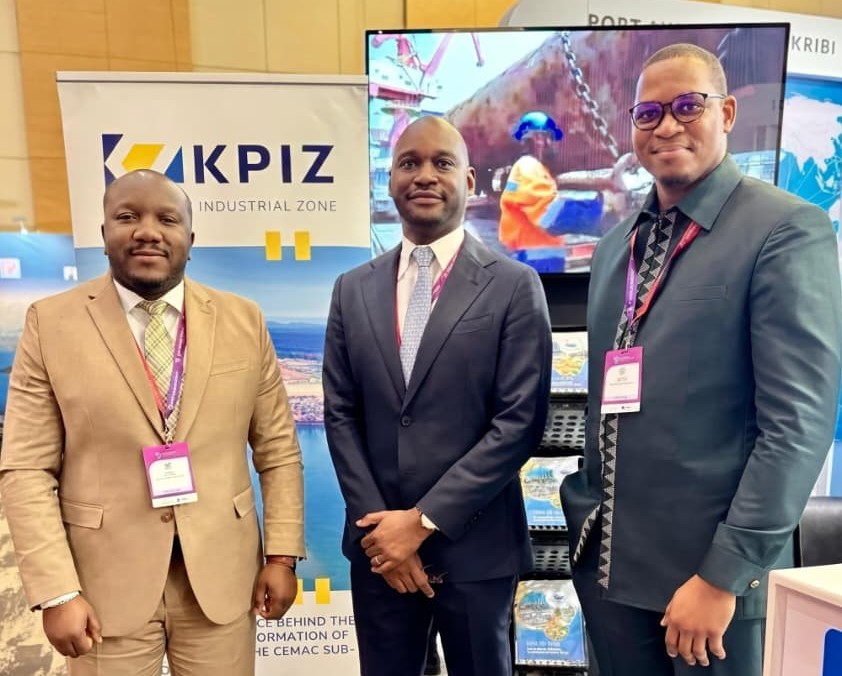
Inside the corridors of the Kigali Convention Centre, investors, policymakers and African business leaders engaged in discussions on the continent’s new growth drivers. This year, debates largely focused on economic sovereignty, local industrialization and the control of African logistics chains.
Amid this atmosphere, the Port Autonome de Kribi defended a clear ambition : transforming Cameroon’s industrial-port complex into a regional hub for productive transformation connected to African and international markets. Through exhibition stands and panel discussions, PAK officials presented Kribi as a model capable of integrating port services, industry, energy and logistics into a single economic ecosystem.
This strategy is backed by rapidly improving operational performance. In 2025, the port handled 555,398 TEUs and 12.7 million tons of cargo. According to figures presented in Kigali, the infrastructure generated CFAF 35.3 billion in revenue and contributed CFAF 350 billion in customs revenue to the Cameroonian State.
Since beginning commercial operations in March 2018, the deep-sea port of Kribi has gradually established itself as one of the leading logistics hubs in the Gulf of Guinea. Its deep-water terminals allow it to accommodate large-capacity vessels meeting international standards.
However, the challenge now extends beyond maritime traffic alone. With the creation of the Kribi Port Industrial Zone on February 26, 2026, Cameroon aims to accelerate local resource transformation and attract new industrial investments. Spread across 4,000 hectares, the integrated zone will combine logistics, manufacturing, energy and services around an estimated investment of €795 million.
According to projections presented at the forum, the KPIZ could generate between 110,000 and 150,000 direct and indirect jobs. Connected to Cameroon’s national transport network and serving the Central African hinterland as well as Nigeria, Kribi is positioning itself as a major driver of regional competitiveness.
In Kigali, PAK officials strongly defended one conviction: Africa will only strengthen its economic sovereignty by processing more of its resources locally and by controlling its strategic infrastructure. For Cameroon, Kribi is now emerging as one of the key instruments of that continental ambition.

 La voix des entreprises
 Esther Grâce