

ENERGY & GOVERNANCE : TRADEX strengthens its regional command structure with the appointment of André M. E. YINDA in Malabo

(LVDE) – Meeting in Douala on 9 June 2026 under the chairmanship of Emmanuel Patrick Mvondo, the Board of Directors of TRADEX Equatorial Guinea confirmed the appointment of Cameroonian executive André Marc Emmanuel YINDA as Managing Director. He succeeds Alain Francis Ngondi Owona, in a strategic move aimed at tightening operational control across the group’s Central African subsidiaries in a context of intensifying competition and increasing pressure on fuel supply chains.

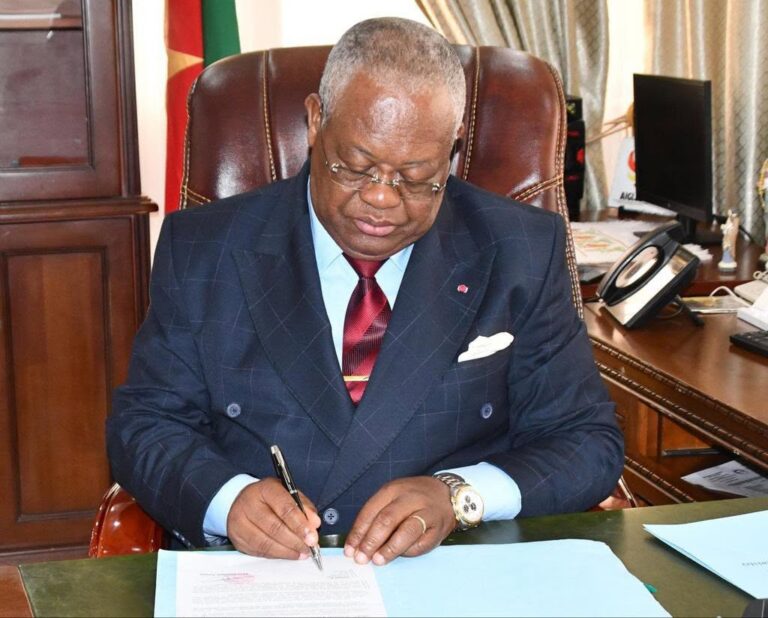
André Marc Emmanuel YINDA, Managing Director of TRADEX Equatorial Guinea.
The decision reflects a broader recalibration within TRADEX, where regional subsidiaries are being repositioned as integrated performance units rather than standalone operational entities. In an environment shaped by import dependency, volatile refining margins and logistical bottlenecks, governance efficiency is becoming as critical as physical distribution capacity.
André YINDA represents a textbook case of internal succession within a vertically structured energy group. At 48, he brings more than twenty years of continuous experience within TRADEX, progressing through audit, budgeting and management control functions. His trajectory reflects the group’s increasing reliance on internal technocratic expertise to secure financial discipline across its regional footprint.
Educated in France, with training in financial management and econometrics from Paris-based institutions, he has been closely involved in the development of TRADEX’s internal performance architecture. His contribution has centred on strengthening cost-monitoring systems, improving budget forecasting accuracy, and embedding key performance indicators into operational management. These tools have become essential in a downstream oil market exposed to recurring price shocks and shrinking downstream margins.
Beyond governance reform, TRADEX is also repositioning itself within the broader energy transition dynamics of Central Africa. The expansion of LPG distribution through branded solutions such as TradexGaz illustrates a gradual shift toward household energy markets, where demand is rising steadily due to urban growth, fuel substitution policies, and the slow reduction of biomass dependency in major cities.
Equatorial Guinea remains a structurally strategic but operationally constrained market. While the country benefits from hydrocarbons production capacity, its downstream segment continues to rely heavily on imported refined products and regional logistics networks. In this context, TRADEX’s role extends beyond commercial distribution to supply security management, a function that has become increasingly sensitive for governments in the sub-region.
At the level of the CEMAC zone, this appointment also highlights a deeper institutional trend: the concentration of managerial authority within parent companies to reinforce coherence across subsidiaries. Energy groups are progressively moving toward standardized governance models, aiming to reduce fragmentation in decision-making and improve cross-border operational efficiency.
This evolution is taking place in a region where energy infrastructure gaps remain significant. Fuel storage capacity, transport reliability and distribution networks continue to vary widely between countries, making private distributors key stabilizers of both industrial activity and household consumption. Their performance directly influences price stability and supply continuity.
For Cameroon, TRADEX’s home base, the appointment reinforces the country’s growing footprint in regional energy management. It reflects the emergence of Cameroonian managerial capital as a transferable asset within the CEMAC energy ecosystem, particularly in downstream operations where operational expertise is as important as capital strength.
Ultimately, the appointment of André YINDA signals a strategic preference for continuity over disruption. In a sector defined by volatility and structural constraints, TRADEX is betting on internal expertise, financial discipline and managerial cohesion as the foundations of its regional competitiveness.

 La voix des entreprises
 Esther Grâce