

CENTRAL AFRICA : AfDB projects 3.8% growth in 2026, driven by the oil sector

In its African Economic Outlook 2026 report, presented on May 27, 2026 in Brazzaville during the Annual Meetings of the African Development Bank (AfDB), the institution forecasts 3.8% growth for Central Africa in 2026, compared with 3.6% in 2025, mainly driven by the oil sector in a sub-region still heavily dependent on hydrocarbons.
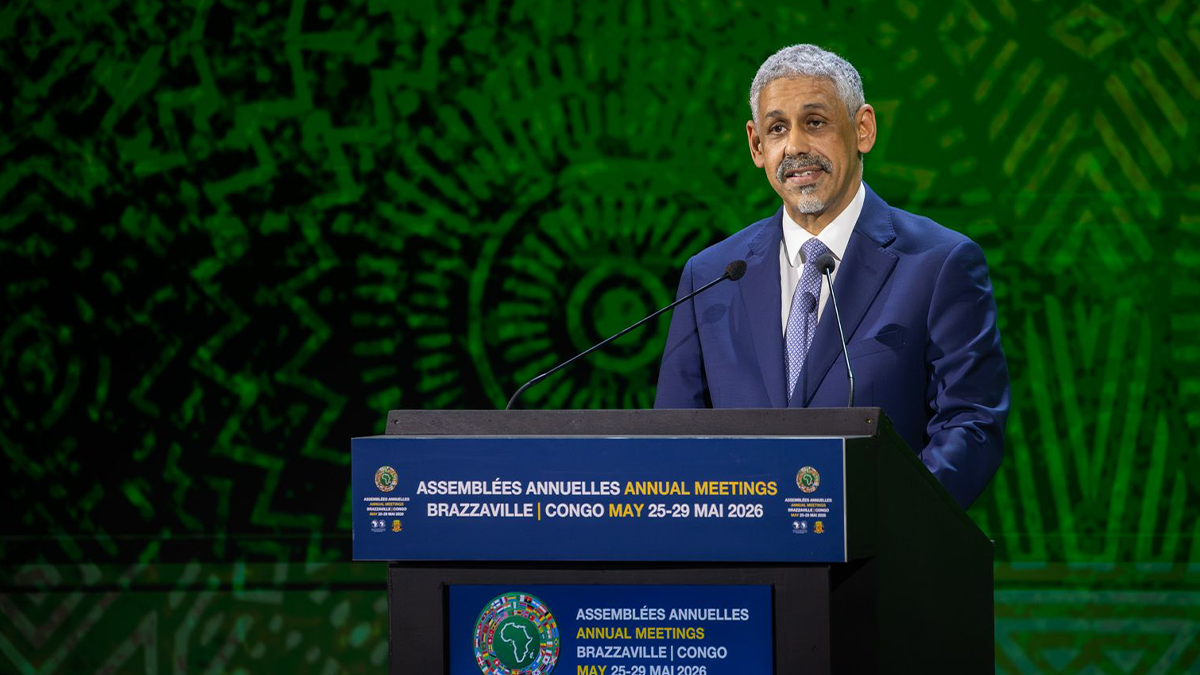
Sidi Ould Tah during the 61st Annual Meetings of the African Development Bank Group in Brazzaville.
Long exposed to commodity cycles, Central Africa is entering a modest but fragile recovery phase. According to the African Development Bank, regional growth is expected to reach 3.8% in 2026 and 4.1% in 2027, after an estimated 3.6% in 2025. This upward trajectory remains closely tied to oil market dynamics, which continue to anchor most economies within the CEMAC bloc.
The AfDB stresses that this performance remains structurally constrained by weak economic diversification. Sub-regional economies are still dominated by hydrocarbons and, to a lesser extent, extractive industries, while manufacturing capacity remains limited. This structure increases vulnerability to external shocks, despite ongoing efforts to boost public investment and local value chains.
National trajectories highlight these imbalances. The Democratic Republic of Congo is expected to maintain one of the continent’s strongest growth rates, supported by its mining sector—particularly copper and cobalt—driven by global demand linked to the energy transition. In contrast, Equatorial Guinea is set to remain in recession, with growth projections of -1.7% in 2026 and -1.4% in 2027, weighed down by the structural decline in oil production.
Within this uneven landscape, Cameroon confirms its position as the region’s leading economy, with projected growth of 4%. This momentum is driven by infrastructure investment, public spending, and domestic consumption. However, the African Development Bank warns of persistent fiscal and external deficits, which continue to weigh on macroeconomic stability.
At the continental level, the AfDB projects African growth at 4.2% in 2026, down from 4.4% in 2025. Despite geopolitical tensions, financial volatility, and tighter global financing conditions, the continent continues to show relative resilience, supported by domestic demand and selected sectoral growth engines.
Beyond growth figures, the central challenge remains domestic resource mobilization. The institution estimates that Africa could unlock up to $1,430 billion annually through improved tax collection, more efficient public investment, and stronger public-private partnerships.
Another underutilized lever is institutional savings. Pension funds, insurance companies, and sovereign wealth funds across Africa manage nearly $4,000 billion in assets, yet less than 2.7% is currently allocated to infrastructure and productive sectors. For the AfDB, this gap represents a major constraint on industrialization and structural transformation.
Finally, the report highlights several risks that could weaken the outlook : persistent tensions in the Middle East, financial market instability, rising energy and fertilizer prices, and tighter external financing conditions. Together, these factors could slow a recovery still heavily dependent on external variables.

 Esther Grâce
 La voix des entreprises