

SOCADEL : Oumarou Hamandjoda at the Helm of Cameroon’s Electricity Revival

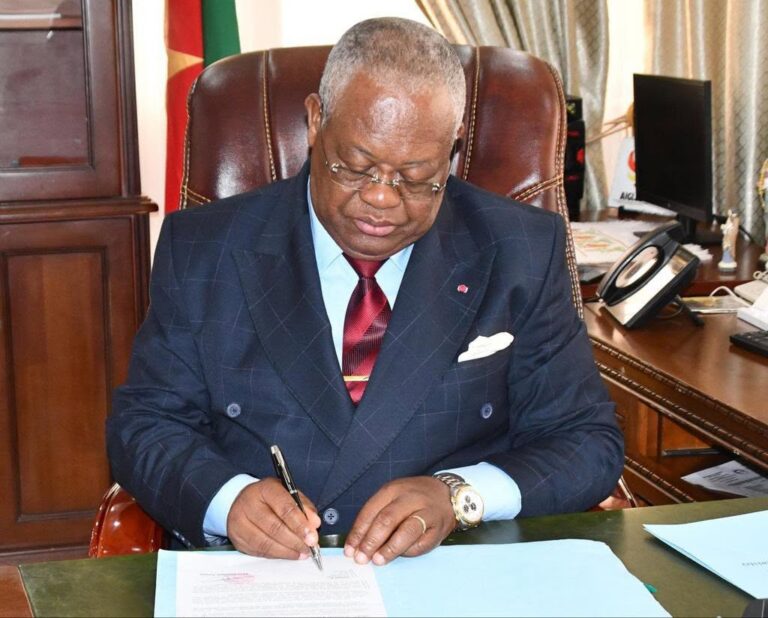
(LVDE) – Who is Oumarou Hamandjoda ? A hydroelectric engineer and senior figure in Cameroon’s energy sector, he was appointed Director General of the Cameroon Electricity Company (Socadel) in Yaoundé on May 5, 2026. He takes over the leadership of the new public company created following the renationalization of the electricity system, at a time marked by production shortages, rising urban demand and the strategic restructuring of a sector considered vital to the country’s economic growth.
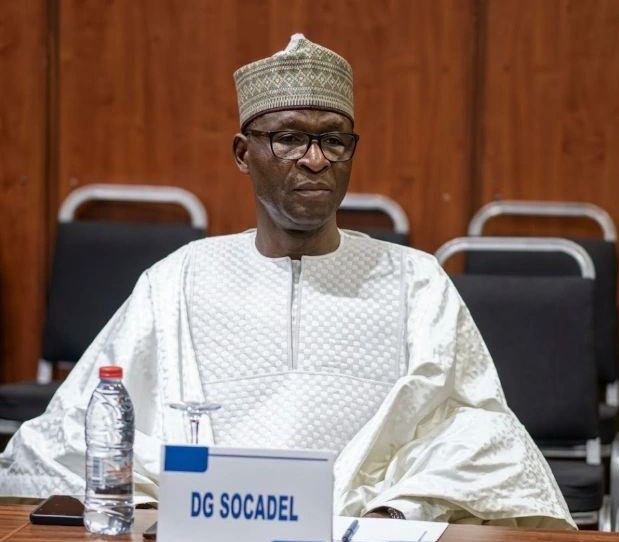
Oumarou Hamandjoda, Director General of the Cameroon Electricity Company (Socadel).
In the discreet offices where Cameroon’s energy future is shaped, governance changes are never mere appointments. They often reflect subtle yet decisive shifts in institutional balance. Oumarou Hamandjoda’s arrival at the head of Socadel fits into this broader process of silent but far-reaching restructuring within a sector under constant pressure.
On May 5, 2026, in Yaoundé, the government officially transformed the former private operator into an integrated public company. Socadel inherits an electricity system marked by a national production capacity estimated at around 1,500 MW, while demand regularly exceeds 1,800 MW during peak periods, according to combined sector data and World Bank analyses. This chronic imbalance has fueled power outages for years in the country’s major industrial cities.
It is within this environment that Oumarou Hamandjoda emerges. Trained as an engineer specializing in hydroelectric infrastructure, he belongs to a generation of technocrats who have accompanied the sector’s successive transformations since the first waves of reform. His career developed behind the scenes of major decision-making processes, within technical structures where the delicate balance between production, distribution and financial constraints is managed.
Before his appointment, he held several operational positions within Cameroon’s electricity ecosystem, contributing to the supervision of dam management projects and the optimization of interconnected networks. This experience gave him a deep understanding of the system’s structural weaknesses, particularly the country’s dependence on hydropower, which accounts for nearly 70% of the national energy mix and leaves Cameroon vulnerable to climatic and hydrological fluctuations.
The creation of Socadel marks a clear political turning point: the return of the State to a sector regarded as strategic for industrialization. Authorities are banking on a deep restructuring process aimed at reducing technical and commercial losses, estimated at between 20% and 25% of the electricity produced, according to recent sector reports. The stated objective is twofold: securing power supply for industrial zones while improving electricity access in rapidly expanding urban areas.
Within this rebuilding framework, Oumarou Hamandjoda appears more as a figure of technical continuity than of rupture. His appointment reflects the government’s preference for internal expertise over imported or purely managerial governance. It is a choice rooted in Cameroon’s administrative tradition, where major public enterprises are often entrusted to engineers from within the system.
Yet the challenge ahead goes far beyond technical mastery alone. It requires the ability to transform a structurally constrained institution into a driver of economic performance. In a country where industrialization still heavily depends on the reliability of electricity supply, energy remains a direct indicator of competitiveness.
In the months ahead, Socadel will be judged on its capacity to reduce outages, stabilize investments and improve service quality. For Oumarou Hamandjoda, the challenge is both technical and symbolic: proving that renationalization is not merely a legal change of status, but a genuine effort to transform a sector essential to Cameroon’s economic future.

 Esther Grâce
 La voix des entreprises