

DIGITAL CULTURE : Añdjeun launches a digital library to promote African knowledge

(LVDE) – Presented on May 6, 2026, in Douala before journalists, cultural stakeholders and online participants, the platform Añdjeun (https://www.andjeun.com) aims to expand access to Africa’s intellectual heritage through a digital library, training modules and an interactive event space. Available in both French and English, the initiative already claims more than 3,500 works dedicated to African culture, social sciences and practical knowledge.
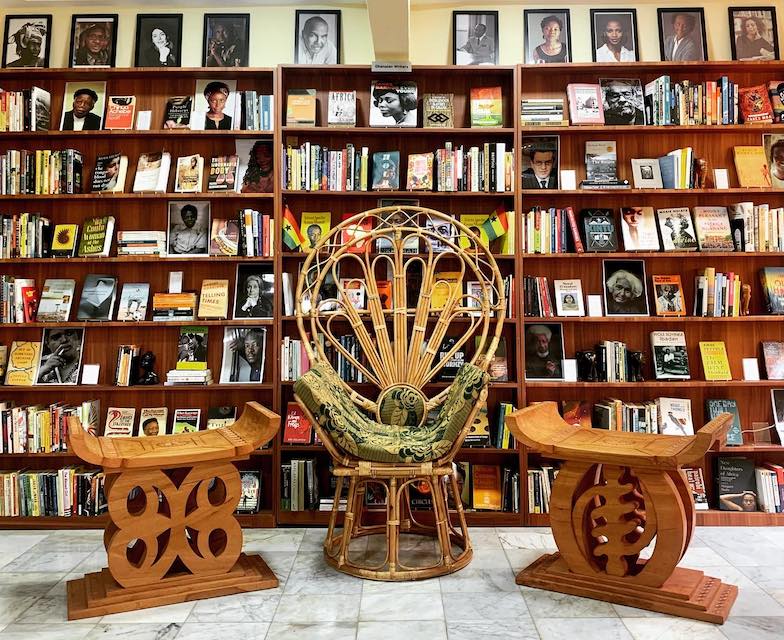
In a modestly arranged venue in Douala, the official launch of the platform Añdjeun (http://www.andjeun.com) on May 6, 2026, brought together journalists, academics, cultural actors and online participants connected via Zoom. Behind this digital initiative lies a clearly stated ambition : to create an online space capable of preserving, disseminating and modernizing access to African intellectual heritage in an environment largely dominated by major international content platforms.
Designed as an evolving digital library, Añdjeun is structured around three main components : a digital library, a training space and an event platform. The technical presentation was conducted by Ronald Ayée, alongside Kwezi and Boris, who oversees the project’s technical operations. According to the developers, the platform is directly accessible through a web browser and is optimized for both desktop and mobile use.
At the core of the project is a digital library already featuring more than 3,500 titles, with a target of reaching 4,500 works during the first week following the launch. The catalog includes African literature, philosophy, political essays, as well as practical content related to agriculture, livestock farming and beekeeping. The project’s promoters say they prioritize works focused on the promotion of African cultures and indigenous knowledge systems, within a broader vision of intellectual and cultural transmission.
Beyond standard digital reading, the platform introduces interactive features inspired by academic research tools. Users can build personal libraries, annotate books, classify quotations using color codes and quickly retrieve specific excerpts. For Gabriel Fopa, these tools represent a strategic time-saving mechanism for students, researchers and professionals involved in analytical or documentation work.
The training section, still in its expansion phase, already offers content related to agriculture, livestock farming and apiculture. The event space enables the organization of hybrid conferences accessible both physically and remotely through secure access codes. The project leaders also announced the gradual integration of conference and webinar archives in order to create a searchable digital memory of intellectual discussions hosted by the community.
The platform’s business model is based on an annual subscription system set at 5,000 FCFA for adults and 2,500 FCFA for young users holding Cameroon’s biometric youth card. Part of the content nevertheless remains freely accessible to broaden the project’s audience. Available in French and English, Añdjeun promotes a bilingual approach aligned with Cameroon’s and Central Africa’s sociolinguistic realities.
Beyond Cameroon, the promoters are already considering expansion into Chad, the Central African Republic and Republic of the Congo. This regional strategy aims to build an African community of readers, contributors and content producers capable of fostering intellectual exchanges rooted in African realities. In a context of accelerating digital transformation, Añdjeun intends to position itself as a new platform for the dissemination of African knowledge in the digital age.

 Esther Grâce
 La voix des entreprises