

CAMEROON : Former President of the CEMAC Commission, Antoine Ntsimi Appointed Chairman of Socadel

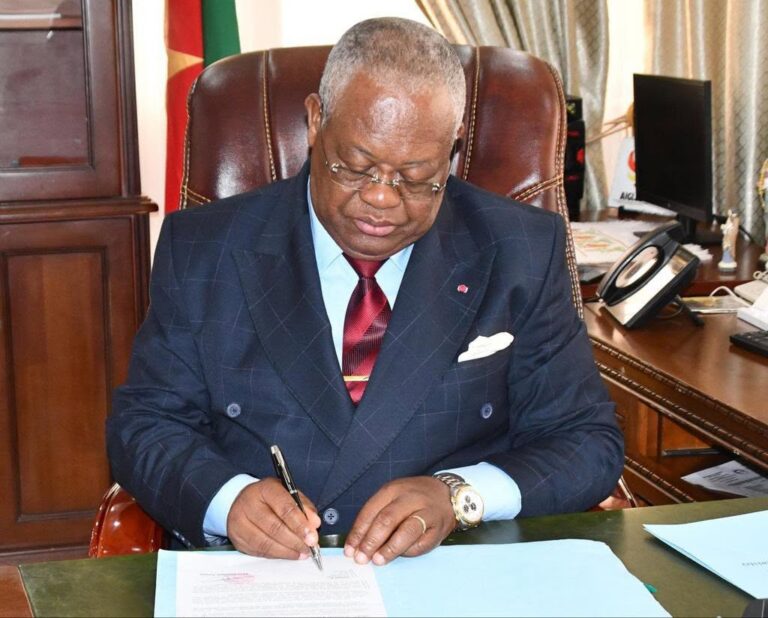
(LVDE) – Who is Antoine Ntsimi? A former Cameroonian Minister of Finance, former President of the CEMAC Commission and a prominent figure within Central Africa’s regional economic circles, he was appointed Chairman of the Board of Directors of Socadel in Cameroon in May 2026. The appointment comes in Yaoundé amid the renationalization of the electricity sector and the strategic reorganization of the country’s energy apparatus.
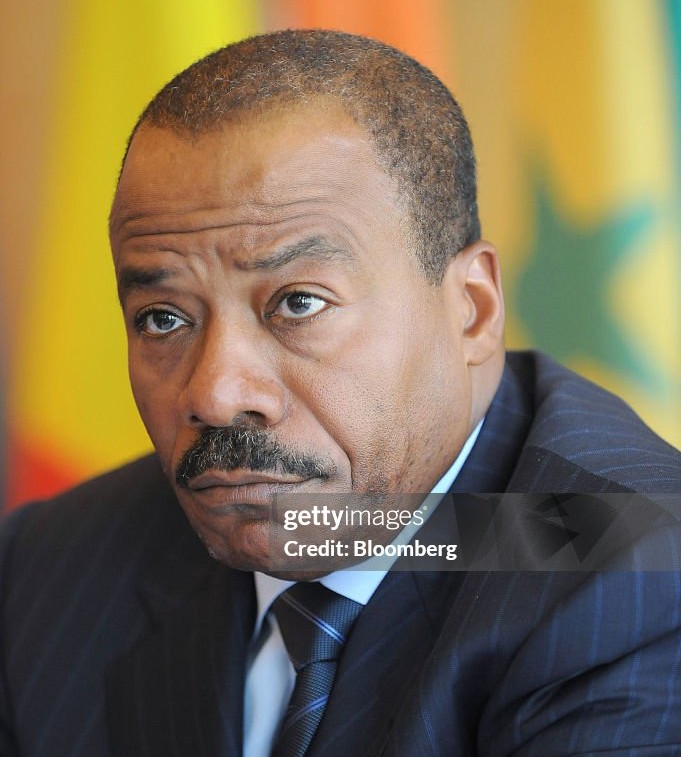
Antoine Ntsimi, Chairman of the Board of Directors of the Cameroon Electricity Company (SOCADEL)
Within Cameroon’s major institutional balances, certain appointments go far beyond mere administrative decisions. Antoine Ntsimi’s appointment as Chairman of Socadel’s Board of Directors falls into this category of high-stakes economic and political choices. Behind the decision lies the State’s determination to place the public electricity company under the supervision of a man seasoned in financial negotiations, regional arbitrations and major issues relating to economic sovereignty.
At the helm of the new structure born from the State’s takeover of the electricity sector, Antoine Ntsimi brings a rare profile within the Cameroonian administration: that of a technocrat who has navigated international finance, public governance and regional integration. A former Minister of Economy and Finance in the 1990s, he notably established himself as one of the architects of the institutional consolidation of the Central African Economic and Monetary Community (CEMAC). Between 2007 and 2012, he served as President of the CEMAC Commission, a period during which he contributed to reviving regional economic integration projects, implementing the community biometric passport and advancing discussions on the free movement of goods and capital across the sub-region.
His appointment comes at a time when Cameroon is seeking to redefine its energy model. After years of tensions surrounding electricity distribution, marked by recurrent power outages and criticism over system performance, authorities have chosen to deeply restructure the sector. Socadel inherits an electricity system facing a persistent gap between supply and demand. According to several sector reports, national demand regularly exceeds available capacity during peak consumption periods, particularly in the industrial hubs of Douala and Yaoundé.
The challenge is considerable for an economy whose industrial ambitions depend largely on energy stability. Yet Cameroon possesses one of Central Africa’s largest hydroelectric potentials, estimated at more than 20,000 MW of exploitable capacity according to various institutional studies. However, shortcomings in transmission infrastructure, technical network losses and delays in key investments continue to limit the overall performance of the energy sector.
Within this rebuilding framework, Antoine Ntsimi’s role appears less operational than strategic. As Chairman of the Board, he will be expected to help secure the company’s governance, restore its financial credibility and support the State’s modernization ambitions. His experience with financial institutions and regional mechanisms could also prove valuable in negotiations with donors and technical partners expected to support future energy investments.
For Yaoundé, the appointment also carries symbolic significance. By entrusting Socadel’s supervision to a figure drawn from regional integration circles, the government is sending a message of stability and expertise at a time when energy issues are becoming central to Africa’s economic competitiveness. Antoine Ntsimi thus joins the ranks of senior state officials called back to the forefront to oversee sectors regarded as strategic to national sovereignty.

 Esther Grâce
 La voix des entreprises