

CAMEROON : Patrice Yantho, the shadow engineer locking the financial equations of Africa’s industrialization

(LVDE) – Patrice Yantho Yondeu is a Cameroonian financier and founder of JMJ Africa, a consultancy active in Cameroon and several African countries. In an African context marked by a chronic shortage of industrial financing, he has specialized in structuring complex projects linking states, private investors and international development institutions. His name regularly appears in business and industrial circles engaged in the transformation of local economies.

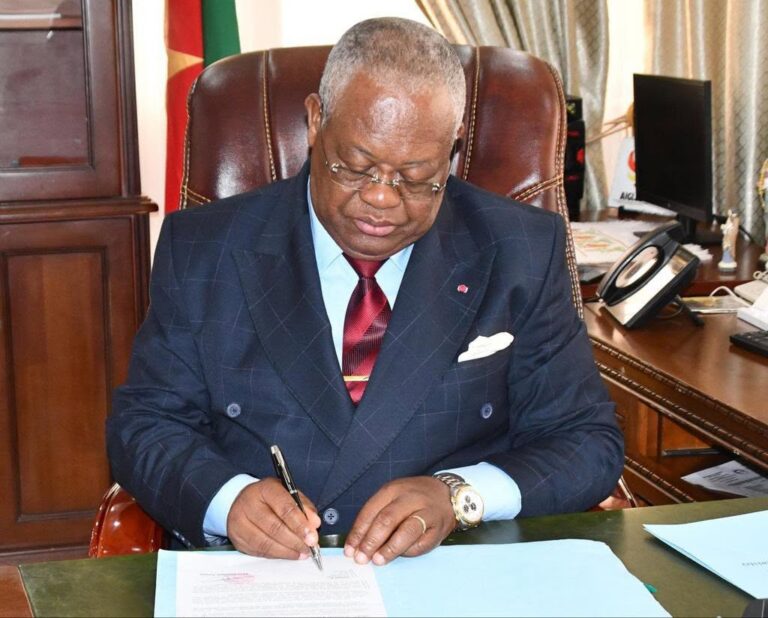
Patrice Yantho, founder of JMJ Africa.
He does not run a factory, does not chair a bank, and rarely features in public debates. Yet in the industrial trajectories that take shape in Cameroon and beyond, his imprint is often decisive. Patrice Yantho Yondeu belongs to that category of behind-the-scenes financiers who do not produce projects but determine whether they exist at all.
His career is rooted in the conventional standards of corporate finance. Trained in financial structuring, he began at Afriland First Bank, before joining the international consulting firm KPMG, where he worked on assignments across Francophone Africa. It is in this environment that he specialized in complex transactions involving infrastructure, energy and heavy industry—fields in which financial engineering becomes a negotiation language between actors with divergent interests.
Early on, he positioned himself in a demanding niche: making projects bankable in economies where perceived risk remains high. This approach led him to work on structures involving public administrations, private investors and development institutions, with a constant objective: transforming political intentions into bankable assets.
The creation of JMJ Africa marked a strategic turning point. The firm, which he founded after turning down several senior positions in banking and international consulting, does not present itself as a direct financier but as an engineering platform. Its mission is to translate industrial projects into structures that are understandable and acceptable to financial markets. An intermediate function, yet decisive in economies where the structuring deficit is often more binding than the capital deficit.
In Cameroon, this expertise has gradually taken hold across several industrial value chains. Cocoa, palm oil, aluminium, steel: sectors where the challenge is no longer only production, but also organization and financing. JMJ Africa works on structuring value chains, securing financial flows, and integrating projects into sustainable investment frameworks. In this logic, structuring acts as a filter: without a solid financial model, a project does not pass the investor threshold.
This influence extends beyond private consultancy. Patrice Yantho coordinates the Organisation camerounaise des industries de transformation des métaux (Cameroonian Organisation of Metal Transformation Industries), which brings together major players in the steel sector. Together, these industries represent hundreds of billions of CFA francs in investments and several thousand direct jobs, in an environment marked by volatile energy costs and industrial inputs.
His role within employer associations, particularly in discussions on competitiveness and industrial policy, reinforces this hybrid positioning: financial technician on one side, economic policy contributor on the other. In a continent where industrialization strategies still struggle to translate into robust productive capacity, his message remains consistent: without strong financial engineering, industrialization remains an aspiration.
The recognition of JMJ Africa as Cameroon’s best investment advisory firm in 2024 by investment promotion authorities formalized this trajectory. Beyond the award, it reflects a broader shift: the emergence in Africa of a market for financial structuring, where value lies not only in capital raised, but in the ability to make it investable.
This dynamic is embedded in a continental reality documented by international financial institutions. The African Development Bank estimates annual infrastructure financing needs at tens of billions of dollars, a structural gap between needs and available funding that reinforces the role of financial engineers in economic decision-making chains.
It is precisely within this intermediary space that Patrice Yantho operates. Neither traditional banker, nor industrialist, nor simple consultant, he occupies a translation function between political ambition and financial constraint. A discreet but structuring position, where the success of a project depends less on its idea than on its transformation into a credible economic model.
In this economy of transformation, his role recalls an often underestimated truth: before factories, there are structures. And before structures, there are those who know how to make them possible.

 Esther Grâce
 La voix des entreprises