

YOUTH ENTREPRENEURSHIP : UBA Cameroon and MINJEC strengthen their partnership for financial inclusion

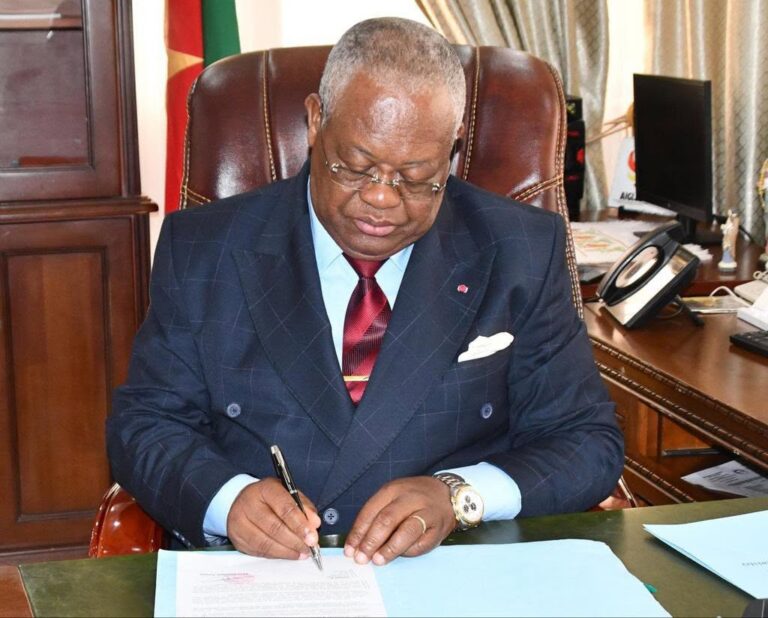
(LVDE) – On April 8, 2026, in Yaoundé, United Bank for Africa (UBA) Cameroon and the Ministry of Youth and Civic Education (MINJEC) renewed their strategic partnership aimed at promoting financial inclusion and the socio-economic integration of young people. Signed by Mounouna Foutsou and Jeanne Anie Ekeme, the agreement seeks to expand access for people aged 15 to 35 to banking services and economic opportunities, notably through the Youth Biometric Card.
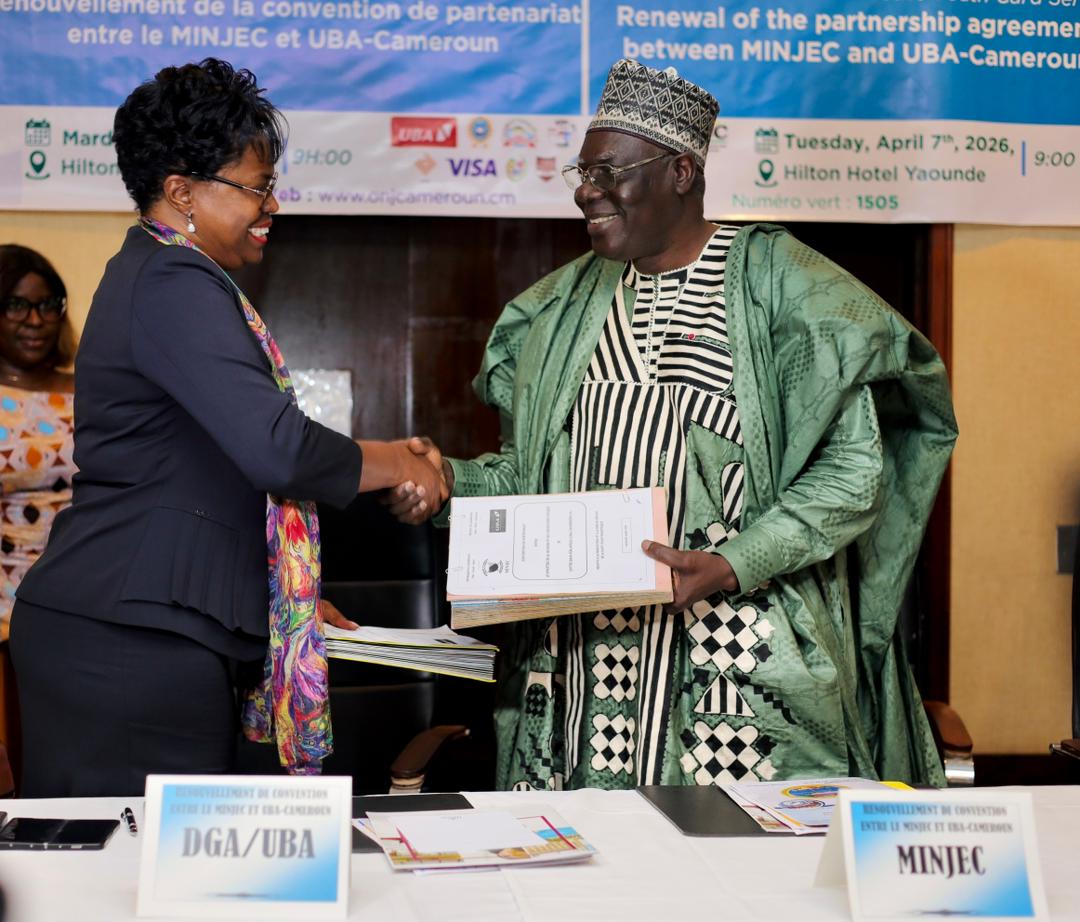
In Yaoundé, the renewal of the partnership between UBA Cameroon and MINJEC marks a new milestone in Cameroon’s youth financial inclusion policy. In a context where more than 60% of the population is under 25, according to data from the National Institute of Statistics, access to financial services appears to be a key lever for supporting entrepreneurship and reducing youth unemployment.
Concluded for an initial renewable period of three years, the agreement signed on April 8, 2026, is part of the continuity of public programmes such as the National Youth Policy and the Special Youth Employment Promotion Plan. It aims to facilitate the integration of young people into the formal economic system by providing them with tailored tools adapted to their needs.
At the core of this initiative is the Youth Biometric Card, designed as an interface between beneficiaries and financial services. Targeting young people aged 15 to 35, including those in the diaspora, it provides access to a range of banking services and economic opportunities. The initiative aims to connect a significant segment of the population to the financial ecosystem, which remains largely inaccessible for some young people.
As part of this collaboration, UBA Cameroon is offering a diversified package combining financial and non-financial services. Beneficiaries will have access to co-branded VISA cards, preferential-rate loans, as well as training programmes and capacity-building initiatives. The objective is to promote income-generating activities and improve employability.
Beyond banking instruments, the initiative also includes internships, conferences, and exchange platforms dedicated to entrepreneurship. These actions aim to develop young people’s skills and prepare them for labour market requirements. According to the World Bank, financial inclusion remains a major challenge in Sub-Saharan Africa, where nearly 45% of adults still lack access to formal financial services.
For UBA Cameroon, this partnership reinforces its position as a key player committed to socio-economic development. For its part, MINJEC sees it as a structuring tool to accelerate youth empowerment and support public employment policies.
In a context marked by the rise of digital technology and the transformation of economic models, this public-private alliance appears as a concrete response to inclusion challenges. It also reflects a shared ambition to build a more accessible ecosystem capable of sustainably integrating young people into national growth dynamics.


 Esther Grâce
 La voix des entreprises