

AGRIBUSINESS : Cameroon Bets on Plantain to Create 10,000 Youth-Led Businesses by 2030

(LVDE) – In Yaoundé on June 3, 2026, Cameroon’s Minister of Agriculture and Rural Development, Gabriel Mbaïrobe, launched a new phase of the national plantain incubation programme by distributing agricultural starter kits to 500 students from five private higher education institutions. Led by the Cameroon Plantain Value Chain Association (FBPC), the initiative aims to create 10,000 youth-owned agribusinesses by 2030 while strengthening regional exports, particularly to neighboring Gabon.
For decades, plantain has occupied a central place in Cameroon’s food culture, serving as a staple crop for millions of households. Today, however, policymakers and private-sector actors are seeking to transform the commodity from a subsistence product into a strategic agribusiness industry capable of generating jobs, attracting investment and expanding regional trade.
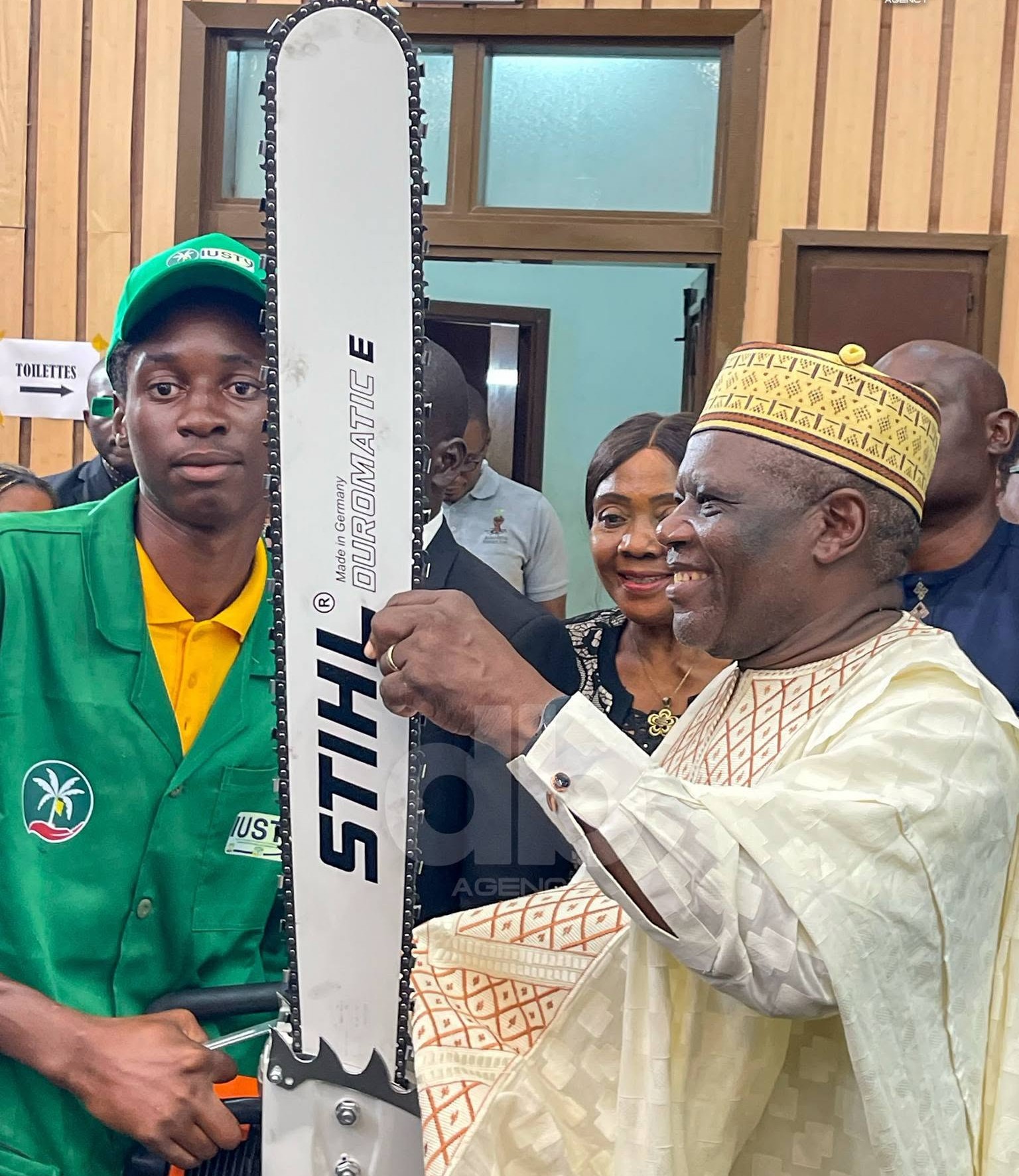
That ambition took a new step forward on June 3 in Yaoundé, where 500 students received agricultural starter kits under the latest phase of a national incubation programme dedicated to the plantain sector. The initiative reflects a broader effort to reposition agriculture as a driver of entrepreneurship and economic diversification at a time when youth unemployment remains one of Cameroon’s most pressing socio-economic challenges.
Implemented by the Cameroon Plantain Value Chain Association (FBPC) under the leadership of Samuel Tony Obam Bikoué, the programme combines technical training, agricultural production, business development and market access within a single incubation model. The 500 beneficiaries, drawn from five private higher education institutions, form the fifth cohort of the initiative, officially named the “Paul Biya Promotion.”
Unlike traditional agricultural support programmes, the project focuses on building commercially viable enterprises rather than simply increasing production volumes. Participants receive technical supervision, entrepreneurial coaching and access to guaranteed purchase agreements designed to reduce market uncertainty once production begins.
The long-term objective is ambitious : support the creation of 10,000 youth-led agribusinesses within five years. By linking production directly to structured commercial outlets, the programme seeks to address one of the biggest obstacles facing young farmers across Africa—access to reliable markets.
The economic projections are substantial. For the current cohort alone, organizers estimate revenues of at least CFAF 855 million within eleven months of cultivation. These forecasts are based on the distribution of 250,000 high-yield tissue-cultured plantlets, equivalent to 500 plants per participant, cultivated on land made available by partner institutions.
The initiative also places strong emphasis on value addition. Beyond cultivation, the programme envisions the gradual establishment of semi-industrial processing units within participating campuses. These facilities will produce plantain flour, chips and other processed goods capable of generating higher margins than raw agricultural products.
This approach addresses a longstanding weakness of Cameroon’s agricultural sector : post-harvest losses. By increasing local processing capacity, stakeholders hope to improve profitability while reducing waste throughout the value chain.
A distinctive feature of the programme is its revenue-sharing model. Under the proposed framework, young entrepreneurs will retain 40% of profits generated by their activities, while partner institutions and the incubation structure will each receive 30%. Organizers believe this arrangement will ensure long-term commitment from all parties involved in the development of the businesses.
Export development is another strategic pillar. According to project leaders, a significant share of future production will target the Gabonese market. The choice reflects both geographic proximity and strong demand. Gabon remains one of Cameroon’s key trading partners in Central Africa and continues to rely heavily on imported agricultural products to meet domestic consumption needs.
For Cameroon, expanding plantain exports could contribute to strengthening regional trade flows within the Central African Economic and Monetary Community (CEMAC) while generating additional foreign exchange earnings. It also aligns with broader ambitions to position the country as a leading supplier of agricultural products within the region.
The plantain incubation programme illustrates a shift in Cameroon’s agricultural policy from production-centered interventions toward value-chain development. Rather than treating agriculture solely as a food security issue, authorities increasingly view it as a platform for entrepreneurship, industrialization and export growth.
If successfully implemented, the initiative could generate multiple economic benefits: job creation for young people, expansion of agro-processing activities, increased regional exports and greater integration of agriculture into formal value chains. The target of 10,000 youth-led enterprises represents not only an employment strategy but also an attempt to build a new generation of rural entrepreneurs.
The programme’s emphasis on guaranteed market access and local processing is particularly significant. Across Africa, many agricultural projects fail because production grows faster than demand or because farmers remain disconnected from commercial networks. By addressing both production and commercialization simultaneously, the FBPC model seeks to improve business sustainability.
Ultimately, Cameroon’s plantain strategy is about more than agriculture. It is a test case for whether agribusiness can become a genuine engine of economic transformation, capable of turning a traditional staple crop into a source of industrial growth, regional trade and youth-driven prosperity.

 La voix des entreprises
 Esther Grâce