

CEMAC : BEAC Puts Productive Investment Refinancing on Hold as It Rethinks Industrial Finance

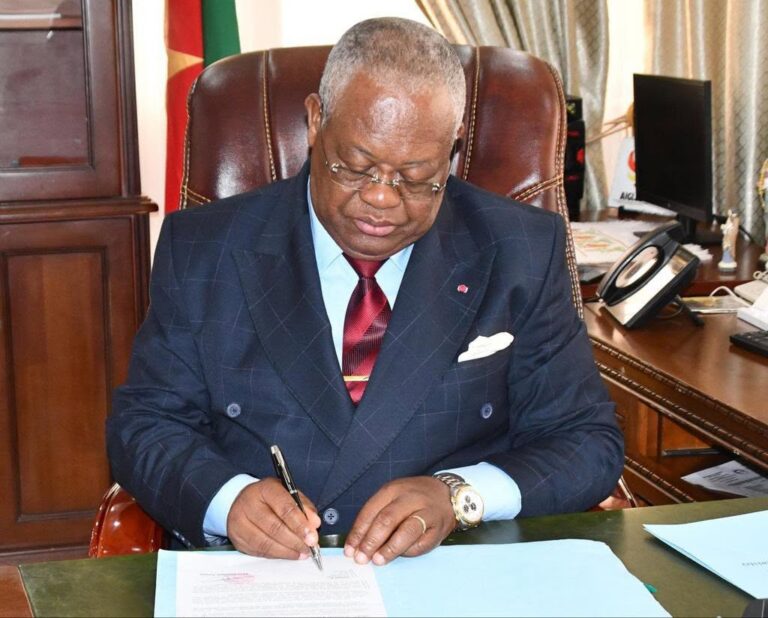
(LVDE) – Meeting on April 2, 2026, members of the Monetary Policy Committee of the Bank of Central African States (BEAC) decided to suspend new applications under the special refinancing facility dedicated to productive investments across the CEMAC region. The temporary freeze is intended to pave the way for a comprehensive overhaul of a financing instrument that has recently emerged as a key driver of industrial and infrastructure investment in Central Africa.

The decision by the Bank of Central African States (BEAC) to suspend its special refinancing window for productive investments marks a significant moment in the evolution of monetary policy within the Central African Economic and Monetary Community (CEMAC). While the measure may appear restrictive at first glance, it reflects a broader effort to modernize the region’s financial architecture and improve the effectiveness of long-term investment financing.
For decades, the facility—commonly referred to as the former “Window B”—served as a dedicated mechanism through which commercial banks could access central bank liquidity to finance medium-term productive projects. Designed in the 1990s, the instrument was intended to channel credit toward sectors capable of supporting economic diversification, industrialization and job creation.
Yet the economic landscape of Central Africa has changed considerably since then. Financial markets have become more sophisticated, banking institutions have expanded their balance sheets, and governments increasingly rely on private-sector participation to finance infrastructure, mining, telecommunications and agro-industrial projects. In this new environment, BEAC considers the original framework no longer fully adapted to contemporary financing needs.
The mechanism operated under strict eligibility criteria. Commercial banks could obtain refinancing covering up to 60% of the total cost of approved projects, while decision-making authority was distributed according to the size of the financing request. Projects worth up to CFAF 20 billion could be approved directly by the Governor, while larger operations required validation by the Monetary Policy Committee.
For many years, the facility remained largely underutilized. Banks often preferred conventional lending channels, while the administrative requirements associated with the refinancing window limited its attractiveness. However, the situation changed markedly in 2025 following an awareness campaign conducted by BEAC.
The result was a surge in demand. Commercial banks increasingly turned to the facility to support strategic investments across the region. According to available figures, approximately CFAF 122 billion in financing was mobilized through the mechanism during 2025 alone.
Several flagship projects benefited from the programme. Among them were CFAF 41.2 billion allocated to the Bipindi-Grand Zambi mining project in Cameroon, CFAF 31.3 billion supporting investment programmes by CAMTEL, and CFAF 30 billion dedicated to a mining venture in the Republic of Congo through CCA Bank. Afriland First Bank also sought CFAF 20 billion in refinancing for an industrial palm oil project linked to SODECOTON.
These transactions transformed what had long been a marginal policy tool into an increasingly important source of long-term financing for productive sectors. As a result, the suspension arrives at a sensitive moment, just as commercial banks had begun incorporating the facility into their investment strategies.
For BEAC, however, the objective is not to reduce support for economic activity but to redesign the mechanism for greater efficiency. Governor Yvon Sana Bangui has repeatedly emphasized the need to adapt monetary instruments to a changing economic environment characterized by digital finance, rising systemic risks and the growing complexity of credit markets.
The challenge facing policymakers is considerable. CEMAC economies continue to face a substantial financing gap in infrastructure, industrial development and economic diversification. Across the region, investment needs amount to hundreds of billions of CFA francs annually, while access to long-term financing remains limited.
For businesses, particularly those operating in capital-intensive sectors such as mining, telecommunications, energy and agribusiness, the temporary suspension introduces a degree of uncertainty. Although BEAC has confirmed that applications submitted before the freeze will continue to be processed, investors are awaiting clarity regarding the future structure of the facility and the timeline for its relaunch.
At the regional level, the episode highlights a broader policy dilemma confronting many African central banks : how to reconcile financial stability with the imperative of financing structural transformation. Prudential discipline remains essential to safeguarding monetary stability, yet excessive caution can constrain investment in sectors critical to long-term growth.
Ultimately, the suspension of the refinancing window should be viewed less as a retreat than as a strategic recalibration. The success of the reform will depend on BEAC’s ability to design a more modern, flexible and scalable financing instrument—one capable of supporting industrialization while preserving macroeconomic stability across the six-member CEMAC bloc.

 La voix des entreprises
 Esther Grâce