

CAMEROON : Kribi accelerates its rail shift to support the expansion of its port

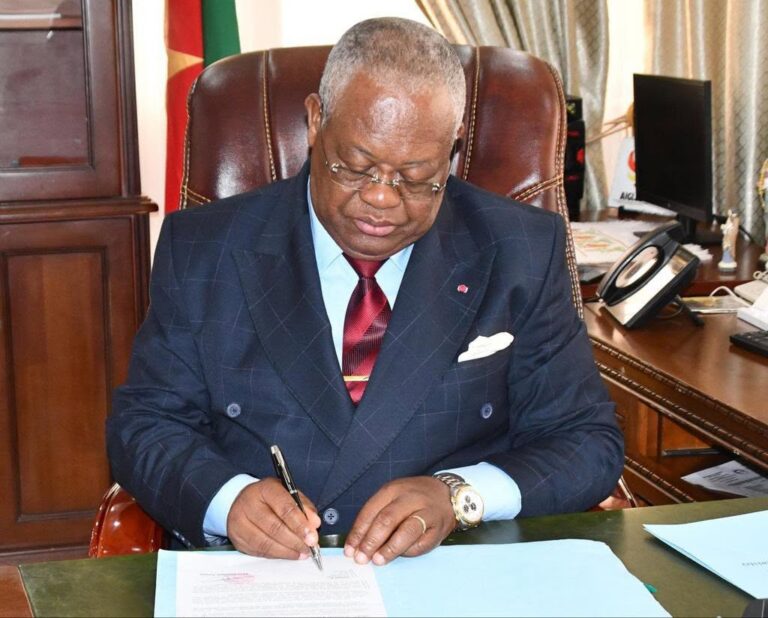
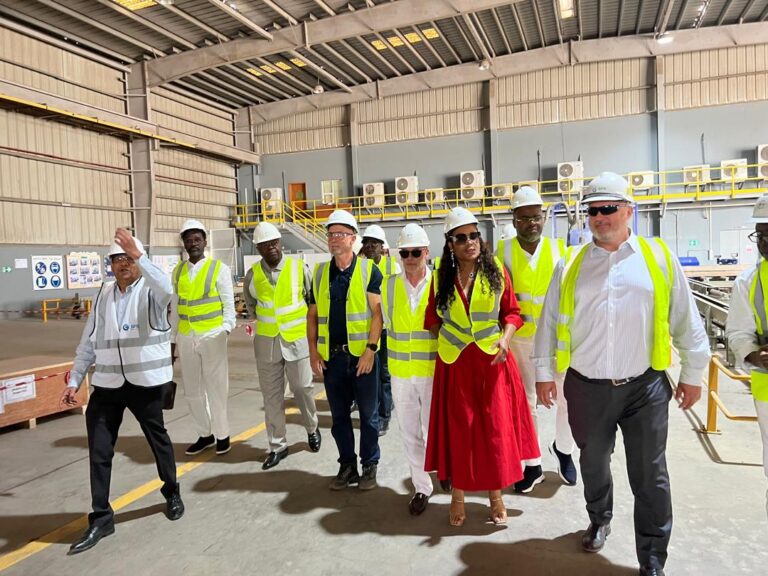
(LVDE) – Meeting in Yaoundé on June 4, 2026, the State of Cameroon, the Kribi Port Authority (PAK), CAMALCO and Africa Global Logistics (AGL) signed a memorandum of understanding (MoU) for the development of the Édéa–Kribi–Lolabé–Campo railway line. The initiative aims to strengthen the inland connectivity of Kribi’s deep-water port and support the scaling-up of cargo volumes estimated at 12.7 million tonnes, amid growing pressure on the southern road corridor.
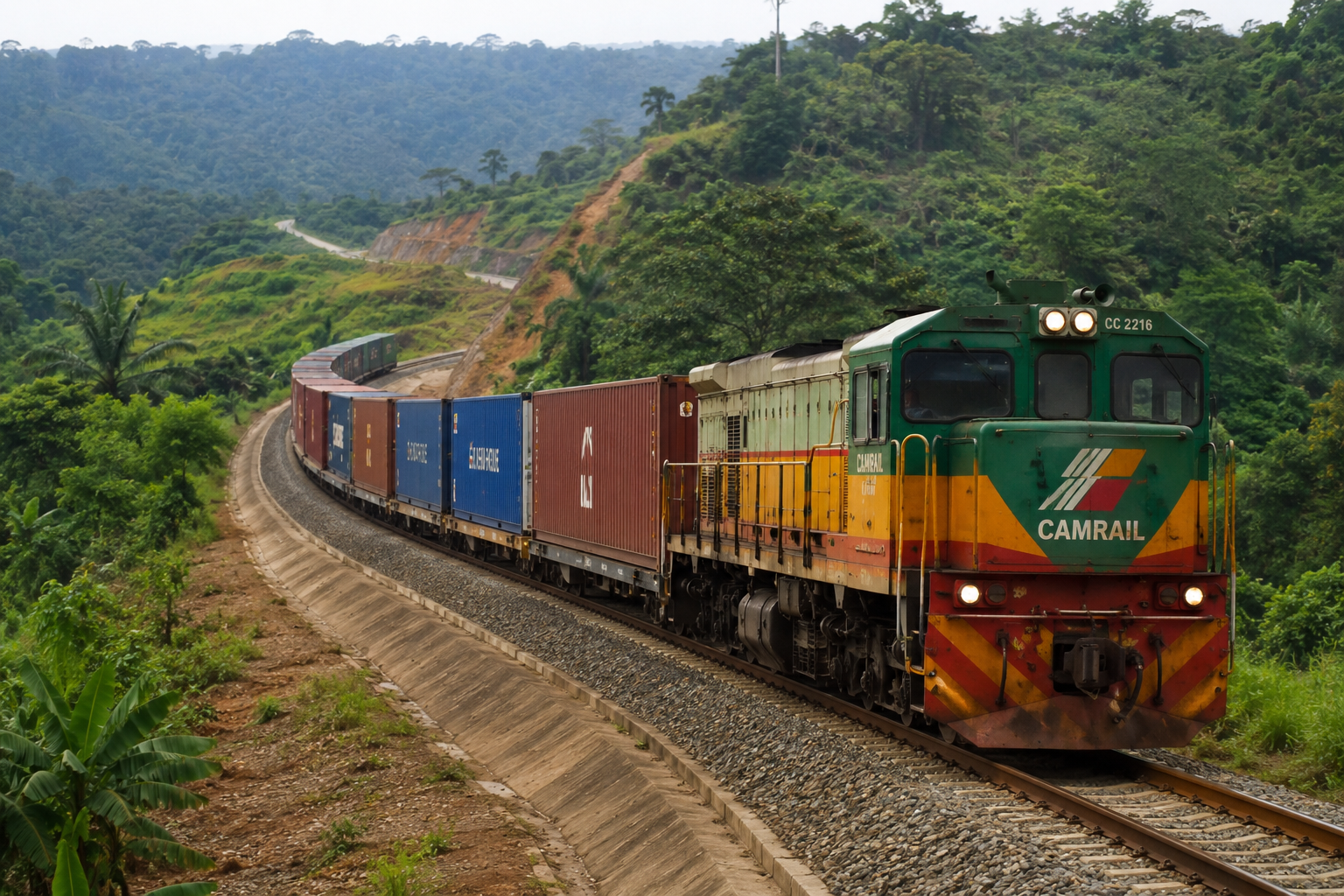
An AI-generated image of a Camrail train.
The signing of the MoU marks a structuring milestone in the logistics expansion strategy of the Kribi Port Authority. Endorsed under the high patronage of the Minister of Transport, Jean Ernest Massena Ngallè Bibehe, the agreement brings together all public and private stakeholders involved in transforming Cameroon’s leading deep-water port hub. It does not set any implementation timeline or immediate financial commitment, but opens a preparatory phase dedicated to feasibility studies, design, financing, and operational planning of the proposed railway infrastructure.
In this context, the Édéa–Kribi–Lolabé–Campo project is part of a forward-looking approach to traffic management. The Kribi port, operational since March 2018, has confirmed its upward trajectory, handling 555,398 TEUs and 12.7 million tonnes of cargo in 2025. This sustained growth highlights the limitations of the current road network, particularly the Édéa–Kribi corridor, which has become the main freight route and is now facing increasing congestion.
Against this backdrop of rising pressure, rail transport is emerging as a structural transformation lever. The objective is to consolidate freight volumes, improve delivery regularity, and secure logistics chains linking the port to its hinterland. The project also aims to diversify cargo flows, including containerized, industrial, agricultural, and mining goods, while strengthening regional integration with Central Africa and parts of Nigeria.
For port authorities, this evolution responds to the need for capacity alignment with the site’s physical potential. Located about 35 km from Kribi in the Ocean Division, the complex features deep-water berths reaching 16 meters and a land reserve estimated at 15,000 hectares, making it one of the largest industrial-port complexes in the Gulf of Guinea. This configuration opens wide prospects for industrial and logistics expansion, provided that inland access infrastructure is strengthened.
From this perspective, PAK management emphasizes the need for a step change in connectivity. The ambition is to better link production basins to the maritime gateway in order to streamline trade flows and enhance the competitiveness of the southern corridor. The next phase of the project will focus on feasibility studies, whose outcomes will determine the technical, financial, and institutional framework, paving the way toward operational implementation.

 La voix des entreprises
 Esther Grâce