

PUBLIC DEBT : China Eximbank Collects CFAF 16.5 Billion in Interest Payments from Cameroon in Q1 2026

(LVDE) – Between January and March 2026, Cameroon paid CFAF 121.8 billion to Export-Import Bank of China as part of the repayment of its bilateral debt. According to figures released by the Caisse Autonome d’Amortissement (CAA) in Yaoundé, CFAF 16.5 billion represented interest payments alone made to the Chinese state-owned bank. The situation confirms Beijing’s growing weight in financing Cameroon’s infrastructure projects, as China now accounts for nearly 65% of the country’s bilateral debt.
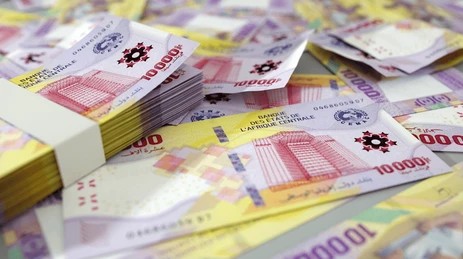
The burden of Chinese debt continues to shape Cameroon’s financial balance. Between January and March 2026, the Cameroonian government disbursed CFAF 121.8 billion to China Eximbank, the country’s leading bilateral creditor. According to statistics from the CAA, CFAF 16.5 billion of this amount corresponded exclusively to interest payments made to the Chinese financial institution, highlighting the rising cost of external financing amid increasing pressure on public finances.
These repayments alone accounted for more than 93% of Cameroon’s total bilateral debt service during the first quarter of 2026, which stood at CFAF 132.2 billion. Behind these figures lies a structural dependence on Chinese financing, mobilized over the past decade to support major infrastructure projects across the country, including roads, hydroelectric dams, ports, telecommunications, and urban development facilities.
According to official data as of March 31, 2026, Cameroon’s outstanding bilateral debt reached CFAF 2,409 billion. China alone holds 64.9% of this amount, representing nearly CFAF 1,560 billion, equivalent to 16.9% of the country’s total external debt. By comparison, France, Cameroon’s second-largest bilateral creditor, accounts for 25.8% of this component. This concentration of financial risk around a single partner is increasingly raising concerns among economists regarding the medium-term sustainability of Cameroon’s debt model.
Over the years, China Eximbank has established itself as the main financier of Cameroon’s strategic infrastructure projects. The institution notably financed the deep-sea port of Port of Kribi, several highway sections, the Memve’ele Hydroelectric Dam, as well as numerous energy and digital infrastructure projects. These investments have enabled Cameroon to accelerate projects that had long remained stalled due to a lack of traditional concessional financing. However, they have also increased pressure on external debt servicing as grace periods gradually come to an end.
In an international environment marked by rising interest rates and shrinking concessional financing, repayments owed to China are becoming a major issue for Cameroon’s public treasury. Authorities are now seeking to better control the pace of borrowing while maintaining the investments needed to support economic growth. The government is notably relying on a strategy combining stronger domestic tax revenue mobilization, partial refinancing of certain debts, and more selective use of external borrowing.
At the continental level, Cameroon’s situation reflects a broader trend observed in several African economies heavily exposed to Chinese financing. According to estimates by the World Bank and the China Africa Research Initiative (CARI), Chinese loans granted to Sub-Saharan Africa have exceeded $170 billion over the past two decades. While these funds have helped bridge Africa’s infrastructure gap, they have also fueled debates over the budgetary vulnerability of African states toward their external creditors.
For Yaoundé, the equation remains delicate : continuing the modernization of infrastructure essential to economic competitiveness while avoiding an excessive rise in debt levels. Beyond the billions invested, the central question remains Cameroon’s ability to transform these loans into sustainable growth and sufficient wealth creation capable of absorbing the future cost of repayment.

 La voix des entreprises
 Esther Grâce