


COCOA : Kilogram price rises back above the 1,500 FCFA threshold

(LVDE) – With two months remaining before the close of the 2025–2026 cocoa season scheduled for July 15, Cameroonian farmers are witnessing a recovery in cocoa prices across several production basins. According to data published on May 6, 2026, by the Sector Information System (SIF) of the National Cocoa and Coffee Board (ONCC), cocoa beans are now trading between 1,550 and 1,650 FCFA per kilogram, after several weeks of decline around 1,300 FCFA.
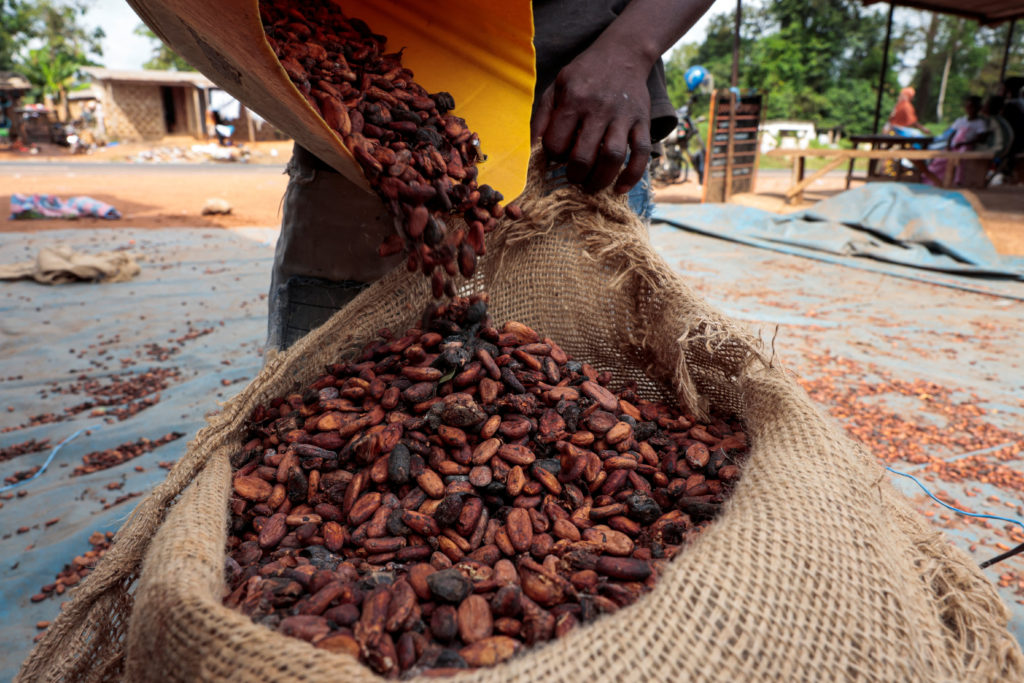
In the cocoa-growing regions of Cameroon’s Centre, South-West and East, the slight improvement observed on the market is temporarily restoring optimism among many producers. In recent days, farm-gate prices have been rising again, pushing back above the symbolic 1,500 FCFA per kilogram mark just weeks before the official end of the 2025–2026 campaign.
According to the latest ONCC SIF data released on May 6, cocoa beans are currently sold between 1,550 and 1,650 FCFA per kilogram across several production zones. This shift contrasts with recent weeks, when prices were fluctuating closer to 1,300 FCFA. However, for many stakeholders in the sector, this rebound remains insufficient to offset the sharp correction experienced since the start of the campaign.
Despite this recent improvement, prices in Cameroon remain far below the historic highs recorded in previous seasons. During the 2024–2025 campaign, cocoa reached up to 5,400 FCFA per kilogram in some localities, after exceptional peaks of nearly 6,000 FCFA during the 2023–2024 season. That surge had boosted producer optimism and strengthened the country’s export revenues.
At the launch of the 2025–2026 campaign, Cameroonian authorities had projected sustained high prices ranging between 3,200 and 5,400 FCFA per kilogram. However, market developments have proven less favourable than expected. Over recent months, global cocoa prices have been under downward pressure due to expectations of improved worldwide supply.
According to commodity market analysts, this bearish trend is mainly driven by forecasts of a global production recovery after several seasons marked by deficits. The International Cocoa Organization (ICCO) expects global supply to increase during the 2025–2026 campaign, supported by improved harvests in major producing countries, particularly Côte d’Ivoire and Ghana, which together account for more than 60% of global production.
This anticipated surplus continues to influence international markets and mechanically weighs on prices received by African producers. In Cameroon, where cocoa is one of the main cash crops, global price fluctuations directly affect the incomes of hundreds of thousands of rural households. According to the Ministry of Agriculture, the country produces between 280,000 and 300,000 tonnes of cocoa annually, making it one of Africa’s leading producers.
Within cooperatives and trading channels, several operators are nonetheless hoping for a gradual stabilisation of prices before the end of the campaign scheduled for July 15. Some exporters believe that global demand remains resilient despite current market adjustments, particularly in Europe and Asia, where chocolate consumption continues to grow.
For Cameroonian farmers, the return above 1,500 FCFA is mainly seen as a positive signal after months of volatility. However, in a market increasingly sensitive to global supply and demand balances, price movements over the coming weeks will largely depend on updated climate forecasts and expected production volumes from major exporting countries.


 La voix des entreprises
 Esther Grâce