


DSCHANG CLIFF : CFHEC Moves to the Asphalt Wearing Course Phase

(LVDE) – The China First Highway Engineering Company (CFHEC) launched, on May 11, 2026, preparatory works for the installation of the asphalt wearing course on the reconstruction site of the Dschang Cliff, in Cameroon’s Western Region. This stage is part of a Public Investment Budget–funded project aimed at completing a strategic road corridor linking several key economic hubs.
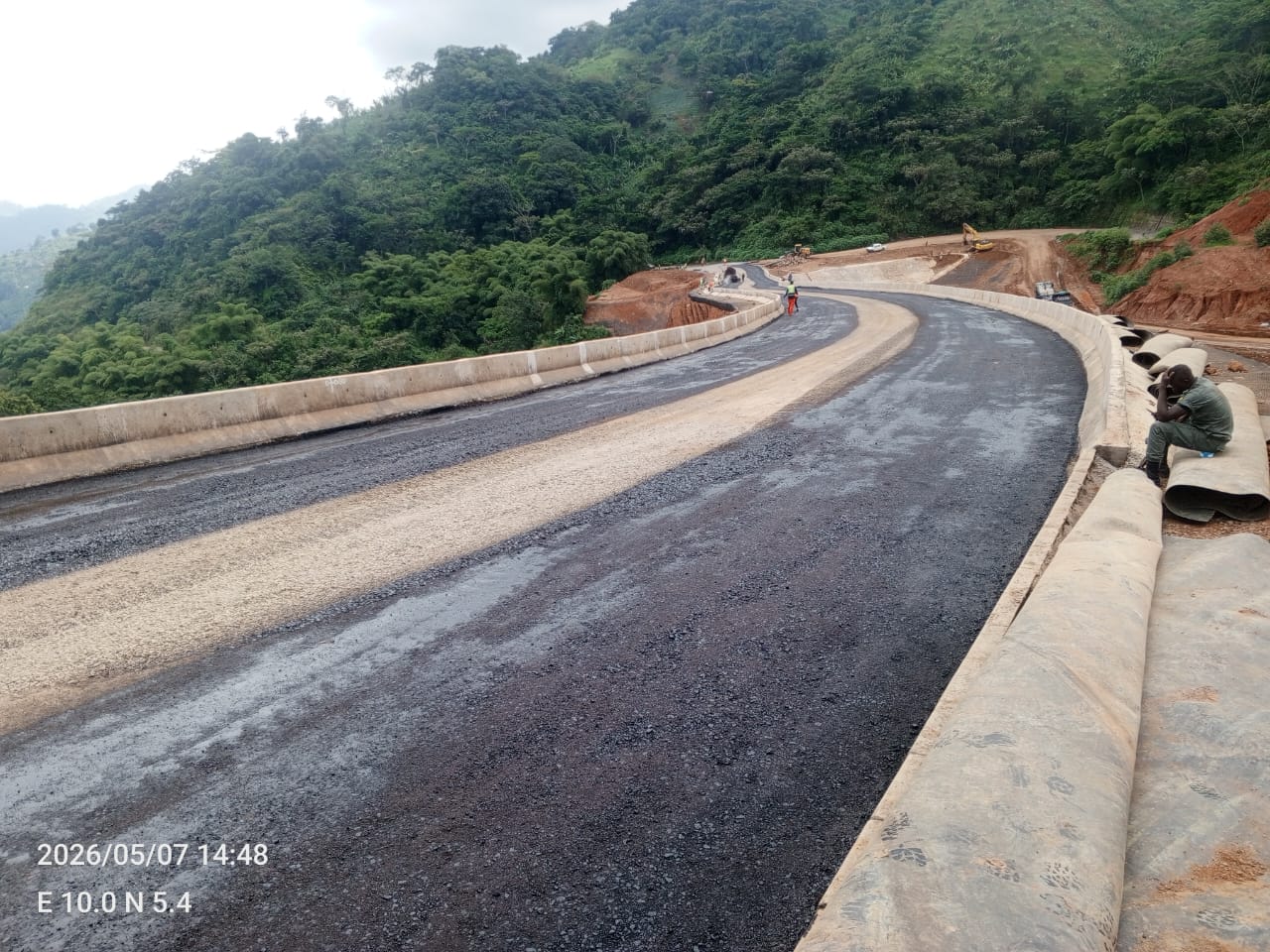
At the flagship Dschang Cliff construction site, technical teams are entering a decisive phase of the rehabilitation project. On May 11, 2026, CFHEC began preliminary operations ahead of the laying of the wearing course, the final layer of the pavement structure, whose quality will determine the durability of the road and driving comfort.
On the ground, this technical phase relies on a series of inspections and adjustments made necessary by weather conditions. Frequent rainfall recorded in the area has led engineers to locally redo sections of the base layer to ensure optimal uniformity of the foundation. Sand-binding priming operations have been carried out to improve adhesion between the different pavement layers, alongside geotechnical tests designed to assess the actual bearing capacity of the platform before asphalt placement.
Meanwhile, protection works on the structure are ongoing. Concrete casting at the rock armour zones located at the outlet of the 2×2 culvert helps secure areas exposed to water erosion. Silt removal from the culvert and maintenance of the diversion road have also been intensified to ensure traffic flow continuity, a major challenge on this route, which carries significant daily flows of goods and passengers.
On another section of the site, slope stabilisation works are progressing through continued vegetation efforts, particularly the planting of Chinese bamboo on the Santchou side. This bio-engineering solution aims to reduce landslide risks and strengthen soil stability in an area known for high geological instability.
Launched in March 2025, the Dschang Cliff reconstruction project is financed through the Public Investment Budget (PIB) in a context marked by both climatic constraints and financial adjustments. According to data from the Ministry of Public Works, mountain roads account for nearly 15% of high structural instability zones within the national road network, which explains the high level of technical requirements applied to this project.
Current progress suggests a gradual transition into the finishing phase, with the ultimate goal of fully reopening this strategic corridor in Cameroon’s Western Region. The road is a vital link for trade between the agricultural zones of the West and the country’s major urban centers.
For engineers, the installation of the wearing course represents a critical milestone, dependent on strict technical controls and effective management of weather-related risks, in what is considered one of the most complex road projects in Cameroon’s national network.


 La voix des entreprises
 Esther Grâce