

ENERGY : SOCADEL Launches Its Turnaround with a 630 Billion CFA Franc Budget

(LVDE) – Meeting on May 28, 2026 in Yaoundé under the chairmanship of Antoine Ntsimi, the Board of Directors of the Cameroon Electricity Company (SOCADEL) adopted a budget of 630 billion CFA francs for the 2026 fiscal year. Amid financial restructuring, internal reorganization, and strengthened energy supply efforts, the newly established public utility aims to lay the foundations for a sustainable turnaround of Cameroon’s power sector.
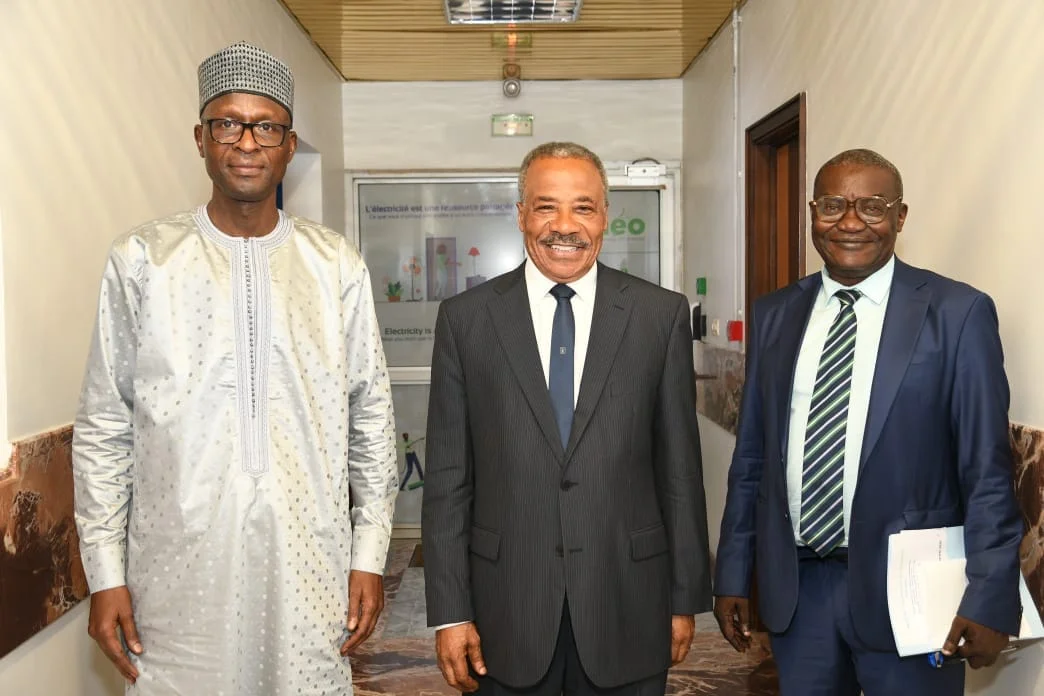
Barely integrated into Cameroon’s institutional landscape, SOCADEL is already outlining its ambitions. During its inaugural board meeting in Yaoundé, the company adopted a series of measures designed to ensure continuity of public electricity service while preparing for the transformation of a sector facing significant financial and operational challenges.
The most significant decision concerns the approval of a balanced 630 billion CFA franc budget for 2026. Of this amount, 375 billion CFA francs—nearly 60% of projected expenditure—will be allocated to electricity procurement, energy transport, and fuel supply. This allocation reflects the substantial weight of production costs and supply security in a context of steadily rising electricity demand.
In addition, 74.6 billion CFA francs have been earmarked for investments. The objective is twofold: to improve electricity distribution quality and to strengthen the technical capacity of the national power system. According to government projections, electricity demand in Cameroon is growing at over 6% annually, driven by urbanization, industrialization, and the expansion of digital usage.
The approved budget also provides for the gradual settlement of the company’s outstanding obligations to suppliers and partners. This is seen as a key step toward restoring financial credibility and securing relationships across the energy supply chain.
Beyond the figures, the Board mandated the Chief Executive Officer to initiate discussions with domestic and international development partners. These talks aim to mobilize new resources to restructure sector debt, refinance liquidity, and support future investments.
This direction comes as financing remains one of the major challenges for Africa’s power sector. According to the African Development Bank, annual energy investment needs across the continent amount to tens of billions of dollars to support economic growth and universal electricity access.
On the institutional front, the Board defined three priority areas: the implementation of the government’s roadmap for the electricity sector, internal governance reform, and the development of an operational restructuring plan. These directives align with instructions from President Paul Biya aimed at improving the performance of strategic public enterprises.
Energy supply also featured prominently in the discussions. Faced with supply constraints in certain regions, the Board approved an increase in fuel allocation for the Far North region. It also validated an emergency plan to address electricity shortages in the Eastern region, particularly in Bertoua, where household and economic demand continues to rise.
The session also saw a series of interim appointments to key management positions. Brigitte Konso (née Yanda) was appointed Chief Financial Officer, Christian Ekambi Koba as Head of Human Resources, Léonard Aser Mbong as Director of Security, and Christian Nola Ze in charge of Innovation and Information Systems. These officials will oversee the company’s transition phase.
Through this inaugural board meeting, SOCADEL sends a clear signal: it aims to become one of the central instruments in the reform of Cameroon’s electricity sector. Between financial imperatives, governance modernization, and supply security, the challenge now goes beyond the management of a public company. It is about ensuring the energy required for the country’s economic growth and improving living conditions for its population.

 La voix des entreprises
 Esther Grâce