

FURNITURE PRODUCTION : MCG Sarl Announces the Construction of a 3-Billion CFA Franc Industrial Plant in Douala

(LVDE) — Cameroon’s wood processing sector is witnessing a significant new investment. In Douala, MCG Sarl plans to build an industrial facility valued at 3 billion CFA francs to manufacture office furniture, modern kitchens, and various wood products, in a national context driven by import substitution policies and local job creation.
The announcement was made public on February 19, 2026, in Yaoundé during the signing of an agreement between MCG Sarl and the Investment Promotion Agency (API). Through this convention, the company will benefit from tax and customs incentives provided under the private investment law enacted in April 2013, revised in 2017 and further amended by presidential ordinance on July 18, 2025. The updated framework places stronger emphasis on employment generation and the local processing of raw materials.
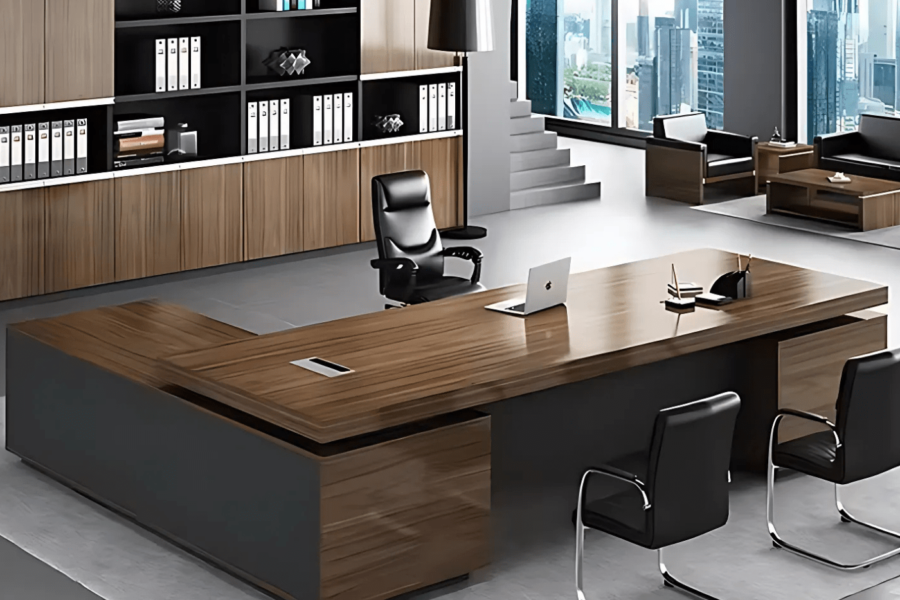
The project involves setting up, in the country’s economic capital, a production unit dedicated to the industrial manufacturing of doors, household furniture, fitted kitchens, and professional office furnishings. The announced investment, estimated at 3 billion CFA francs, is expected to create 350 direct jobs during the initial phase, with projections rising to nearly 1,000 positions at full capacity. The promoters aim to establish an integrated value chain, from sourcing locally harvested timber to distributing competitive finished products.
This initiative comes as Cameroon seeks to reduce its reliance on imported manufactured goods. According to the National Institute of Statistics (INS), annual imports of furniture and wood products amount to several tens of billions of CFA francs. These expenditures contribute to the country’s persistent trade deficit.
To reverse this trend, public authorities have introduced several measures. Since 2023, budget circulars have prioritized locally manufactured furniture in public procurement. The 2024 Finance Law strengthened this approach by imposing a 25% excise duty on certain imported furniture items, including wooden products, metal office furniture, and plastic furnishings. The objective is to improve the competitiveness of domestic products and foster the development of national industries.
The country’s potential is substantial. According to the Ministry of Forestry and Wildlife, Cameroon has approximately 22 million hectares of forest, representing nearly 40% of its national territory. Despite this resource base, a significant portion of timber is still exported in raw or semi-processed form. The National Development Strategy 2020–2030 (NDS30) specifically targets increased local processing of forest resources to generate higher value-added and sustainable employment.
In Douala, the country’s economic hub and leading logistics center, the establishment of this new plant could strengthen the local industrial ecosystem. If implemented as planned, MCG Sarl aims to position itself as a key player in the national furniture market while contributing to Cameroon’s broader structural economic transformation.
Esther Grace


 Esther Grâce
 La voix des entreprises