

GABON : Standard Chartered strengthens partnership with Ecobank for strategic integration


(LVDE) – On October 2, 2025, Standard Chartered Bank announced the expansion of its partnership with Ecobank Africa to include Gabon. This initiative aims to support the Gabonese economy through large-scale financing as the country prepares to implement an ambitious investment plan.
Gabon is positioning itself at the forefront of investment in Central Africa, and the October 2, 2025 announcement by Standard Chartered Bank further reinforces this momentum. By formalizing the extension of its strategic partnership with Ecobank, the British bank reaffirms its long-term commitment to the Gabonese market at a time when the national economy is seeking strong financial backing to sustain its investment strategy.
For 2025, the Gabonese government plans to raise 190.5 billion CFA francs in project loans, with Standard Chartered contributing 70.3 billion CFA francs. This funding will be used to finance public infrastructure and strategic equipment projects, addressing the country’s pressing needs in road construction, administrative buildings, and transportation. These sectors alone account for nearly 63.5% of the national loan envelope—about 120.2 billion CFA francs.
However, it is the ambitious investment plan for 2026 that is drawing particular attention from investors. Gabon has announced a record program of 3,300 billion CFA francs aimed at modernizing infrastructure, developing the energy sector, boosting agriculture, and improving public services. Such an undertaking will require massive financial support from international partners, and Standard Chartered appears eager to seize the opportunity to position itself as a key player in financing both the Gabonese state and private initiatives.
At a time when several major international banks are scaling back their presence in Africa, Standard Chartered’s approach stands out for its boldness. By betting on Gabon and leveraging Ecobank’s extensive network, the British bank seeks not only to strengthen its footprint in the subregional banking sector but also to play a central role in financing the real economy. For Libreville, the arrival of a top-tier financial institution sends a strong signal, heralding a new era of unprecedented investment.
The implications of this collaboration go far beyond numbers. By facilitating access to adequate financing, Standard Chartered and Ecobank could help transform Gabon’s economic landscape—stimulating job creation and improving living standards. The synergy between the two institutions could also encourage other investors to turn their attention to Gabon, drawn by the country’s stability and growth potential.
Financial analysts agree that this initiative could also serve as a model for other African nations, demonstrating how strategic partnerships can catalyze economic development. At a time when adapting economic models to local realities has become increasingly crucial, Gabon’s example may inspire other governments to pursue similar alliances.
In summary, the strengthened partnership between Standard Chartered and Ecobank marks a significant step for Gabon in its quest for sustainable growth. As the country prepares to embark on a new cycle of ambitious investments, this cooperation paves the way for unprecedented development opportunities—for both the national economy and its citizens. Gabon thus appears ready to write a new chapter in its economic story, with renewed hope for a prosperous future.
Sorelle Ninguem

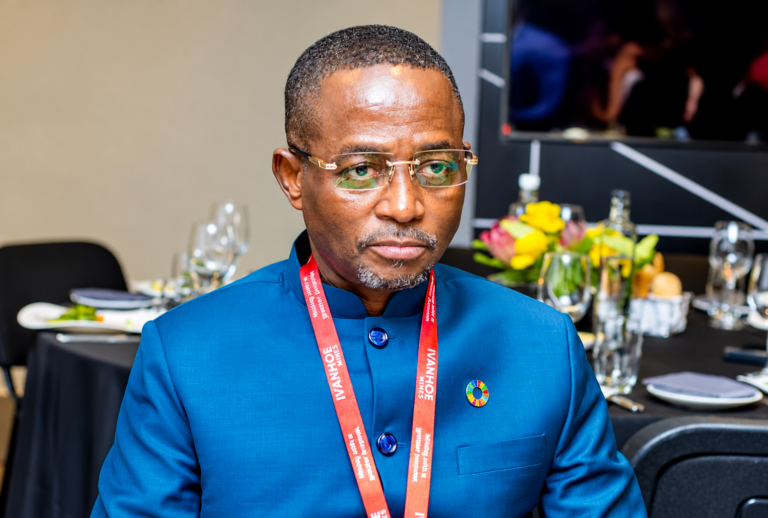
 Sorelle NINGOUEM