

CINEMATIC SCREENING : Sylver Screen Cinema Officially Resumes Operations in Cameroon


(LVDE) – In September 2025, the company specializing in cinema operations resumed activity at the Douala Grand Mall cinemas, marking a turning point in Cameroon’s film industry following the withdrawal of Genesis and Bolloré. This initiative aims to revitalize the sector and meet a growing demand for local content.
In mid-September 2025, Sylver Screen Cinema, a Cameroonian company specialized in cinema management, announced the reopening of the Douala Grand Mall cinemas, which had been closed for a year following the departure of Nigerian group Genesis. Initially opened in 2020, these theaters were launched as part of a partnership between Genesis and British fund Actis. Unfortunately, after three years of operations marked by financial losses, Genesis terminated its lease in 2024. The group cited the absence of government subsidies, difficulties in sourcing international films, and mounting debts to suppliers as reasons for its withdrawal.
Genesis’s departure reflects a broader trend of multinational disengagement from the Cameroonian cinema sector. The French group Bolloré, for example, recently announced the gradual closure of its CanalOlympia network, which comprised 18 theaters across Central and West Africa, including two in Cameroon. Launched in 2016 with the ambition of democratizing access to cinema in Africa, the network’s closure was confirmed in a June 2025 statement, which outlined its exit plan and transfer of operations to new local operators.
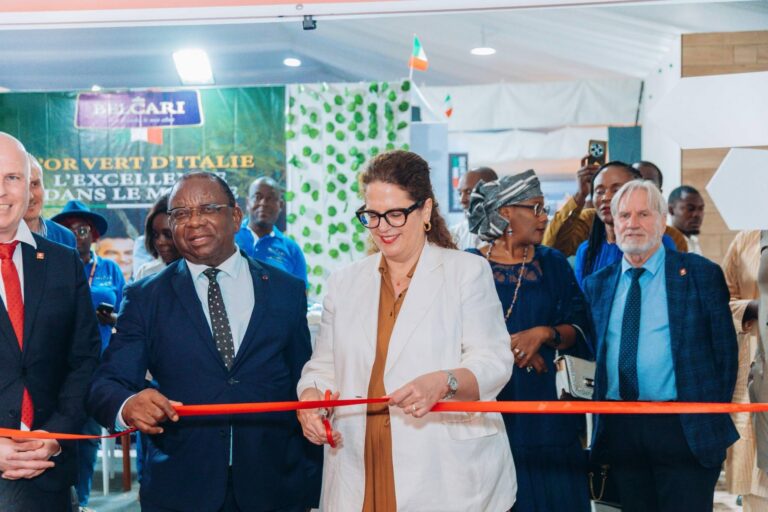
Against this backdrop, Sylver Screen is positioning itself as a key player to fill the void left behind. The company has planned a phased reopening of the Douala Grand Mall theaters, with two reopening as of September 19, 2025, followed by a return to full capacity with all five screens. Its ambitions extend beyond Douala, with plans to expand into other Cameroonian cities.
For Marie Jeanne Nock A Kibeng, CEO of Sylver Screen, identity is a central issue. She stresses that it is unacceptable for cinemas to shut down in Cameroon when the country has the talent to showcase its film industry on the global stage. To attract audiences, the company is partnering with Pathé, a renowned French group in film production and distribution. Sylvain Foppa, Head of Sub-Saharan Africa at Pathé Touch Afrique, confirmed that the objective is to offer top films and blockbusters to draw as many moviegoers as possible.
Nevertheless, profitability remains a crucial challenge. Theater operators must navigate an environment where attendance is still unstable, further undermined by the rise of streaming platforms and piracy issues. To address this, Sylver Screen plans to diversify its revenue streams. Beyond ticket sales, the company intends to introduce film-related merchandising, sell licensed products, secure sponsorships for premieres, and rent its theaters for private and corporate events.
This diversification strategy is vital for ensuring the long-term sustainability of Sylver Screen. By focusing not only on cinema operations but also on extending its activities, the company hopes to build a loyal audience and foster a dynamic film ecosystem in Cameroon.
As the country undergoes a period of transition in the cinema sector, Sylver Screen’s commitment to revitalizing the industry may prove pivotal. By combining local expertise with strategic partnerships, the company could restore prestige to Cameroonian cinema while addressing contemporary challenges posed by new technologies and changing consumption habits. The success of this initiative will be decisive for the future of cinema in Cameroon, which aspires to establish itself on the African cinematic stage.
Esther Grace


 Esther Grâce
 La voix des entreprises