

BREWING INDUSTRY : UCB Enters the Canned Beverage Era and Sets Its Sights on the West African Market

(LVDE) – In Douala, the Union Camerounaise de Brasseries (UCB) has recently launched its first canned beverages, including Kadji Beer, Spécial Pamplemousse, and KiQ. Backed by the production capacity of its new Moungo plant, this innovation marks a significant milestone in the group's modernization strategy and supports its ambitions to expand across West African markets in an increasingly competitive industry.
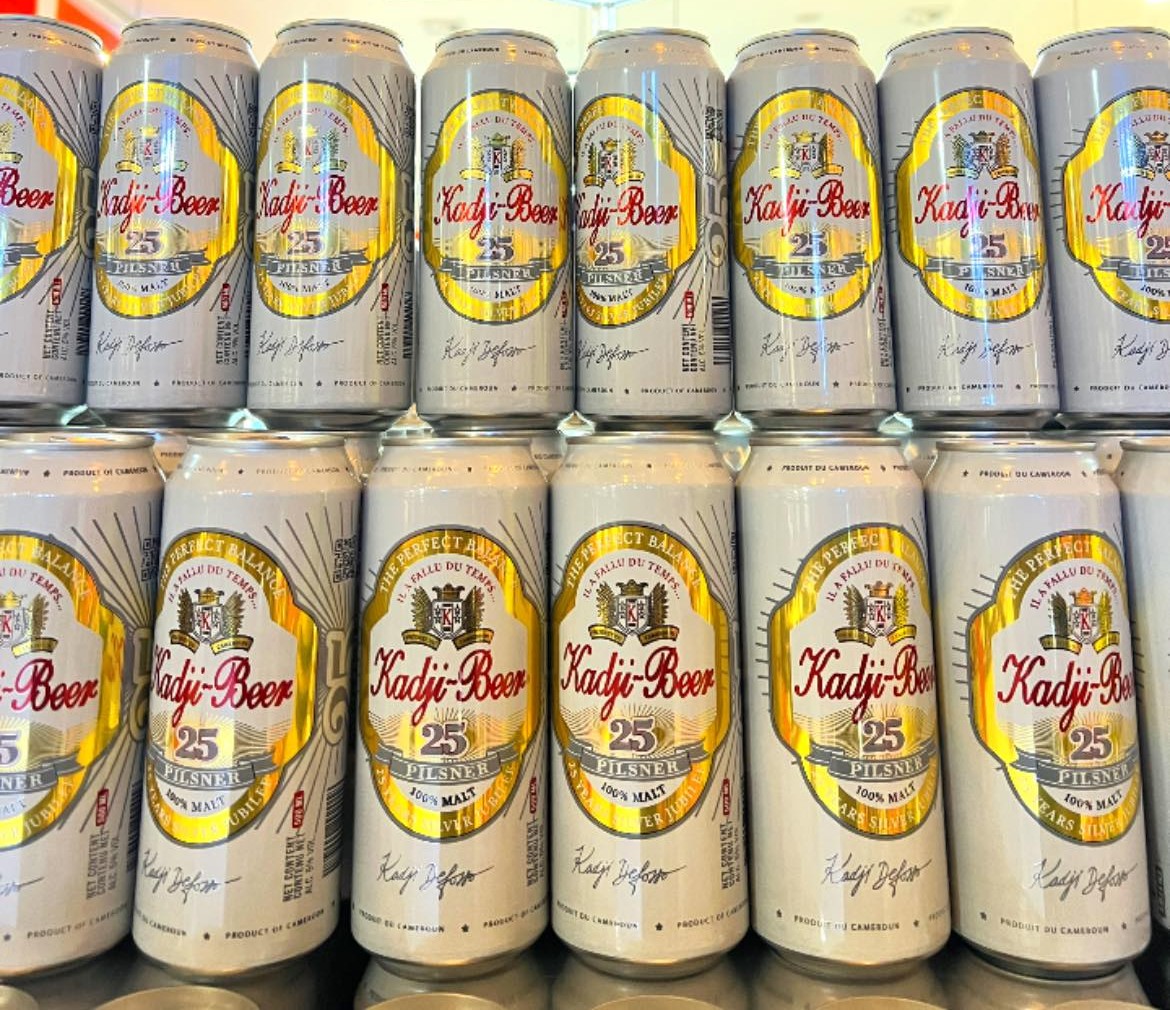
The Union Camerounaise de Brasseries (UCB) has reached a new stage in its industrial development. Since the beginning of 2026, the company has been marketing its beverages in cans for the first time on the Cameroonian market. The new range includes Kadji Beer, Spécial Pamplemousse, and KiQ, three flagship brands within the company’s portfolio.
Far more than a simple packaging change, this move reflects a strategic transformation for the Cameroonian brewer. For decades, the domestic beverage market has been dominated by glass bottles. However, changing consumer habits and the emergence of new distribution channels are gradually reshaping the industry. Lighter, more convenient, and better suited to large gatherings as well as long-distance transportation, cans are increasingly becoming an essential packaging format for beverage manufacturers.
UCB’s entry into the canned beverage segment is supported by the growing capacity of its Moungo plant, located within the Kadji Sports Academy complex in Douala. Commissioned as part of the Kadji Group’s extensive investment program, the facility—valued at nearly CFA 100 billion—has an estimated annual production capacity of two million hectoliters. It complements the company’s historic Douala-Bassa facilities and significantly strengthens its manufacturing capabilities.
The launch of these first canned beverages also comes at a time when local producers are seeking to better satisfy a demand that has long been supplied through informal imports. According to industry stakeholders, a substantial share of canned beverages consumed in Cameroon previously entered the market through unofficial channels. By developing its own canning capabilities, UCB aims to capture part of this demand while further consolidating its position in the domestic market.
Yet the group’s ambitions extend well beyond Cameroon. For UCB, canned packaging is also a strategic tool for regional expansion. More resistant during transportation and easier to distribute over long distances, cans offer significant logistical advantages that are particularly suited to West African markets. The company’s planned distribution hub in Côte d’Ivoire is part of this strategy. The facility could serve as a regional platform supplying several neighboring countries, leveraging production from both Cameroon and the recently inaugurated plant in Aba, Nigeria.
This strategy is unfolding within a highly competitive environment. The Cameroonian beverage market remains largely dominated by SABC, whose market position has been further strengthened through the integration of Guinness Cameroon’s operations. Faced with this growing concentration, alternative players are focusing on industrial innovation, packaging diversification, and geographic expansion to enhance their competitiveness.
With the introduction of its first canned beverages, UCB is doing more than simply broadening its commercial offering. The company is laying the groundwork for a new phase of growth driven by the modernization of its industrial infrastructure, the optimization of its logistics network, and its gradual expansion into West African markets. A strategy that could reshape its position within the regional brewing industry in the years ahead.


 La voix des entreprises
 Esther Grâce