

REAL ESTATE : Cameroon Structures Diaspora Capital Mobilization Through the “Diaspora-SIC” Program

(LVDE) – Signed on May 19, 2026 in Yaoundé between the Ministry of External Relations and the Cameroon Real Estate Corporation (SIC), the “Diaspora-SIC” program aims to channel investments from Cameroonians abroad into the housing sector. Driven by an economic diplomacy strategy, the initiative seeks to secure financial flows estimated at several billion CFA francs and address a structural housing deficit of over one million units nationwide.
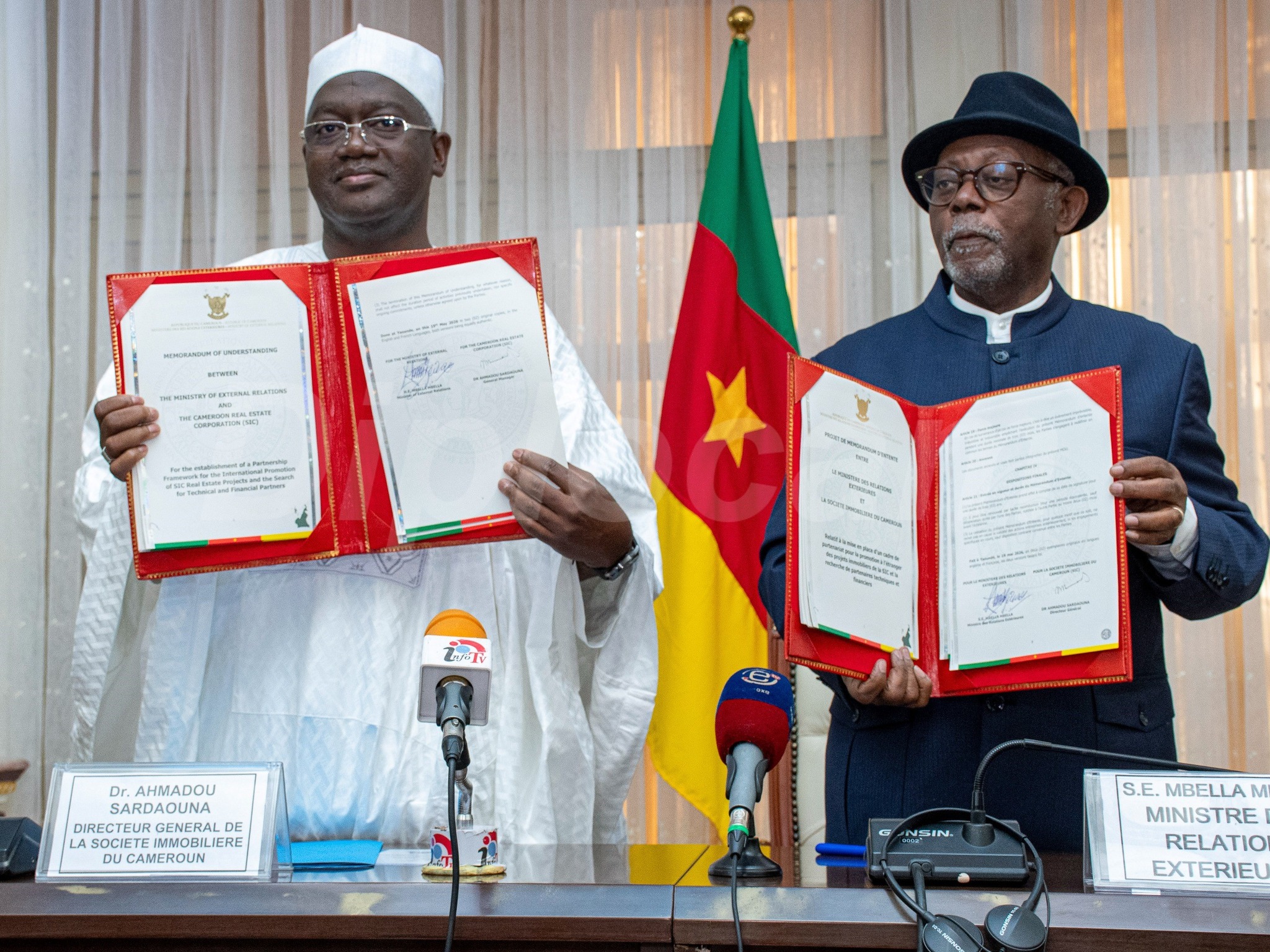
From right to left : Lejeune Mbella Mbella, Minister of External Relations, and Dr Ahmadou Sardaouna, Managing Director of the Cameroon Real Estate Corporation (SIC).
In a context marked by the search for new development financing sources, Yaoundé is increasingly relying on its diaspora as a strategic economic lever. The agreement signed between Mbella Mbella, Minister of External Relations, and Ahmadou Sardaouna, Managing Director of SIC, formalizes a framework for mobilizing and securing diaspora capital directed toward public and semi-public real estate projects.
At the core of the mechanism is an integrated approach combining diplomacy and investment. Cameroonian diplomatic missions will be tasked with promoting SIC’s real estate projects abroad, organizing presentation campaigns, and designating dedicated focal points for diaspora investors. The objective is to transform embassies into commercial relays for national housing policy.
Operationally, SIC plans to develop an international portfolio of housing projects supported by a secure digital platform enabling remote subscriptions by investors. The scheme also introduces regulated financial safeguards, including foreign-currency escrow accounts and phased disbursement of funds based on construction progress, in order to reduce the risks of disputes and incomplete projects.
This financial architecture is designed to address a recurring issue in Cameroon’s real estate market : the lack of trust among diaspora investors. According to authorities, land disputes, delivery delays, and weak contractual guarantees have long constrained the inflow of diaspora capital, despite its significant annual potential.
At the macroeconomic level, remittance flows to sub-Saharan Africa reached around $54 billion in 2023, according to the World Bank, while total financial flows from the African diaspora are estimated to exceed $100 billion, surpassing both official development assistance and foreign direct investment combined. Against this backdrop, Cameroon aims to capture a more structured share of these flows.
The housing deficit is a key driver of this strategy. Estimated at more than one million units by public authorities, it is fueled by rapid urbanization and sustained population growth in major cities such as Douala and Yaoundé. For the state, diaspora participation could accelerate housing supply while diversifying funding sources for urban development.
The program’s operational rollout began during the “MBOA Paris” fair on May 23, 2026, SIC’s first international showcase under this initiative. Additional promotional campaigns are planned through the end of 2026 in major Cameroonian diaspora hubs, particularly in Europe and North America.
With “Diaspora-SIC,” Cameroonian authorities aim to reach a turning point : transforming a diaspora traditionally seen as an informal contributor into a structured player in national housing finance, as African states increasingly deploy innovative mechanisms to channel external savings into productive investments.

 La voix des entreprises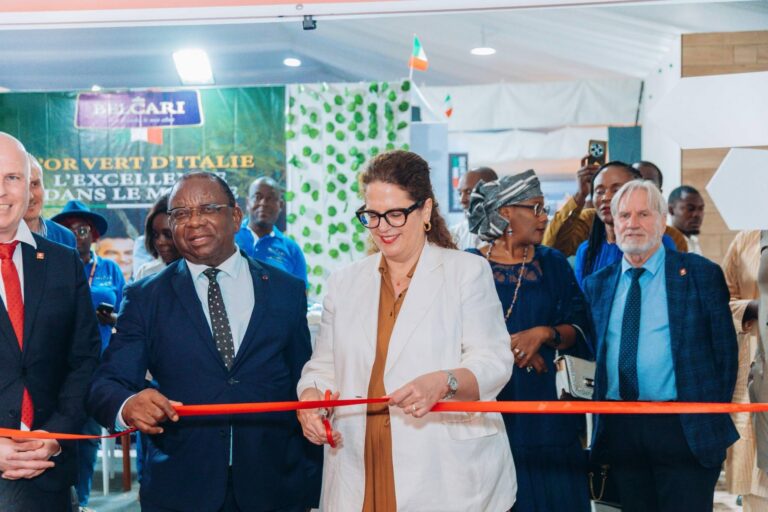
 Esther Grâce