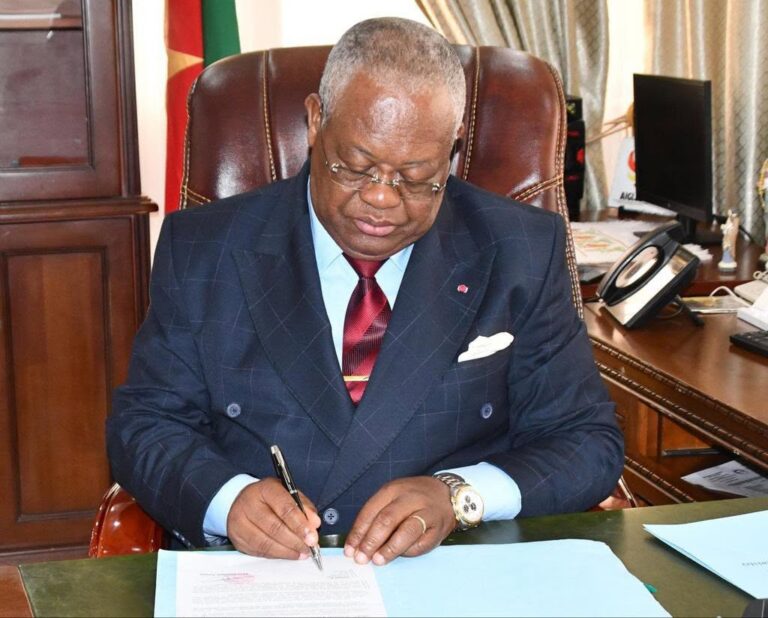


AFRICAN ECONOMIC INTEGRATION : AfCFTA and Scanning Systems seal partnership to streamline cross-border trade

(LVDE) – The African Continental Free Trade Area (AfCFTA) and Scanning Systems, a subsidiary of Tassec Investment Holding led by entrepreneur Mory Diané, signed a memorandum of understanding on May 18, 2026 in Lomé, on the sidelines of the Biashara Africa business forum. The agreement aims to design and deploy modernized joint border posts in order to streamline cross-border trade, reduce transit times, and enhance the competitiveness of trade corridors across the African continent.
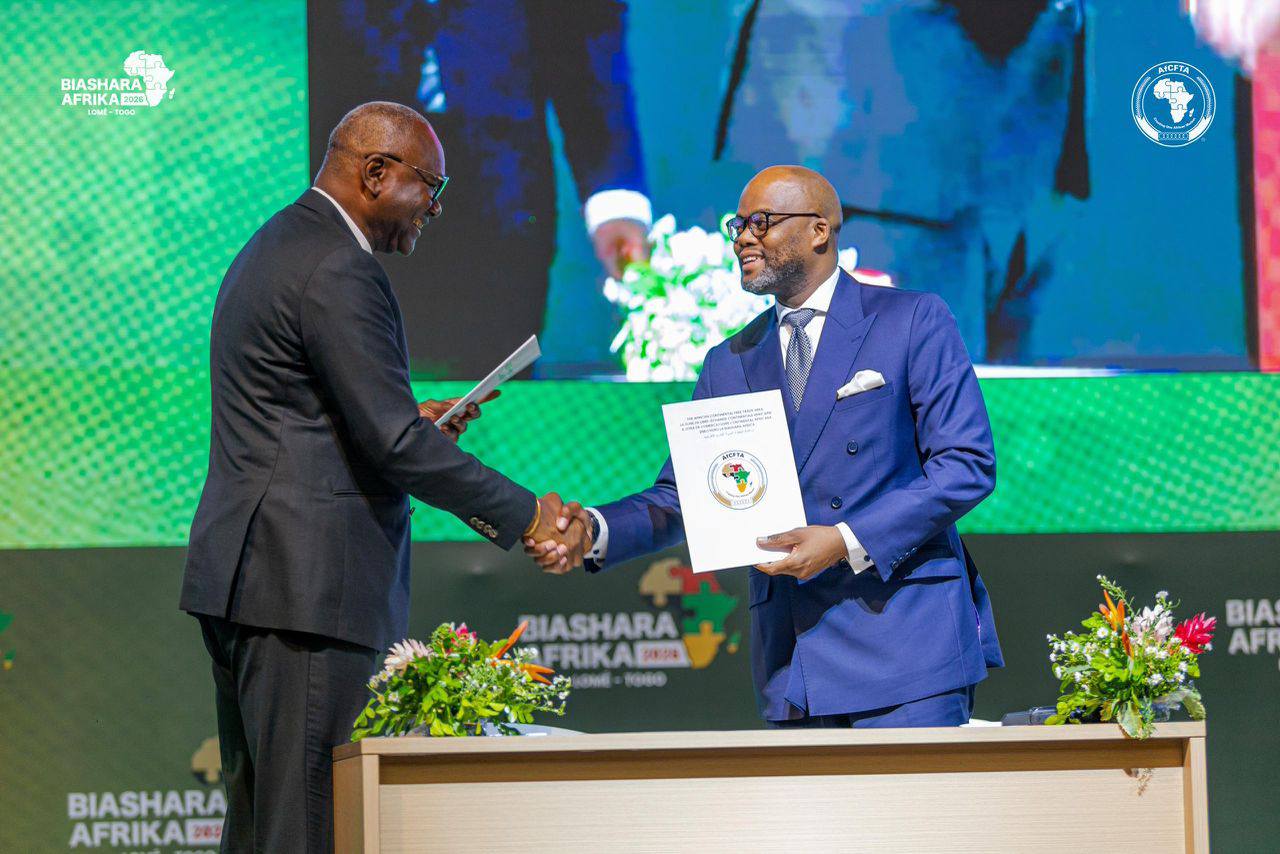
Handshake between Mory Diané, founder of Scanning Systems (left), and the Executive Secretary of the AfCFTA, Wamkele Mene, during the signing of the Memorandum of Understanding.
In Lomé, the AfCFTA has taken another step toward the realization of its continental economic integration agenda. By partnering with Scanning Systems, the pan-African organization seeks to accelerate the transformation of African borders, which remain characterized by fragmented administrative procedures, high logistics costs, and structural delays that continue to hinder the movement of goods.
The partnership focuses on the development of joint border posts (JBPs), designed as integrated platforms bringing together customs, security, and administrative services within a single facility. The objective is to establish a one-stop-shop system capable of significantly reducing transit times, improving the traceability of flows, and optimizing the management of trade corridors.
Already active across several strategic corridors in West Africa, Scanning Systems has established itself as a specialist in the design, financing, and operation of JBPs. The company, 70% owned by Tassec Investment Holding and supported by Africa50 with a 25% stake, operates key sites including Cinkansé between Togo and Burkina Faso, and Laléraba between Burkina Faso and Côte d’Ivoire. The latter required more than CFA 13 billion in structured investment, mobilized through a regional banking consortium including Société Générale Côte d’Ivoire, BNI, and Ecobank.
The group now claims a portfolio of twelve concessioned JBPs across West Africa. Its strategy is based on a gradual expansion model combining physical infrastructure, financial structuring, and digital solutions aimed at modernizing cross-border flow management.
Since 2024, Scanning Systems has also been working with CEMAC on feasibility studies for the development of four pilot JBPs in Central Africa. The signing of concession agreements, expected in 2026, should accelerate the rollout of this model in a region where border crossing costs remain particularly high and continue to weigh on intra-regional trade.
In a context where non-tariff barriers can account for up to 30% of intra-African trade costs, according to the African Development Bank, joint border posts are emerging as a key lever for enhancing continental competitiveness. They are part of a broader effort to transform African logistics chains.
By sealing this partnership, the AfCFTA reaffirms its ambition to move beyond institutional frameworks and anchor its strategy in high-impact operational projects. The goal is to turn trade corridors into seamless, integrated, and efficient spaces, supporting a more concrete and effective form of African economic integration.

 La voix des entreprises
 Esther Grâce