

MARITIME SECURITY : ECCAS, ECOWAS and the GGC strengthen governance of the framework in the Gulf of Guinea

(LVDE) – Regional organisations from West and Central Africa, together with the Gulf of Guinea Commission, met in Yaoundé, Cameroon, as part of the 5th Ordinary Session of the Annual Meeting of Senior Officials (RAHR). Held from 14 to 16 May 2026, the proceedings led to the adoption of a new 2026–2030 strategic plan for the Interregional Coordination Centre (ICC), the approval of the 2026 budget, and a revision of the financing mechanism, in a context of strengthened maritime safety and security arrangements in the Gulf of Guinea.
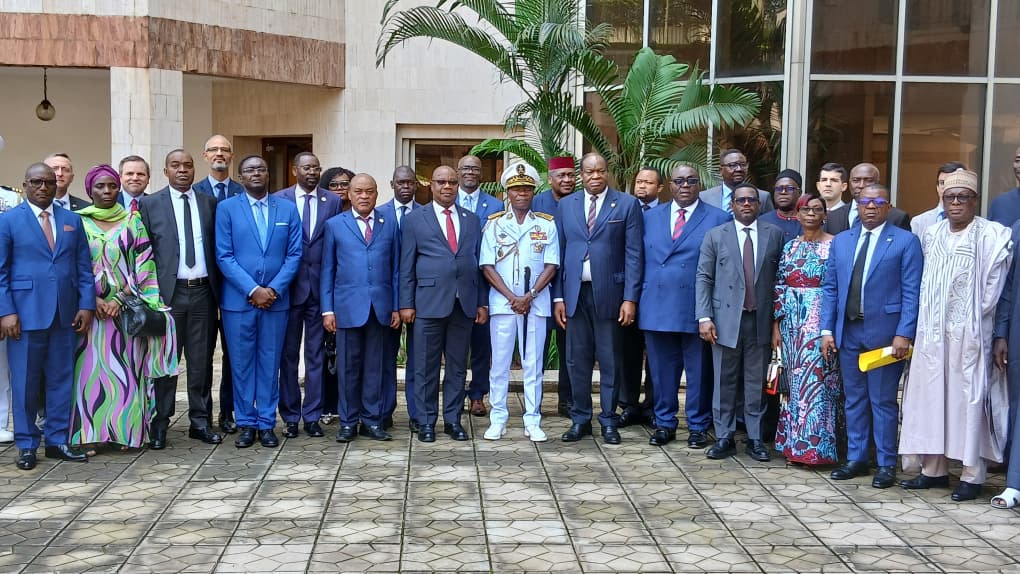
In the conference room of the Hilton Hotel in Yaoundé, military uniforms stood alongside diplomatic suits in a subdued yet focused atmosphere, marked by technical exchanges on the future of regional maritime security. On 16 May 2026, institutional representatives, military experts and regional officials took part in the closing ceremony of this 5th RAHR session, dedicated to consolidating the Yaoundé Architecture, the central pillar of maritime security cooperation in the Gulf of Guinea.
Around the table, delegations from Economic Community of Central African States (ECCAS), the Gulf of Guinea Commission and specialised bodies reviewed the conclusions of expert discussions, whose report was presented and subsequently adopted. Participants reaffirmed their commitment to strengthening the governance and operational capacities of the ICC, in a context marked by evolving maritime threats, including piracy, illicit trafficking and other forms of insecurity at sea.
The discussions also highlighted the need to accelerate the implementation of recommendations from the previous session. Officials stressed the importance of improving decision monitoring, modernising coordination tools, and enhancing the institutional credibility of the regional framework.
In this momentum, the ICC’s 2026–2030 strategic plan was adopted. The document sets out operational priorities for the next five years, with emphasis on resource pooling, partnership development, and the adaptation of structures to new maritime security realities. The 2026 budget was also approved, accompanied by instructions aimed at improving financial planning and transparency in the management of member states’ contributions.
One of the key outcomes of the meeting was the new financing formula for the ICC. Economic Community of West African States (ECOWAS) will now contribute 50%, ECCAS 40%, and the Gulf of Guinea Commission 10%. This reform aims to ensure greater financial stability for the mechanism and to prepare a partners’ conference scheduled for 2027, intended to mobilise additional funding from international donors.
On the operational level, discussions focused on the gradual transfer of the YARIS system, a strategic maritime surveillance tool, towards full regional management. The objective is to strengthen African states’ digital sovereignty over sensitive maritime data and improve response capabilities to incidents at sea.
Officials also addressed human resource management within the ICC, stressing the need for controlled staff rotation while preserving institutional continuity. The appointment of an interim Executive Director was confirmed pending a permanent designation, while workforce planning mechanisms were recommended to anticipate vacancies.
In a solemn closing atmosphere, participants commended Cameroon’s efforts in organising the meeting and expressed their gratitude for the political and logistical support provided to the regional framework. All delegations reaffirmed their commitment to a shared vision of a safer maritime space in the Gulf of Guinea, a strategic zone for global trade flows.
The meeting ended on a consensus note, marking a further step in strengthening interregional security cooperation, as states continue adapting their mechanisms to the growing challenges of maritime security.

 La voix des entreprises
 Esther Grâce