

MBAKAOU PROJECT : Adamaoua Pushes to Accelerate Electrification of Its Territories

(LVDE) – On May 11, 2026, Dr Théodore Nsangou, Managing Director of Electricity Development Corporation (EDC), received in audience in Yaoundé Aliou Issa, President of the Regional Council of Adamaoua. During the meeting, both officials discussed the progress of the Mbakaou hydro-solar dam project and the integration of local communities into its benefits, particularly through the electrification of several localities in the region.
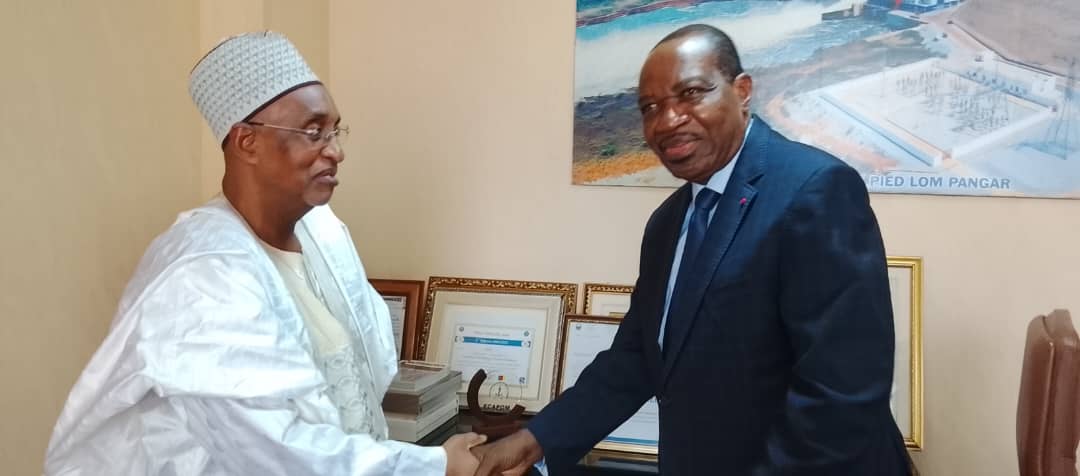
Dr Théodore Nsangou, Managing Director of Electricity Development Corporation (EDC), and Aliou Issa, President of the Regional Council of Adamaoua.
In a context where large-scale energy projects are increasingly becoming key drivers of territorial development, the meeting between EDC and the regional authorities of Adamaoua reflects a strengthened framework of consultation around the Mbakaou project. Led by public authorities, the project is considered a strategic pillar for improving access to energy and boosting local economic activities.
During the discussions, Aliou Issa reaffirmed the support of local populations and elected officials for the project, while stressing the need for stronger inclusion of surrounding communities. According to him, the success of the project should not be limited to production infrastructure alone, but must also include a strong social component, particularly through the extension of the electricity grid to several still-unserved localities.
Data from the Ministry of Water and Energy indicate that the electricity access rate in some rural areas of the Adamaoua region remains below 60%, with significant disparities between urban centers and peripheral zones. This situation reinforces local authorities’ call for major energy projects to directly contribute to reducing inequalities in access to basic services.
For its part, EDC management welcomed the commitment of regional authorities and reiterated its willingness to work in synergy with territorial stakeholders. The public company, responsible for developing several energy infrastructures in Cameroon, promotes a participatory approach aimed at integrating the needs of local populations into project planning and implementation.
According to several analyses of the energy sector in Central Africa, hydroelectric and energy generation projects linked to dams such as Mbakaou play a decisive role in the national strategy for securing electricity supply. Cameroon has an installed capacity estimated at over 2,000 MW, but geographical distribution and effective access to electricity remain uneven, particularly in regions with limited infrastructure density.
The meeting also takes place in a broader context where public authorities are seeking to enhance the socio-economic impact of major public investments. The objective is to ensure that energy projects are not only production infrastructures, but also catalysts for local development, particularly in terms of jobs, agricultural activities, and services.
For stakeholders involved, the Mbakaou project thus represents an opportunity to strengthen the link between energy development and territorial inclusion. The alignment between EDC and regional authorities paves the way for better coordination between the technical requirements of the project and the expectations of local populations.

 La voix des entreprises
 Esther Grâce