

CAMEROON : SOCADEL Given 100 Days to Revive the Power Sector

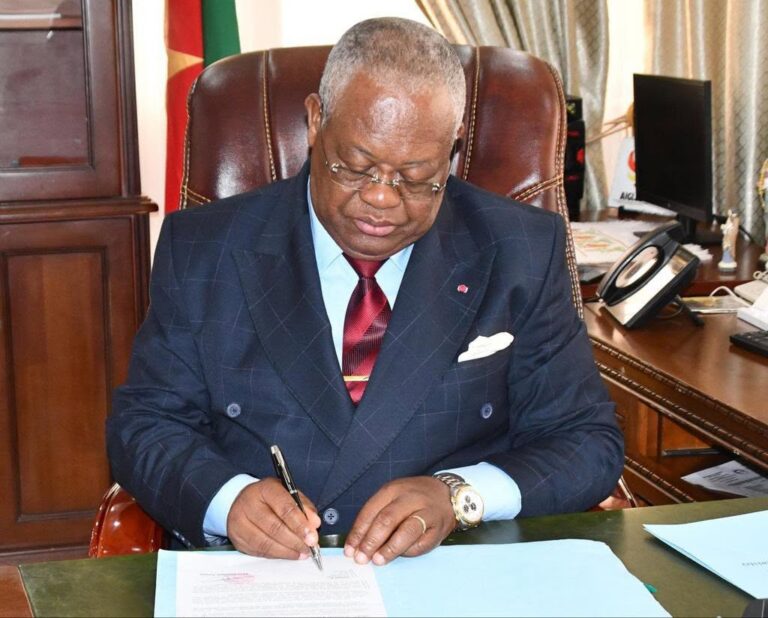
(LVDE) – In Douala, Cameroon’s Minister of Water and Energy, Gaston Eloundou Essomba, officially installed on May 8, 2026 the new management team of the Cameroon Electricity Company (SOCADEL), created following the transformation of ENEO after the Cameroonian State took over the operator’s assets. Faced with financial difficulties, recurring power outages and mounting commercial losses, the government has given the new leadership one hundred days to begin restoring the national electricity system.
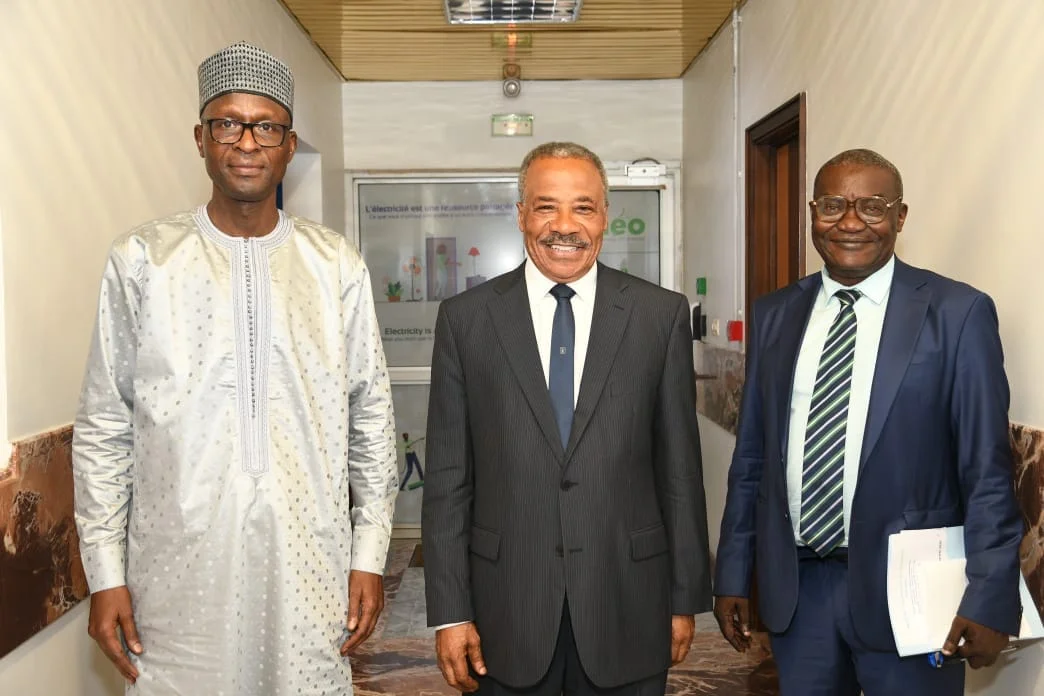
From left to right: Oumarou Hamandjoda, Director General; Antoine Ntsimi, Chairman of the Board of Directors; and Jean Basile Ekobena, Deputy Director General of SOCADEL.
On May 8, 2026, in Douala, attention was focused on the new team tasked with taking over one of the most sensitive sectors of the Cameroonian economy. Accompanied by performances from the SOCADEL Energizing Band and in front of an audience made up of government officials, energy sector executives and trade union representatives, the handover ceremony between the outgoing ENEO management and the new executives of the Cameroon Electricity Company (SOCADEL) unfolded in an atmosphere combining solemnity and political pressure.
Only days after the official transformation of ENEO into SOCADEL, following the takeover by the Cameroonian State of assets previously controlled by British investment fund Actis, the ceremony marked a decisive stage in the restructuring of the national electricity sector. For several years, Cameroonian authorities have faced increasing criticism over recurrent power rationing, difficulties in access to electricity and deteriorating service quality in several cities across the country.
At the center of attention, Minister Gaston Eloundou Essomba delivered a particularly firm address to the new management team led by Antoine Ntsimi, Chairman of the Board of Directors, Oumarou Hamandjoda, Chief Executive Officer, and Basile Ekobena, Deputy Chief Executive Officer. Speaking before employees and guests, the government official stressed that the reform reflects the clear determination of President Paul Biya to restore State authority in a sector considered strategic for Cameroon’s industrial and economic growth.
The diagnosis presented by the minister left little room for ambiguity. Persistent financial imbalances, cash flow tensions, widespread energy fraud, high commercial losses and shortcomings in public service quality are among the major challenges the new management must address within what is seen as an extremely short timeframe. The government is now demanding rapid and concrete results, particularly in revenue collection, the deployment of prepaid meters, infrastructure modernization and customer service improvement. “Everyone must pay their electricity bill,” the minister insisted, while also calling for full traceability of financial flows.
Within energy sector circles, several observers believe the challenge will be enormous. According to data from the World Bank and the African Development Bank, access to electricity in Cameroon remains below 75%, with major disparities between urban and rural areas. Technical and commercial losses within the grid are among the highest in the sub-region, while investment needs in electricity infrastructure amount to several hundreds of billions of CFA francs.
Beyond technical and financial issues, the government is also seeking to avoid a social crisis within the company. In his speech, Gaston Eloundou Essomba reassured employees that their social benefits would be preserved despite the institutional transition. Authorities promised a gradual transition accompanied by continuous dialogue with trade unions and staff in order to prevent tensions that could further destabilize the sector.
But it was above all the announcement of a tougher crackdown on energy fraud that drew the most attention. The minister revealed plans to establish a national task force responsible for tracking illegal connections and internal complicity within the electricity system. From now on, any employee involved in fraudulent practices will face disciplinary sanctions and legal prosecution.
For SOCADEL’s new management team, the next hundred days already appear to be a full-scale test. Between consumer expectations, financial imperatives and political pressure, the company will have to quickly prove that it can embody the renewal of a sector that has become vital to Cameroon’s economy.

 La voix des entreprises
 Esther Grâce