

STOCK MARKET LISTING : BGFI Holding Corporation Opens a New Chapter for the Cemac Stock Exchange

(LVDE) – Gabonese banking group BGFI Holding Corporation has officially joined the equities compartment of the Central African Stock Exchange (Bvmac), becoming the seventh company listed on Cemac’s unified financial market. The operation, finalized during the first half of 2026 in Douala, marks an important milestone for the development of the regional stock market and for the banking group’s financial diversification strategy across several African countries.

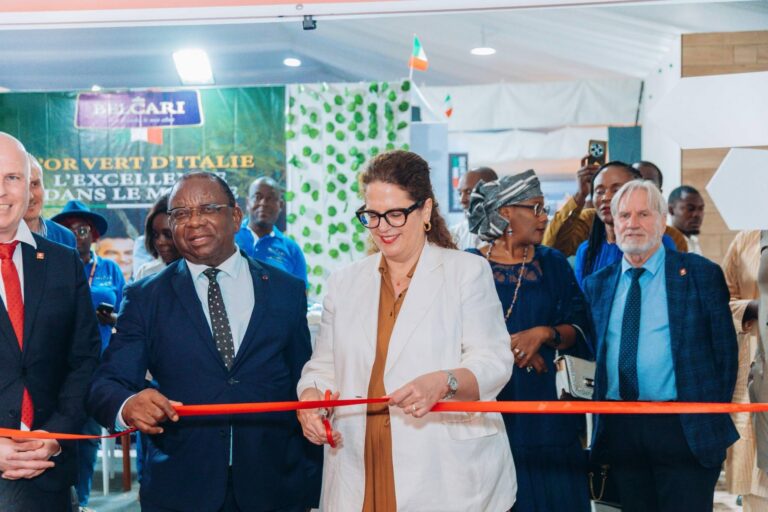
Inside the trading room of the Central African Stock Exchange (Bvmac) in Douala, screens displaying the first quotations of BGFI Holding Corporation captured the attention of investors, financial intermediaries and economic officials gathered for what many described as a historic moment for sub-regional finance. With this stock market listing, the Gabonese banking group officially becomes the seventh company listed on the equities segment of the financial market shared by the six Cemac member states.
For Bvmac executives, the transaction represents far more than a simple market listing. It sends a signal to international investors and companies across the sub-region at a time when Central Africa’s financial market is still striving to gain depth and attractiveness. Long regarded as one of the weak links in regional economic integration, the community stock exchange still struggles to compete with larger African financial hubs such as Johannesburg, Casablanca and Lagos. According to the latest available figures, Bvmac’s overall market capitalization remains significantly below that of Africa’s major exchanges despite reforms introduced following the unification of Cemac’s financial markets in 2019.
At BGFI Holding Corporation headquarters, the stock market listing is presented as a strategic move aimed at strengthening the group’s international visibility and diversifying its funding sources. Already established in around ten African countries as well as in Europe, the banking group intends to leverage capital markets to support its growth ambitions, particularly in corporate financing, infrastructure development and digital banking. The operation is also expected to improve the liquidity of the group’s shares while broadening its base of institutional and retail investors.
Within Bvmac circles, several financial analysts see the listing as a psychological turning point for the regional market. For years, Cemac’s monetary and financial authorities have repeatedly encouraged major public and private companies to rely more on stock market financing rather than depending exclusively on bank credit. Yet despite these incentives, only a limited number of companies have taken the step, discouraged by the financial transparency, governance and reporting requirements imposed by capital markets.
With the arrival of BGFI Holding Corporation, stock exchange officials hope to create a ripple effect capable of encouraging other regional groups to consider going public. The stakes are high for a Cemac region facing massive infrastructure financing needs, industrial modernization challenges and economic diversification ambitions. According to the African Development Bank (AfDB), annual infrastructure financing requirements in Central Africa amount to several billions of dollars, while government budgetary capacities remain constrained.
Beyond the figures, the transaction also carries symbolic significance. It reflects the determination of African financial groups to strengthen their regional roots and contribute to the construction of a genuine capital market in Central Africa. For investors present in Douala during the ceremony, BGFI Holding Corporation’s entry onto the regional exchange represents another step toward consolidating a financial ecosystem that remains young but is undergoing profound transformation.
What remains to be seen now is whether this stock market listing will mark the beginning of a new momentum for Bvmac or whether the regional market will continue to progress at a pace still too slow to meet Cemac’s economic ambitions.


 Esther Grâce
 La voix des entreprises