

CEMAC : BEAC set to distribute CFAF 84 billion in dividends to member states in 2026

(LVDE) – The Bank of Central African States (BEAC) plans to pay out CFAF 84 billion in dividends to the six CEMAC member states for the 2025 financial year. The allocation, expected to be disbursed in 2026, concerns Cameroon, Gabon, the Republic of Congo, Chad, Equatorial Guinea and the Central African Republic, at a time when public finances across the sub-region remain under pressure and non-tax revenues are becoming increasingly important.
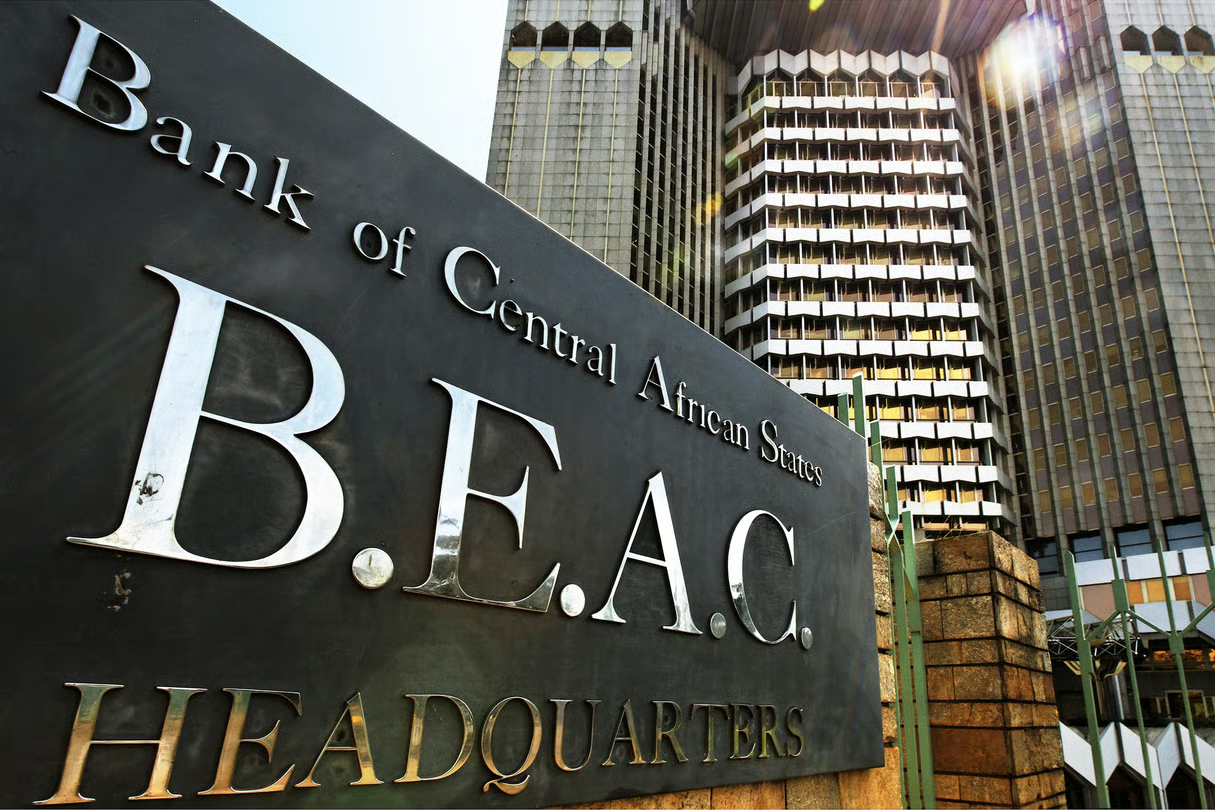
In Central Africa’s Economic and Monetary Community, governments are closely monitoring the financial performance of BEAC, the common issuing institution for the CFA franc zone. Based on preliminary 2025 accounts, the central bank is set to distribute CFAF 84 billion in profits to its public shareholders, namely the member states.
This envelope, which will be transferred after the approval of the financial statements in 2026, is considered a meaningful budgetary support tool in a context marked by strained fiscal revenues and rising financing needs. For several finance ministries, these inflows serve as additional liquidity that can help cover priority spending, particularly in social sectors and infrastructure projects.
BEAC derives these earnings from its foreign exchange reserve management, financial investments, and operational income linked to its monetary issuance and supervisory functions. Over recent years, higher global interest rates and improved reserve asset management have contributed to strengthening the institution’s profitability.
In CEMAC capitals, such dividends are often incorporated into supplementary finance laws or used to partially offset budget deficits. Cameroon, which benefits the most due to its weight in the allocation key, alongside Gabon and the Republic of Congo, remains among the main recipients, given their structural reliance on oil-related revenues.
According to regional financial data and central bank publications, BEAC dividend payouts have remained broadly stable in recent years, typically ranging in the tens of billions of CFA francs per year. This stability reflects both the resilience of the institution’s balance sheet and its cautious approach to surplus management.
In a macroeconomic environment shaped by public debt pressures and volatile export revenues, especially hydrocarbons, these non-tax resources are increasingly viewed as strategic. They provide governments with limited fiscal breathing space, helping to reduce short-term borrowing needs or finance targeted expenditures without increasing tax pressure.
However, economists stress that these dividends remain inherently cyclical and cannot serve as a sustainable financing base. Their level depends on global financial market performance, reserve management policies, and broader international economic conditions.
Looking ahead to 2025–2026, BEAC is also pursuing internal reforms aimed at strengthening regional financial stability, improving operational transparency, and consolidating confidence in the common currency. These measures are expected to influence, in the medium term, the institution’s capacity to generate distributable surpluses.
For CEMAC member states, the CFAF 84 billion dividend therefore represents a temporary but significant fiscal boost in a constrained environment, reaffirming the central bank’s dual role in monetary stability and indirect support to national economies.

 Esther Grâce
 La voix des entreprises