


CAMEROON : ONACC unveils the 2026 agricultural calendar for the Sudano-Sahelian zone

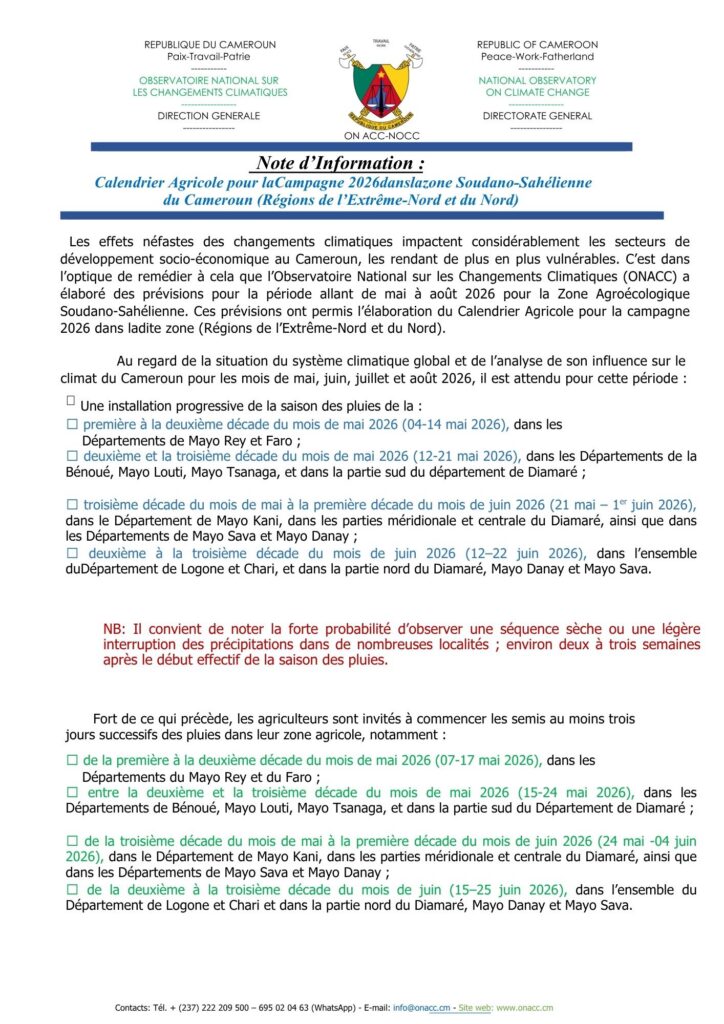
(LVDE) – In Cameroon, the National Observatory on Climate Change (ONACC) published on April 29, 2026, the agricultural calendar for the Far North and North regions. Based on climate forecasts covering the period from May to August 2026, the document aims to guide farmers on optimal planting periods, amid growing climate change impacts.
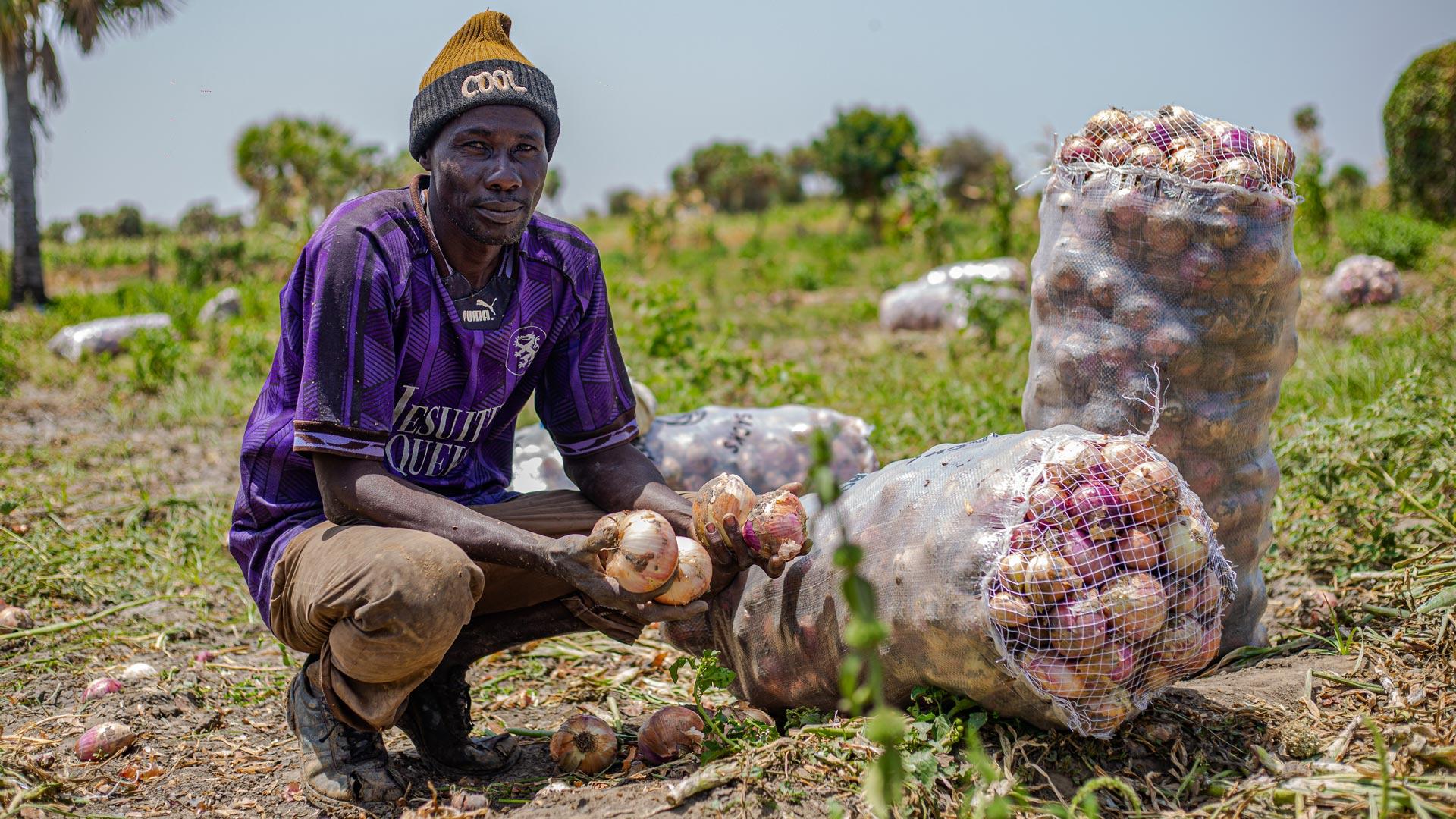
In the northern regions of Cameroon, adapting to climate variability has become a pressing necessity for rural stakeholders. Faced with increasingly unpredictable seasons and disruptions in rainfall patterns, the agricultural sector is striving to better anticipate production cycles. It is within this context that ONACC released the 2026 agricultural calendar for the Sudano-Sahelian agro-ecological zone.
According to the institution’s projections, the rainy season is expected to set in gradually between early May and late June 2026, with variations depending on the area. In Mayo Rey and Faro divisions, the first significant rains are expected between May 4 and May 14. In the divisions of Benoue, Mayo Louti, and Mayo Tsanaga, as well as in the southern part of Diamaré, the effective onset of rains is projected between May 12 and May 21.
Further south and in central Diamaré, as well as in Mayo Kani, Mayo Sava, and Mayo Danay, the rainy season is expected to begin between May 21 and June 1. By contrast, in Logone-et-Chari and the northern parts of Diamaré, Mayo Danay, and Mayo Sava, the rains are forecast to start later, between June 12 and June 22. This gradual progression highlights the complexity of climatic patterns within this agro-ecological zone.
However, ONACC experts warn of potential irregularities in rainfall distribution. A dry spell lasting two to three weeks could occur shortly after the initial rains. Such interruptions pose a risk to crops if planting is carried out too early without stable moisture conditions.
In response to these uncertainties, authorities are urging farmers to adopt a cautious approach. In particular, planting is recommended only after at least three consecutive days of effective rainfall. In early rainfall areas such as Mayo Rey and Faro, sowing is advised between May 7 and May 17. In other northern divisions, planting periods extend from mid-May to late June, depending on local rainfall patterns.
This anticipatory framework is intended to reduce agricultural losses and improve yields in a region highly vulnerable to climate shocks. By providing precise guidance, ONACC aims to strengthen the resilience of the agricultural sector to environmental disruptions.
At a time when agriculture remains a key pillar of the local economy and food security, the dissemination of this calendar stands out as a strategic tool. It reflects the government’s commitment to integrating climate data into agricultural planning in order to secure farming seasons and support rural communities in the face of climate change challenges.

 La voix des entreprises
 Esther Grâce