

AFDB ANNUAL MEETINGS : Sidi Ould Tah Elevated to the Rank of Commander in Brazzaville

(LVDE) – On May 26, 2026 in Brazzaville, during the opening ceremony of the 61st Annual Meetings of the African Development Bank (AfDB), Congolese President Denis Sassou-N’Guesso elevated the President of the AfDB Group, Sidi Ould Tah, to the rank of Commander in the Congolese Order of Merit. Several other senior officials of the institution were also honored at the Kintélé International Conference Centre, in the presence of African leaders and more than 3,000 delegates.
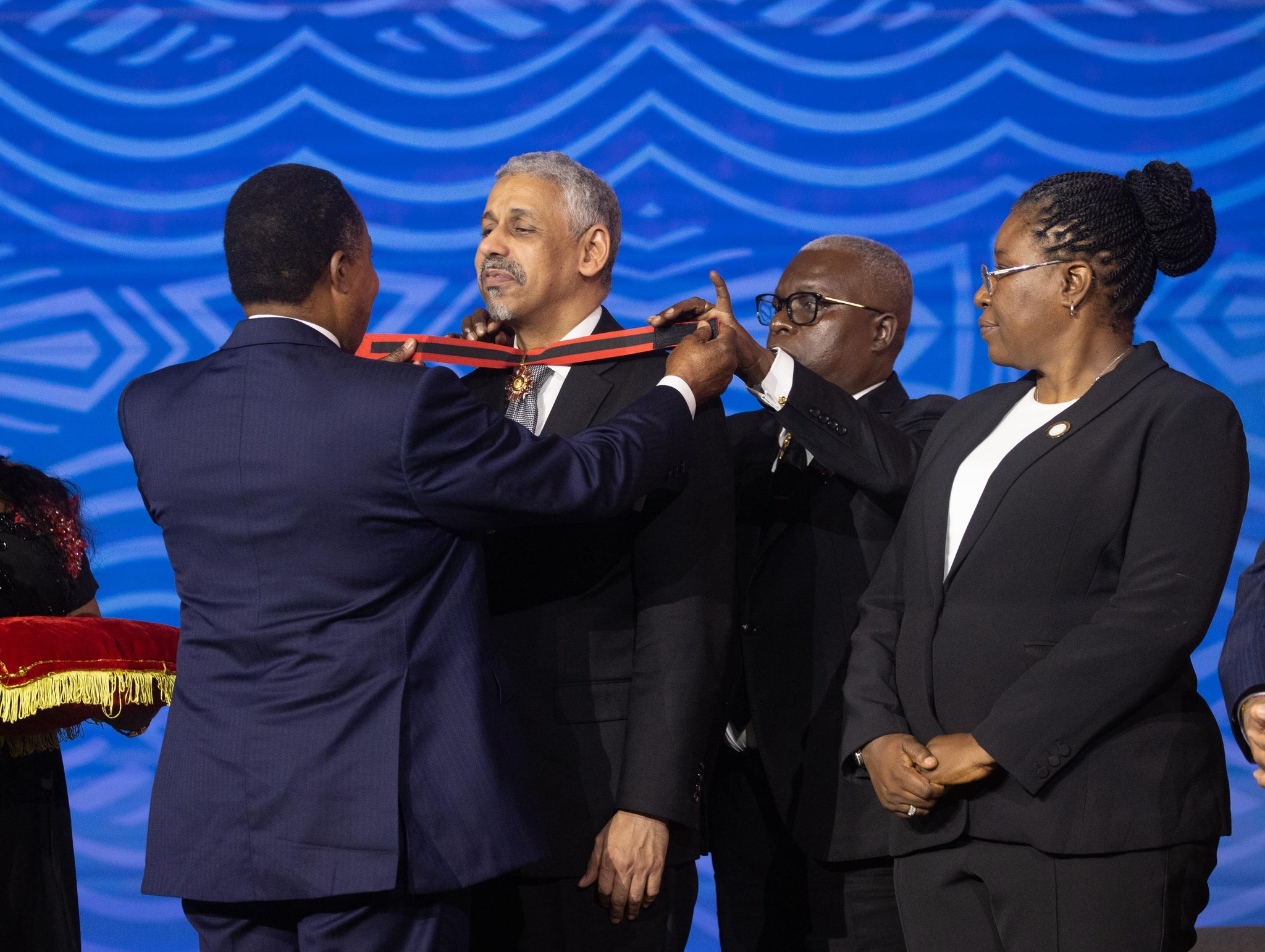
In the solemn setting of the Kintélé International Conference Centre, the opening ceremony of the 61st Annual Meetings of the African Development Bank took on the appearance of a major diplomatic tribute. On this occasion, Congolese President Denis Sassou-N’Guesso chose to honor several senior officials of the pan-African institution, underscoring a gesture with strong symbolic and political significance.
Dr. Sidi Ould Tah, who assumed leadership of the Bank in September 2025, was elevated to the rank of Commander in the Congolese Order of Merit. The distinction comes as he presides for the first time over the Group’s Annual Meetings, a strategic gathering during which the institution presents its financial results, operational priorities and development financing outlook for Africa.
Alongside the AfDB President, Chioma Onukogu, Director of Board Affairs and Proceedings, was also promoted to the rank of Commander. Four other officials were decorated as Knights, including senior executives overseeing regional operations and strategic functions within the institution. According to Congolese authorities, all appointments were formalized through Presidential Decree No. 2026-180 of May 22, 2026.
The ceremony was attended by several African heads of state, including Gabonese President Brice Clotaire Oligui Nguema and Central African President Faustin-Archange Touadéra. Their presence highlighted the continental dimension of the event, which brought together more than 3,000 delegates to discuss development financing challenges across Africa.
Beyond the honors bestowed, these Annual Meetings come at a pivotal economic moment for the institution. The African Development Bank recently completed a record replenishment of the African Development Fund, mobilizing $11 billion during a fundraising round held in London in December 2025. The financing package is considered a key pillar of the Bank’s support for low-income African countries.
Held under the theme of economic sovereignty and financial efficiency, the 61st Annual Meetings are focusing on Africa’s capacity to reduce external dependency. One of the central discussions revolves around strengthening domestic resource mobilization in an international environment marked by fragmented financing flows and declining concessional funding.
For the new President of the African Development Bank, the meetings represent both a political and institutional test. They are expected not only to consolidate his legitimacy at the helm of the institution, but also to define the direction of a financial strategy aimed at greater African autonomy in an increasingly constrained global macroeconomic environment.
At the intersection of diplomatic recognition, governance challenges and development financing imperatives, the Brazzaville gathering once again highlighted the central role of the African Development Bank in reshaping Africa’s development model.

 La voix des entreprises
 Esther Grâce