

PERFORMANCE : Port of Kribi, the container terminal targets the one-million TEU milestone despite logistical constraints

(LVDE) – One year after the arrival of the giant container ship MSC Türkiye at Terminal 2 of the Port of Kribi, Kribi Conteneurs Terminal (KCT) is reporting a sharp rise in activity. With more than 750,000 TEUs handled over twelve months and over 370 vessel calls recorded, the Cameroonian port platform is gradually establishing itself as a regional maritime transshipment hub in Central Africa. Driven by growing international traffic and the regular arrival of Megamax vessels, the terminal is now aiming to reach the one-million-container mark by 2027, despite persistent road and rail connectivity challenges.
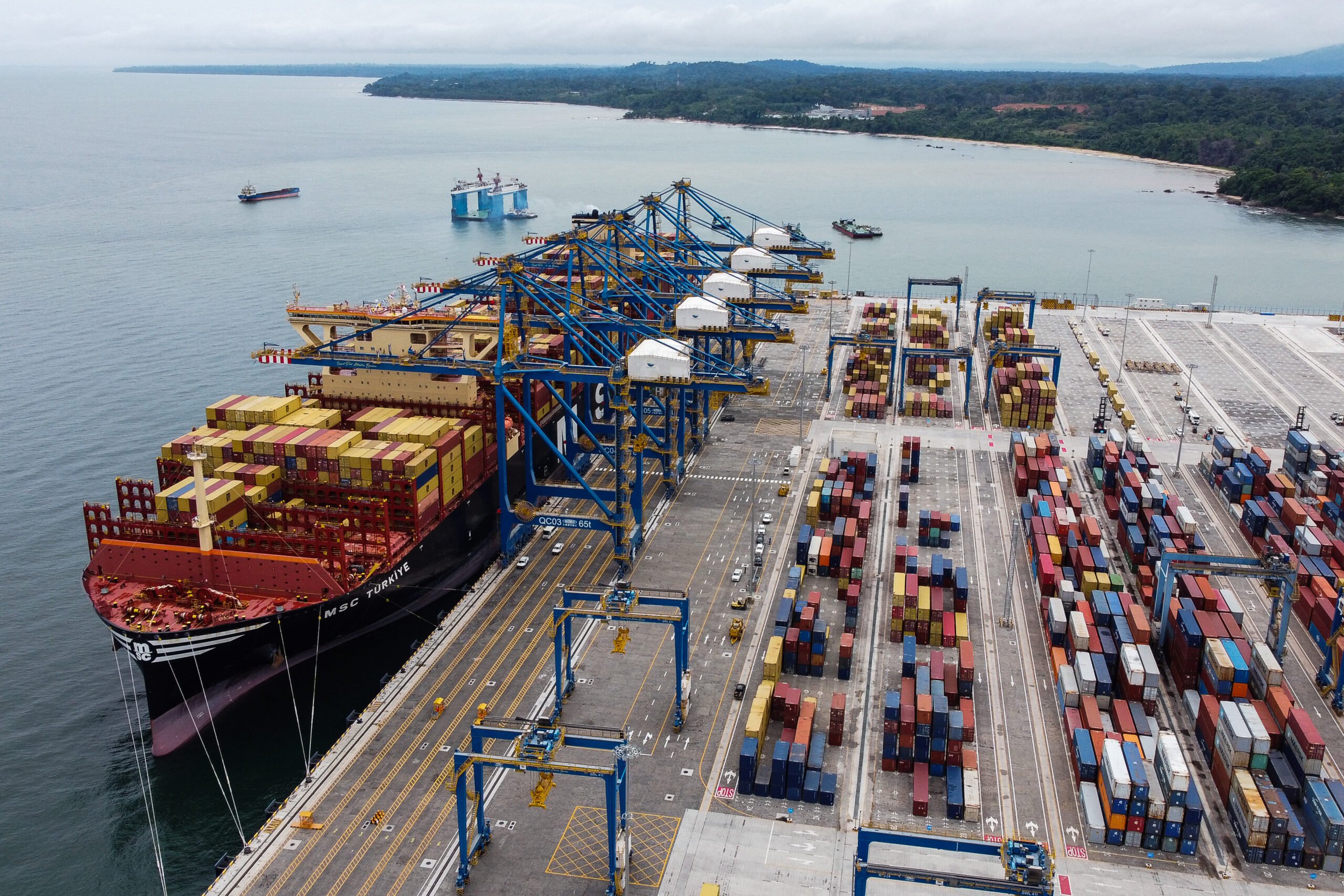
Under Kribi’s humid skies, gigantic port cranes tower over docks lined with thousands of multicolored containers. Several meters above the terminal, automated gantries move massive cargo shipments arriving from Asia, Europe and other African ports without interruption. In the distance, the monumental silhouette of the MSC Türkiye captures every eye. Measuring 400 meters in length and capable of carrying up to 24,000 TEUs, the vessel ranks among the largest container ships in the world. One year after its maiden call in Cameroon, the giant of the seas has become a regular visitor to Kribi’s port facilities.
May 8, 2025 marked a symbolic milestone for Cameroon’s container terminal with the arrival of this Megamax vessel at Terminal 2 operated by Kribi Conteneurs Terminal (KCT). Since then, vessel rotations have intensified. These maritime giants now berth several times a month alongside ships operated by major international shipping companies such as CMA CGM, confirming Kribi’s gradual integration into the exclusive circle of major African port platforms capable of accommodating vessels of this size.
Inside the terminal’s control rooms, screens display real-time vessel movements, loading operations and regional logistics flows. According to KCT officials, this rapid growth reflects a profound transformation in the role of Cameroon’s port within Gulf of Guinea maritime trade. In just one year, the terminal handled nearly 750,000 TEUs through more than 370 port calls, representing an 82% increase in cargo volumes handled.
This spectacular growth is largely driven by the expansion of regional transshipment activities. Today, nearly 70% of the containers processed in Kribi are redistributed to other ports across Central Africa and the West African coastline. A significant share of these flows also serves the Cameroonian market, particularly Douala, as well as destinations such as Angola, Nigeria and Congo.
In the storage yards, the constant movement of trucks reflects this growing activity. Every month, hundreds of containers carrying timber, industrial products and various goods transit through the platform toward neighboring countries. Initial mining-related flows are also beginning to emerge with exports linked to the Grand Zambi iron ore project.
Beyond commercial performance, the terminal’s expansion is gradually reshaping the local economy. Since the commissioning of Terminal 2, KCT says it has created more than 430 direct jobs and over 1,000 indirect jobs linked to port, logistics and industrial activities.
Faced with sustained growth, terminal operators are already preparing a new expansion phase. In the coming weeks, work is expected to begin on an additional eight hectares of storage space. The investment, estimated at between €25 million and €30 million, aims to significantly increase the terminal’s capacity and eventually bring annual throughput close to one million TEUs.
Yet behind this momentum, several weaknesses remain. The Kribi-Edéa road, the main corridor linking the port to hinterland markets, remains heavily deteriorated, complicating cargo transport toward Yaoundé, Chad and the Central African Republic. As for the railway project intended to connect the port to major regional corridors, it is still at the preparatory stage.
Within port and logistics circles, many observers now believe that Kribi’s future will depend as much on the modernization of land infrastructure as on the maritime performance of the terminal itself. While the port already attracts some of the world’s largest commercial vessels, the long-term competitiveness of the Cameroonian platform will inevitably require rapid improvements to the road and rail corridors linking the coast to Central African markets.

 La voix des entreprises
 Esther Grâce