


CRAFTS AND COMPETITIVENESS : MINPMEESA accelerates certification of local products to improve market access

(LVDE) – In Yaoundé, on April 23, 2026, the Minister of Small and Medium-Sized Enterprises, Social Economy and Handicrafts (MINPMEESA) officially opened the third edition of the Artisan Day of Yaoundé I Municipality. The event, which brings together artisans, experts, and local authorities, is dedicated to the certification of local products, with the aim of strengthening compliance with standards and improving their competitiveness in both national and international markets.

Inside the Yaoundé I municipal premises, the atmosphere reflects a sector undergoing deep transformation. The third edition of Artisan Day is taking place in a context where quality has become a central issue for micro, small, and medium-sized enterprises as well as local artisans in Cameroon. The minister immediately framed the discussion around structural transformation, stressing the need to align local products with recognized standards. (Source: MINPMEESA official communication 2026)
The assessment presented by the ministry’s technical services highlights a significant gap between production and compliance. According to data released at the opening ceremony, only 38% of tested artisanal products currently meet applicable standards, particularly in the agri-food sector. This figure illustrates ongoing challenges related to quality control, packaging, and traceability in a sector widely regarded as a key pillar of the informal economy and local employment. (Source: ANOR Cameroon standardization reports 2025)
In response, public authorities have stepped up support initiatives. In 2025, around 500 micro, small, and medium-sized enterprises were assisted in their certification processes, while 200 stakeholders were trained in barcode usage and about 100 were sensitized on labeling and standardization requirements. These actions aim to progressively structure an artisanal sector that remains largely fragmented. (Source: MINPMEESA 2025 report)
On the ground, participating artisans are also introduced to new support mechanisms, including a dedicated certification fund designed to reduce compliance costs. Through cooperation with the national standards agency, a 30% reduction in fees has already been achieved, making it easier for several producers to enter formal distribution channels. This measure is seen as a key lever for expanding the base of certified businesses.
Over several days, technical workshops, training sessions, and B2B meetings are being organized. Participants also benefit from personalized guidance through a dedicated advisory desk, while exhibitions showcase local production. This approach aims to bring artisans closer to modern market requirements, particularly in terms of quality, presentation, and commercial competitiveness.
Beyond the figures, the economic stakes are significant. The government emphasizes the direct link between certification, access to large retail chains, and job creation. The stated objective is to transform handicrafts into a genuine driver of inclusive growth, capable of generating higher added value and better integration into formal distribution networks.
In a context where African economies are striving to strengthen their productive base, this initiative fits into a broader trend of formalization and value upgrading of local production. For the authorities, certification is now seen as an essential step to position Cameroonian products in increasingly competitive markets while strengthening the credibility of “Made in Cameroon.”


 La voix des entreprises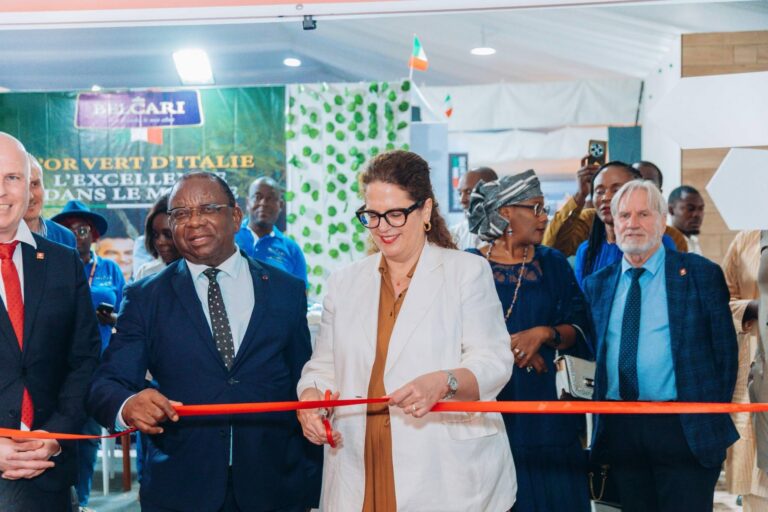
 Esther Grâce