

PORTS & LOGISTICS : Kribi Port Authority aims to become Cameroon’s new industrial hub

(LVDE) – The public company managing the port platform reported in 2025 that it handled 2.7 million tonnes of cargo, up 19% compared to 2024, positioning itself as the country’s leading container terminal. This performance, announced in early 2026, confirms the rapid rise of this strategic hub located in southern Cameroon.
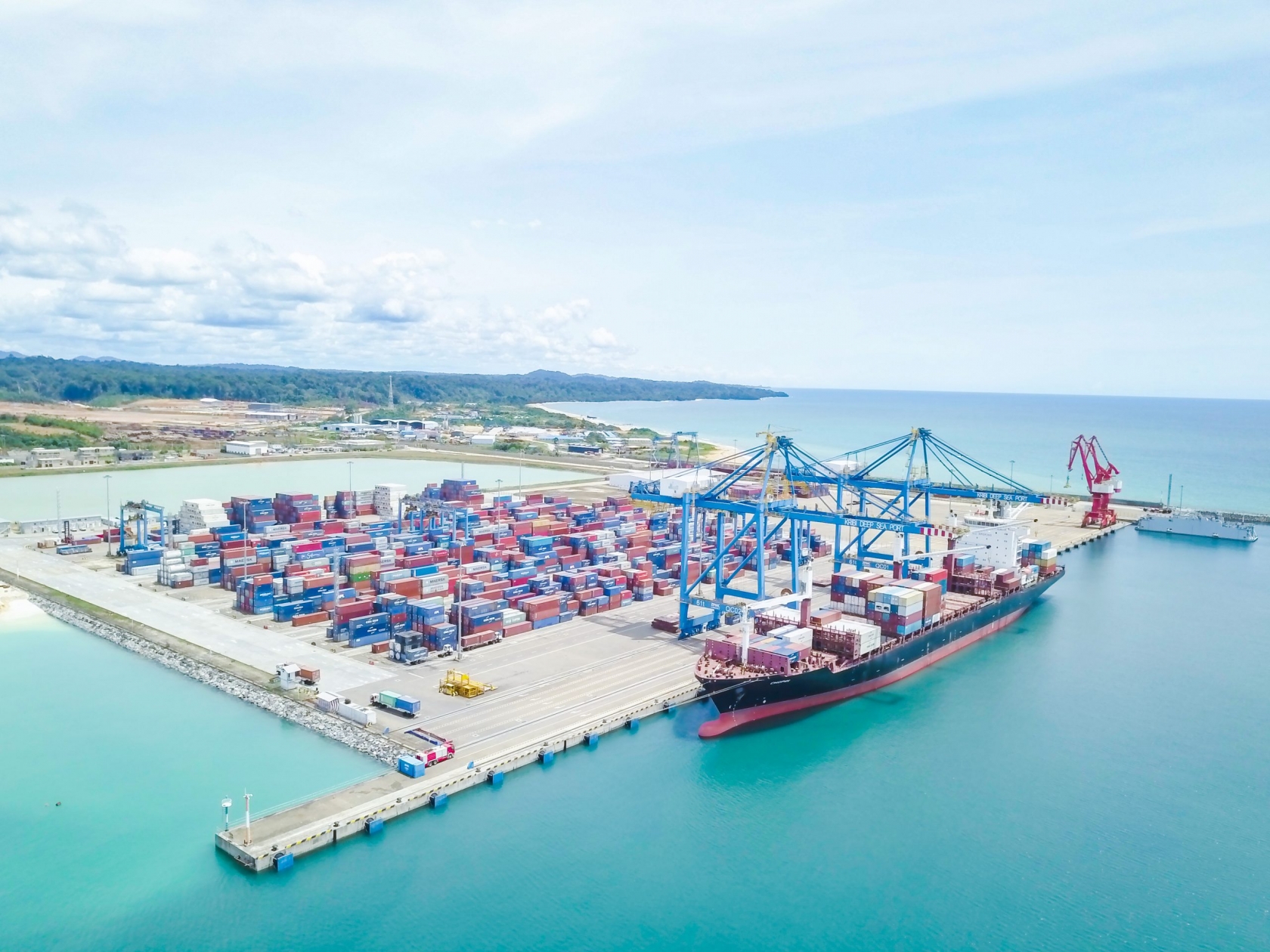
Along Cameroon’s Atlantic coastline, the Port of Kribi is increasingly aligning its ambitions with the scale of its deep-water infrastructure. Once viewed as a long-term structuring project, this industrial and port complex is now accelerating its expansion and reshaping the national maritime transport balance. In 2025, throughput reached 2.7 million tonnes, reflecting strong year-on-year growth driven by rising container traffic, cargo diversification, and continuous improvements in logistics capacity.
This performance comes amid intensifying competition with the Port of Douala, historically the country’s leading port. Kribi leverages its natural advantages, particularly its deep draft, which allows it to accommodate large-capacity vessels, as well as sustained investments in its container terminals. Sector data indicate that container traffic in Cameroon is growing at an average annual rate of 7% to 10%, supported by expanding sub-regional trade and the growth of extractive and manufacturing industries.
Beyond the figures, Kribi’s strategic positioning is increasingly attracting economic operators. From multinational corporations to local SMEs, businesses see the port as a competitive gateway for import-export operations, particularly within the CEMAC region. The gradual expansion of port infrastructure, combined with developing logistics corridors toward the hinterland, is strengthening its attractiveness. The port is thus becoming a key driver of industrialisation, with adjacent industrial zones under development to host processing and manufacturing units.
However, this momentum also comes with challenges, particularly regarding inland connectivity and the efficiency of customs procedures. Industry stakeholders are calling for further modernisation of road and rail infrastructure to sustainably support traffic growth. Despite these constraints, the outlook remains positive. With ongoing investments and a performance-driven governance model, the Port of Kribi aims to consolidate its position as a major logistics hub in Central Africa and establish itself as a key driver of competitiveness for Cameroonian businesses.

 La voix des entreprises
 Esther Grâce