

COCOA & INDUSTRY : Processed products generate XAF 385.3 billion, confirming Cameroon’s industrial shift

(LVDE) – In 2025 in Cameroon, exports of cocoa butter, cocoa paste, and chocolate reached XAF 385.3 billion, according to the National Institute of Statistics (INS). These results, recorded over the full year, represent an increase of XAF 67.4 billion compared to 2024 and concern a total volume of 99,190 tonnes shipped to international markets.

In cocoa industry zones, local processing is emerging as a key driver of economic growth. According to the foreign trade report published by the National Institute of Statistics of Cameroon, cocoa-derived products recorded significant growth in 2025, confirming the structural shift of the sector toward higher value addition.
The momentum is mainly driven by cocoa paste, which accounts for the bulk of performance. Exports of this segment reached 73,261 tonnes, compared to 61,527 tonnes a year earlier, generating XAF 261.3 billion in revenue. This increase of more than XAF 51 billion highlights the direct impact of strengthened local industrial capacity on the trade balance.
Cocoa butter also contributed to this upward trend. Despite a decline in export volumes—from 24,819 tonnes in 2024 to 21,494 tonnes in 2025—revenues rose to XAF 115.5 billion. This development is largely explained by higher international prices, reflecting improved valuation of Cameroon’s processed cocoa products.
By contrast, chocolate and other cocoa-based preparations recorded a slight decline. Exports stood at 4,435 tonnes, generating XAF 8.4 billion, down moderately from the previous year. However, this segment remains marginal within overall processed cocoa exports, despite its growth potential in high-value markets.
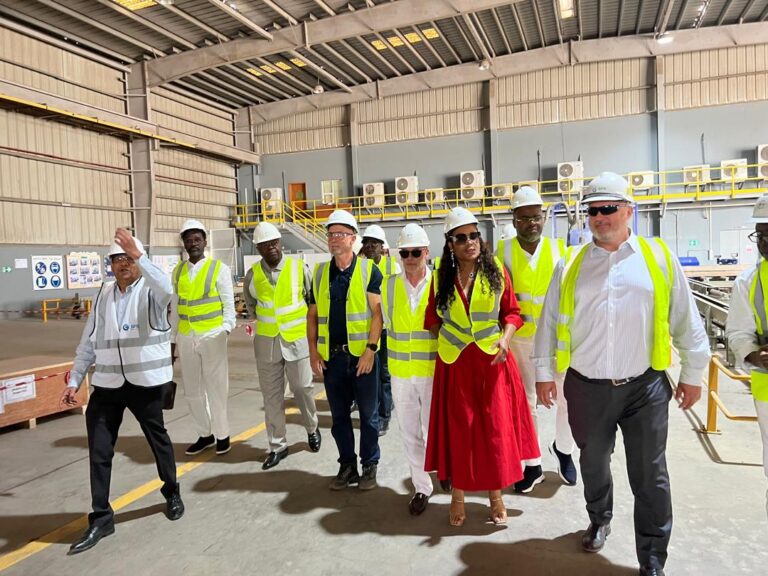
This expansion of local processing is supported by industrial investments made over the past decade. The establishment of grinding facilities such as Neo Industry, Atlantic Cocoa, and Africa Processing, along with the expansion of existing players like SIC Cacaos, has significantly reshaped the sector’s structure. Cameroon now has a stronger industrial base capable of processing an increasing share of its national production.
According to the National Cocoa and Coffee Board, the 2024–2025 campaign reached a symbolic milestone with more than 100,000 tonnes of cocoa beans processed locally. This marks a turning point in the sector’s value-added strategy, historically dominated by raw bean exports.
This gradual transformation is also reflected in the country’s international positioning. According to competitiveness analyses published by the Ministry of Economy, Cameroon ranked as the world’s 7th largest exporter of cocoa paste and 9th largest exporter of cocoa butter in 2024, confirming its growing integration into global value chains.
Meanwhile, cocoa bean exports remain a major pillar of the sector, with 162,257 tonnes shipped in 2025, generating XAF 810.1 billion. However, the rising share of processed products is gradually reshaping the economic structure of the industry, increasing the value retained domestically.
This evolution reflects a deeper transformation of Cameroon’s cocoa economy, which is no longer limited to raw material exports. It is increasingly shifting toward industrialization, supported by private investment and public strategies aimed at strengthening local processing and improving global competitiveness.


 La voix des entreprises
 Esther Grâce