


CAMEROON : Cocoa exports generate over CFAF 800 billion in 2025

(LVDE) – In 2025, Cameroon’s cocoa sector generated CFAF 810.2 billion in export revenue, according to foreign trade data published in early 2026. This performance, recorded mainly at the Port of Douala and on international markets, was driven by higher cocoa prices in the first half of the year, despite a decline in export volumes and a downturn in prices toward year-end.
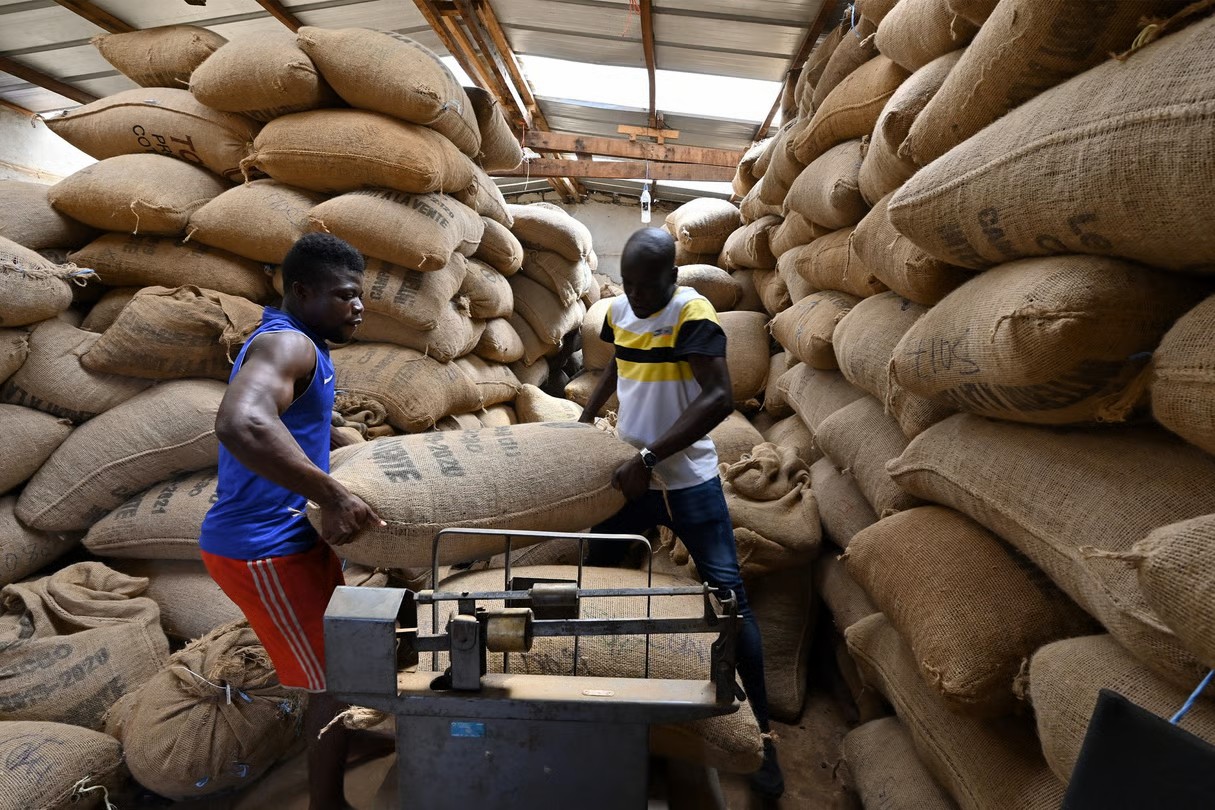
At the Port of Douala, the main gateway for Cameroon’s cocoa exports, 2025 was marked by mixed dynamics. On the one hand, export revenues surpassed CFAF 810 billion, representing an 18.7% increase compared to 2024. On the other, this growth masks underlying weaknesses linked to falling volumes and the volatility of global prices.
The strong performance was largely fueled by the surge in international cocoa prices during the first half of the year. Amid global supply constraints, prices reached historic highs at the end of 2024, extending into early 2025. Between January and June 2025, export prices for Cameroonian cocoa ranged between CFAF 3,800 and CFAF 4,130 per kilogram, according to data from the National Cocoa and Coffee Board (ONCC). On international markets, prices climbed to as high as $10,750 per ton at the beginning of the year before gradually adjusting in the spring.
However, this upward trend did not hold throughout the year. From June 2025 onward, global prices began to decline significantly, recording an overall drop estimated at nearly 65% between January and December. This correction slowed revenue growth in the latter part of the year, offsetting the gains achieved earlier.
Beyond price fluctuations, declining export volumes also played a key role. Cocoa bean exports fell by 9%, dropping from 178,230 tons in 2024 to 162,257 tons in 2025. This downward trend, observed over several years, reflects persistent supply-side constraints, including productivity challenges, climate conditions, and structural issues within the sector.
Paradoxically, national production showed notable improvement. During the 2024/2025 cocoa season, farmers marketed 309,518 tons of cocoa beans, up 13% compared to the previous season, according to the ONCC. An increasing share of this output—estimated at around 35%—was processed locally, contributing to greater value addition within the country.
Cocoa thus reaffirms its status as a cornerstone of Cameroon’s economy. In 2025, it accounted for 26.3% of total export revenues. When combined with earnings from processed cocoa products, which reached CFAF 376.9 billion, the cocoa sector surpassed hydrocarbons for the first time in the country’s export structure.
This performance nevertheless highlights the sector’s strong dependence on global markets. Price volatility continues to shape export revenues, exposing the economy to external shocks. In this context, the key challenge for the coming years will be to stabilize production, improve yields, and expand local processing in order to secure export earnings.
Caught between global demand opportunities and persistent structural constraints, Cameroon’s cocoa sector stands at a strategic crossroads. Its ability to consolidate recent gains will determine its contribution to economic diversification and resilience in the face of fluctuating international markets.


 La voix des entreprises
 Esther Grâce