

ECOBANK GROUP : Nearly $800 million mobilized for women-led businesses in 2025

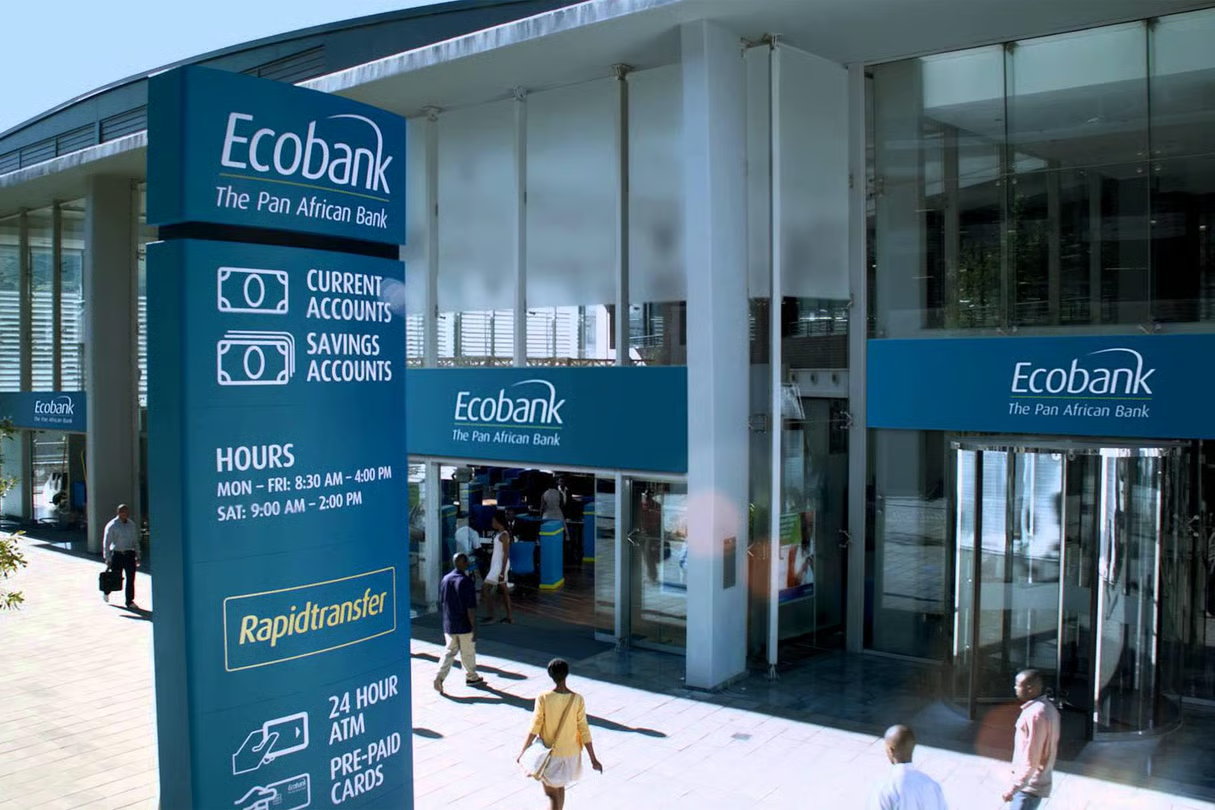
(LVDE) – On the occasion of the celebration of International Women’s Day 2026, the pan-African banking group Ecobank announced a significant increase in financing provided to women-led businesses. In 2025, nearly $780 million in loans were mobilized for female entrepreneurs across the continent, highlighting the growing scale of the bank’s initiatives aimed at promoting financial inclusion and supporting women’s entrepreneurship in Africa.
The pan-African banking group Ecobank is strengthening its commitment to female entrepreneurship across the continent. According to figures released on February 12, 2026 during the publication of the annual report of its gender program, the financial institution granted nearly $780 million in loans in 2025 to businesses owned or led by women. This financing volume represents a remarkable 194% increase compared to 2024, when approximately $265 million had been mobilized.
The announcement comes at a time when women entrepreneurs play a crucial role in Africa’s economic dynamics. Active in numerous sectors, they contribute to job creation, household income support and the strengthening of local value chains. Despite this essential contribution, access to financing remains a major challenge. According to estimates cited by the bank and several international financial institutions, the financing gap faced by women-led businesses in Africa is estimated at nearly $42 billion.
To address this challenge, Ecobank has gradually developed a strategy focused on financial inclusion and the support of women entrepreneurs. At the heart of this initiative is the program Ecobank Ellevate, launched in November 2020 at the height of the health crisis linked to the COVID-19 pandemic. Initially designed to support women-led businesses affected by the pandemic, the program has progressively become one of the most geographically extensive banking initiatives on the continent dedicated to female entrepreneurship.
In 2025, the initiative was rolled out in 26 countries across West, Central, East and Southern Africa, significantly expanding its reach. More than 103,000 women entrepreneurs are now registered within this ecosystem. Over the past year, nearly 21,000 new female business owners joined the program, while more than 24,000 women benefited from training sessions, mentorship programs or other forms of non-financial support aimed at strengthening their managerial and business development capacities.
Beyond access to credit, the initiative also aims to facilitate the integration of women-led enterprises into African trade networks. Through the bank’s single market trade platform, entrepreneurs are able to access business opportunities across the continent, establish partnerships and reach customers beyond their domestic markets.
At the same time, the bank is paying closer attention to women operating in the informal economy, a segment that remains particularly significant in many African countries. In this regard, Ecobank launched in 2024 in Ghana the program Ecobank MAMA, designed to support small-scale women-run businesses. The initiative offers subsidized credit, tailored savings solutions and practical advisory services aimed at improving business management.
According to the bank’s data, more than 10,000 women from the informal sector have already joined the program, while over 2,000 have benefited from subsidized credit facilities totaling more than $1.8 million. The objective is to gradually support these entrepreneurs in formalizing their businesses and facilitating their access to traditional banking services.
Looking ahead, the pan-African banking group plans to intensify this strategy. Ecobank officials have announced the expansion of the Ellevate program across all its markets, the strengthening of non-financial support services, the integration of digital tools dedicated to women entrepreneurs and the development of new financial products specifically tailored to women-led enterprises.
At a time when women’s economic empowerment is increasingly recognized as a key driver of inclusive growth in Africa, these initiatives reflect the growing importance that financial institutions are placing on financing women’s entrepreneurship, widely considered by experts as a critical engine for sustainable development across the continent.
Tressy Chouente

 La voix des entreprises
 Esther Grâce