

INTERNATIONAL WOMEN’S DAY 2026 : Cameroon Human Rights Commission concerned about persistent gender-based violence and slow judicial procedures in Cameroon

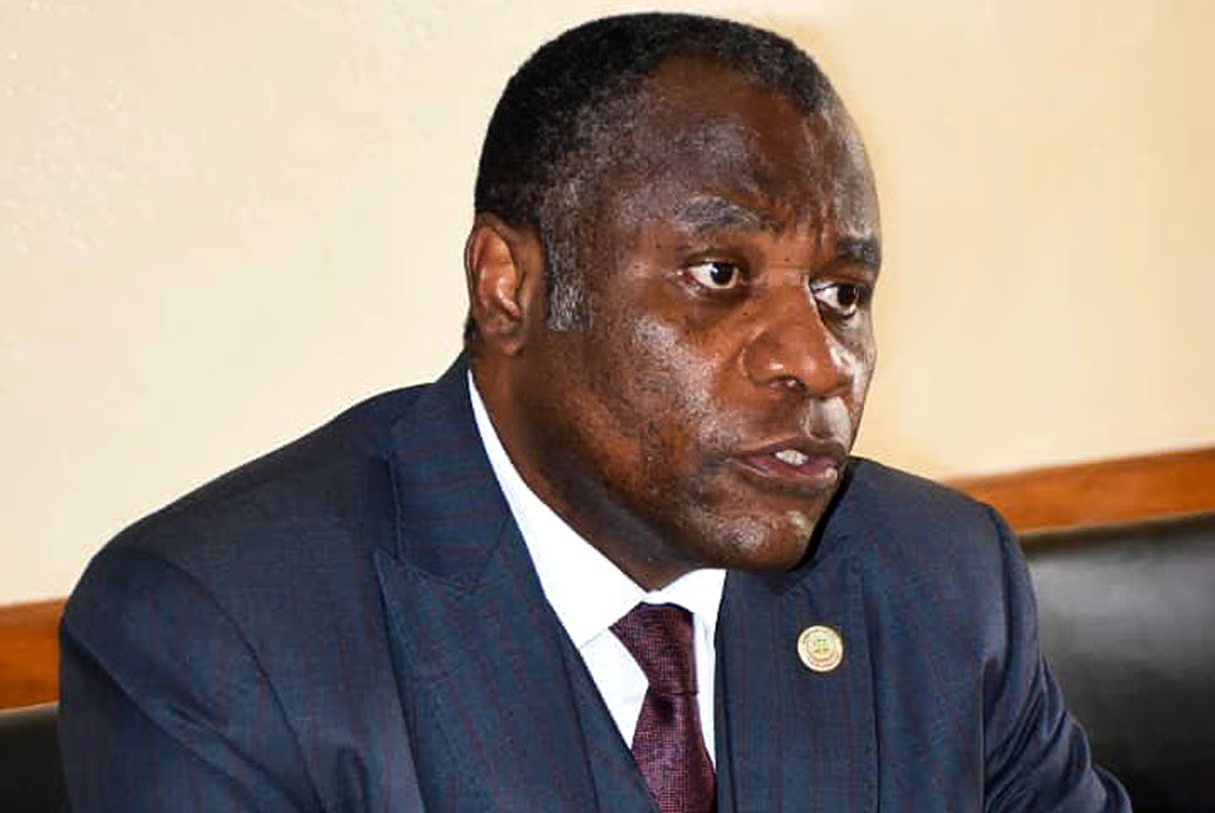
Prof. James Mouangue Kobila, President of the Cameroon Human Rights Commission (CDHC).
(LVDE) — On the occasion of the celebration of International Women’s Day 2026, the Cameroon Human Rights Commission issued a statement warning about the continued prevalence of gender-based violence and the difficulties victims face in obtaining swift justice. While acknowledging progress made in Cameroon in promoting gender equality, the institution called on public authorities to strengthen mechanisms for protecting women and girls, in line with the theme adopted by the United Nations for the 2026 International Women’s Day: “For ALL women and girls: Rights, equality and empowerment.”
The March 8 commemoration in Cameroon was thus marked by a strong position from the national human rights body, which urged greater commitment to the protection and promotion of women’s rights. In its official declaration released during the 41st edition of International Women’s Day, the Commission stressed that trivializing or boycotting the global celebration would reduce the visibility of the fight against discrimination and the persistent inequalities between men and women.
According to the Commission, the International Women’s Day observance offers a strategic platform to highlight ongoing challenges related to equality, including gender-based violence, social discrimination, and barriers to equitable access to economic resources and decision-making positions. The institution warned that the absence of concrete actions in these areas could slow social, economic and democratic progress.
In its analysis, the Commission recalled that the protection of women’s rights is embedded in Cameroon’s constitutional framework. The preamble of the Constitution of January 18, 1996 affirms that all citizens possess inalienable rights without distinction of sex and that the Nation protects women, thereby reinforcing the principle of equality between men and women.
At the continental level, the Commission also referred to the jurisprudence of the African Court on Human and Peoples’ Rights, particularly the ruling delivered on May 11, 2018 in the case between the Association for the Progress and Defense of Malian Women’s Rights and the Republic of Mali. That landmark decision strengthened legal protection for women in Africa in areas such as minimum marriage age, consent to marriage, inheritance rights and the elimination of harmful traditional practices.
The Commission further highlighted several institutional advances recorded in Cameroon. It notably cited the appointment in November 2025 of magistrate Marie Claire Dieudonné Nseng Elang as Prosecutor General at the Supreme Court, marking the first time a woman has held the position in the country’s judicial history. The institution also welcomed the recent cooperation agreement signed between the Ministry of Higher Education and the Ministry of Women’s Empowerment and the Family, aimed at strengthening women’s capacities and intensifying the fight against violence through education and research.
Despite these developments, the Commission remains concerned about the under-representation of women in public decision-making bodies. Statistics indicate that women account for only about 16% of government members, 26% of senators, nearly 24% of municipal councilors and less than 23% of regional councilors. These figures remain below the minimum target of 30% representation established by the national gender policy and the National Development Strategy 2020-2030.
The institution also expressed deep concern over the persistence of gender-based violence, including femicides and domestic violence. It deplored the slow pace of judicial procedures as well as the frequent resort to out-of-court settlements, which can contribute to impunity. In this regard, the Commission referred to the tragic case of two young students from the Government Bilingual High School in Kribi, whose bodies were discovered in February 2026 after they had suffered violence, an incident that shocked public opinion.
In response to these challenges, the Commission recommended that public authorities introduce mandatory quotas of at least 30% women in public appointments and on electoral lists for upcoming legislative and municipal elections. It also urged the Ministry of Justice to make legal aid free for victims of violence and to increase mobile court sessions in rural areas in order to bring justice closer to communities and facilitate the handling of complaints.
Finally, the Commission called on the Ministries of Basic Education and Secondary Education to further integrate human rights education into school curricula, with particular emphasis on women’s rights and the prevention of gender-based violence.
Raphael Mforlem

 Esther Grâce
 La voix des entreprises