

REGIONAL INTEGRATION : Pro Meet Up 2026 places corridors at the heart of CEMAC’s economic transformation

(LVDE) – Meeting on June 1, 2026 in Yaoundé under the high patronage of Cameroon’s Prime Minister Joseph Dion Ngute, public officials, regional institutions, investors and business operators launched the 5th edition of Pro Meet Up (PML). Centered on the theme of integration corridors, the event aims to position transport, logistics and payment infrastructure as key levers for industrial transformation and economic integration across the CEMAC region.
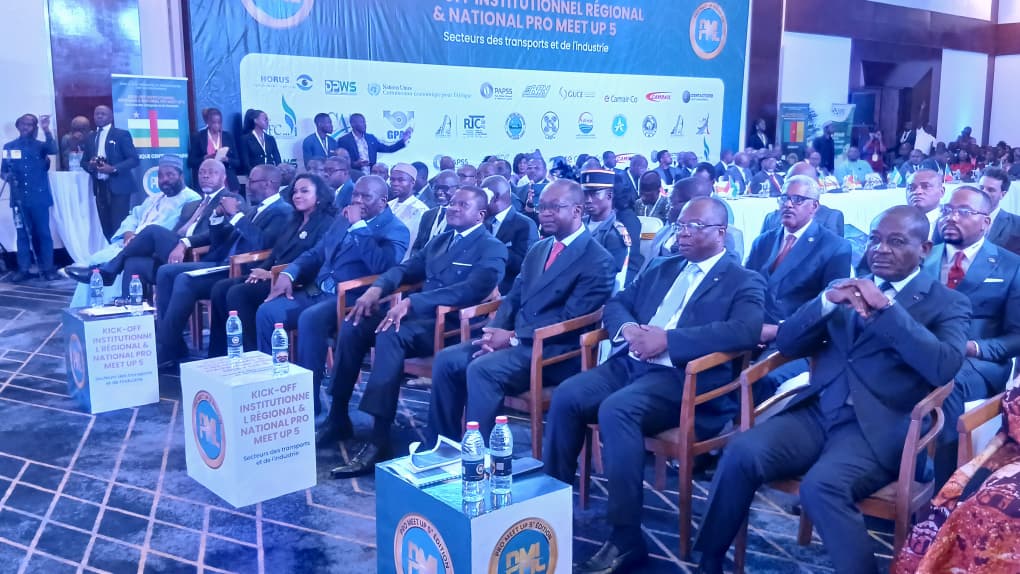
The proceedings of the 5th edition of Pro Meet Up in Yaoundé
In a sub-region where trade flows remain limited and logistics costs high, the fifth edition of Pro Meet Up placed integration corridors at the core of economic debate. Held at the Hilton Hotel in Yaoundé under the chairmanship of Transport Minister Jean Ernest Masséna Ngallé Bibéhè, the forum brought together government representatives, regional bodies, financial partners and private sector actors around a shared ambition: strengthening Central Africa’s competitiveness through better-structured regional value chains.
At the center of discussions is a growing conviction: corridors can no longer be seen as mere transport routes. They are increasingly viewed as development catalysts capable of driving industrialization, promoting local transformation of raw materials and boosting intra-African trade. This approach aligns with the objectives of the CEMAC Commission, the UN Economic Commission for Africa (ECA), and the African Continental Free Trade Area (AfCFTA).
To illustrate this vision, participants selected the Douala–N’Djamena–Bangui–Port-Gentil corridor as a pilot project. This strategic axis connects major production zones, consumer markets and key port infrastructures. The goal is to test a “Value Chain Catalyst Corridor” model before replicating it across other routes in the sub-region.
The economic stakes are significant. Intra-CEMAC trade still accounts for less than 5% of total member states’ trade, one of the lowest levels on the continent. Improved infrastructure connectivity combined with simplified trade procedures could unlock competitive regional value chains in agro-industry, timber, mining, construction materials and energy.
Another key highlight was the integration of the Pan-African Payment and Settlement System (PAPSS), developed by Afreximbank. Presented by its CEO Mike Ogbalu, the system is designed to facilitate cross-border transactions in local currencies, reduce payment costs and accelerate regional trade flows.
The sessions also led to the creation of an expert committee tasked with identifying priority value chains, structuring pilot projects and proposing an operational roadmap. The long-term ambition is to build a regional ecosystem capable of attracting higher investment, accelerating industrial transformation and deepening Central Africa’s economic integration.

 La voix des entreprises
 Esther Grâce