


ENTERPRISE RISK MANAGEMENT : CCA Bank and Afri Insurance mobilize SMEs around new risk management challenges

(LVDE) – Meeting on May 13, 2026 at the Krystal Palace in Douala, CCA Bank and Afri Insurance organized a masterclass dedicated to enterprise risk management. The event brought together SME executives, financial experts and insurance sector stakeholders to discuss mechanisms for prevention, anticipation and the protection of business activities in a context marked by growing entrepreneurial vulnerabilities.
From the early hours of the morning, the lobby of the Krystal Palace in Douala gradually filled with business leaders, finance managers and project developers attending what promised to be an unusual gathering. Between conversations around reception tables, exchanges of business cards and discussions about the difficulties of the business climate, the atmosphere shifted between professional networking and the search for concrete solutions to current economic uncertainties.
Inside the main conference hall, screens were already displaying the day’s themes while technical teams carried out final adjustments. At the center of the discussions was enterprise risk management, now a major concern for many Cameroonian SMEs facing economic volatility, cash-flow pressures, cyber threats, industrial accidents and difficulties accessing financing.
Initiated by CCA Bank and Afri Insurance, the masterclass held on May 13, 2026 sought to raise awareness among economic operators about the importance of preventive mechanisms in ensuring business sustainability. In an environment where small and medium-sized enterprises account for more than 90% of Cameroon’s economic fabric according to several institutional estimates, risk management has increasingly become a key issue for survival and competitiveness.
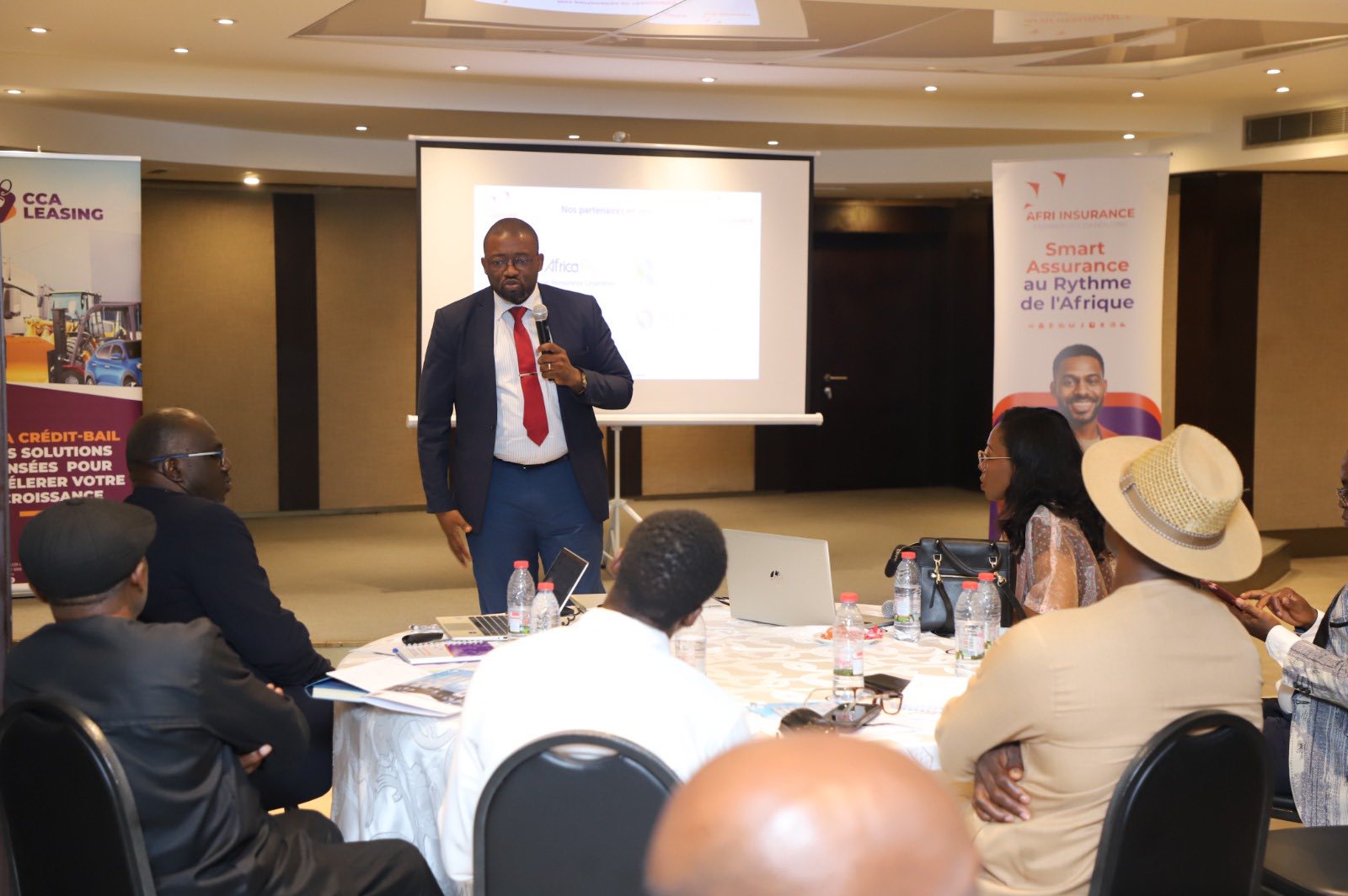
As the sessions progressed, discussions intensified. Guy Martin Mbah, Head of SME Banking at CCA Bank, and Ms. Enonga, Central Director for Commercial Affairs, Communication and Marketing, coordinated the proceedings while shedding light on the challenges facing local businesses. Addressing an attentive audience, they stressed that SME growth now depends as much on access to financing as on the ability to anticipate threats capable of undermining operations.
Expert Olivier Djaba then captured the audience’s attention with an in-depth analysis of the new risks confronting African businesses. Operational risks, digital vulnerabilities, logistics disruptions, market fluctuations and governance shortcomings were among the issues he identified as requiring business leaders to rethink their management models. Alongside him, Technical Director Kamadjo Armand emphasized the growing role of insurance in securing investments and protecting productive assets.
In Cameroon, as in several African economies, SMEs remain particularly exposed to economic shocks. According to data from the World Bank and the Bank of Central African States, a significant proportion of small businesses cease operations before reaching five years of existence, often due to the lack of adequate prevention mechanisms or sufficient financial capacity to absorb crises. Recent economic disruptions, rising logistics costs and tensions in international markets have further increased this vulnerability.
Through this initiative, CCA Bank and Afri Insurance are seeking to go beyond a purely commercial role in order to position themselves as strategic support partners for businesses. Their stated objective is to promote a culture of preventive management capable of sustainably strengthening the resilience of Cameroon’s entrepreneurial ecosystem.
At the end of the sessions, discussions continued in the corridors of the Krystal Palace. Around exhibition stands and reception areas, several participants continued questioning experts about insurance solutions, risk coverage mechanisms and financial security tools adapted to local realities. Another indication that, in an increasingly uncertain economic environment, risk management is gradually becoming an essential component of African business strategy.

 La voix des entreprises
 Esther Grâce